
REVIEW · MAORI CULTURAL EXPERIENCES
Whaka Trails and Maori Village Combo Tour
Steam and song, in the middle of town. This combo in Rotorua pairs a guided look at the living Māori village with time on the Whaka geothermal trails, plus classic photo stops around Pohutu Geyser. I like that you’re not just watching from far away, you’re walking through the thermal features where the community lives, cooks, and explains the geothermal science. The one tradeoff, wear good walking shoes and know the experience depends on good weather, since it can be rescheduled or refunded if conditions are poor.
At about $54.30 per person, you’re paying for a guided cultural-and-science package that’s compact enough for a half-day plan. The group is kept small (maximum 20), and guides like Angela and Daniel have been called out for clear storytelling and a relaxed, family-friendly pace. One thing to be aware of: one low-star comment flagged a guide’s political tone, so if you want purely cultural and natural-history vibes, set that expectation early.
In This Review
- Key points to know before you go
- Whakarewarewa Living Māori Village: geothermal life, not museum life
- Pohutu Geyser lookout platforms, and what to expect from eruptions
- Corn on the cob cooked in a hot pool: included, and actually useful
- Whaka Geothermal Trails: your self-guided walk on thermal ground
- How the 1 to 3 hour flow fits your Rotorua day
- Guides and the difference they make: Angela, Daniel, and the rest
- What you get for the price: value beyond the ticket number
- Photo tips that actually help at Pohutu and on the trails
- Who should book this combo, and who might want to adjust
- Should you book the Whaka Trails and Māori Village combo tour?
- FAQ
- What does the Whaka Trails and Māori Village combo tour include?
- How long is the tour?
- Where do I meet for the tour?
- Does the tour include Pohutu Geyser viewing?
- How often does Pohutu Geyser erupt during the tour?
- Is the corn on the cob tasting included?
- What is the group size?
- Is the tour family-friendly?
- Are coffee, tea, or bottled water included?
- What happens if the weather is poor?
Key points to know before you go
- A resident-led village tour at Whakarewarewa gives you context for everyday life, not just a performance.
- Pohutu Geyser viewpoints are built into the experience, with eruptions said to happen up to 2 times per hour.
- Corn on the cob cooked in a hot pool is included, and it’s a fun, hands-on way to understand geothermal cooking.
- Whaka Geothermal Trails include exclusive access to thermal areas you’d be unlikely to find on your own.
- A small group (max 20) means more time for questions during the guided portion.
- Weather-dependent timing can matter, since the activity requires good conditions.
Whakarewarewa Living Māori Village: geothermal life, not museum life
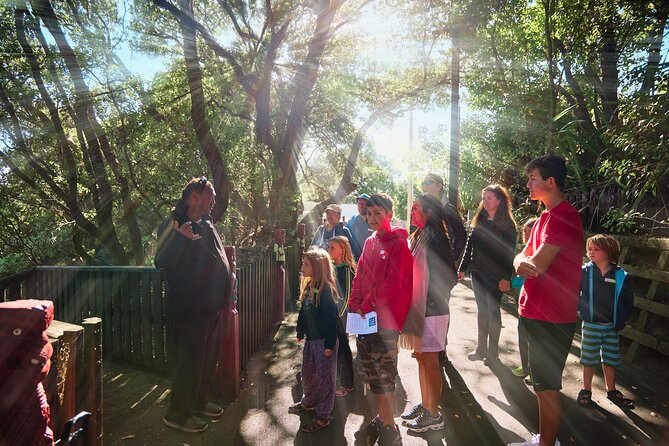
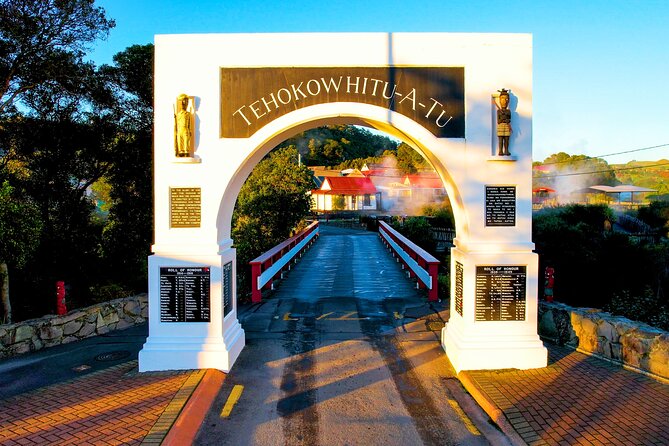
Whakarewarewa is one of Rotorua’s most memorable cultural stops because it is a living Māori village, not a staged set. During the guided portion, you’ll learn how the community uses the geothermal energy beneath the village grounds, and how traditions shape daily life. Expect explanations of history and customs, told in a way that fits a mixed group, including teens.
What I really like is that the tour connects culture to the physical reality of the thermal area. You’re not treated to a list of facts and sent on your way. Instead, you get the “how and why” behind geothermal cooking, hot-water bathing, and why the landscape matters to the people who live here.
The tour also sets you up for better photos. You’re shown where to look, and you learn what you’re seeing. That sounds small, but it’s the difference between snapping steam and understanding why it’s forming where it is.
More Maori Cultural Experiences in Rotorua
- Mitai Maori Village: Cultural Experience and Dinner Buffet
★ 4.7 · 3,575 reviews - Cultural Experience & Seasonal Māori Cuisine at Te Pā Tū
★ 5.0 · 1,546 reviews - Mitai Maori Village Cultural Experience in Rotorua
★ 4.5 · 1,294 reviews
Pohutu Geyser lookout platforms, and what to expect from eruptions
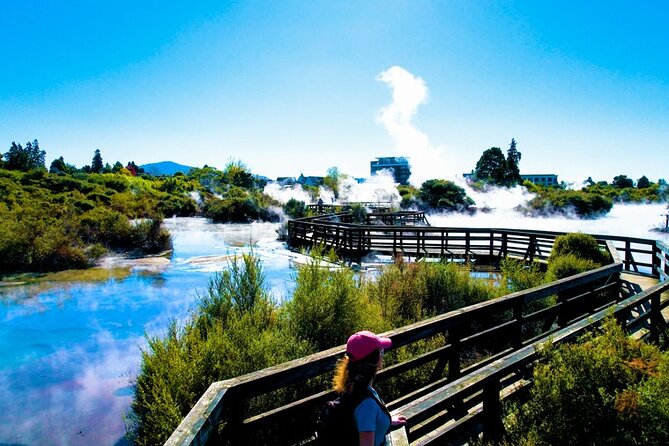
Pohutu Geyser is the headline here, and the experience builds in time at viewing platforms so you can watch it erupt. The itinerary notes that Pohutu can erupt up to 2 times per hour. That’s good news for your planning, but keep in mind geysers are still nature, so your exact eruption timing may vary.
When you arrive at the platform areas, you’ll get a guided sense of what to look for, then a chance to watch the action from a safer, designated spot. This is also where you’ll probably do most of your “wow” photography, because you can frame the bubbling steam and spouting geyser against the open air.
Practical tip: bring a camera that handles fast changes in light well. Steam and spray shift brightness quickly, and it helps to have settings you already know.
Corn on the cob cooked in a hot pool: included, and actually useful
Food tasting is often the weakest part of tours. Here, the corn on the cob tasting is included, and it fits the theme: geothermal cooking.
You’ll be shown the idea of cooking over thermal heat, then you’ll get to eat a corn cob cooked in the village’s largest hot pool. It’s simple, but it’s also memorable because it turns a science concept into something you can taste immediately.
Why it’s valuable for you: geothermal cooking can sound abstract until you see the process described alongside the thermal features that make it possible. The tasting also breaks up the walking portion so the tour feels like a full experience instead of back-to-back viewpoints.
One detail to plan around: coffee or tea is not included, and bottled water is also not included. I’d budget for water and a drink of your choice, especially if you go in warmer Rotorua weather.
Whaka Geothermal Trails: your self-guided walk on thermal ground
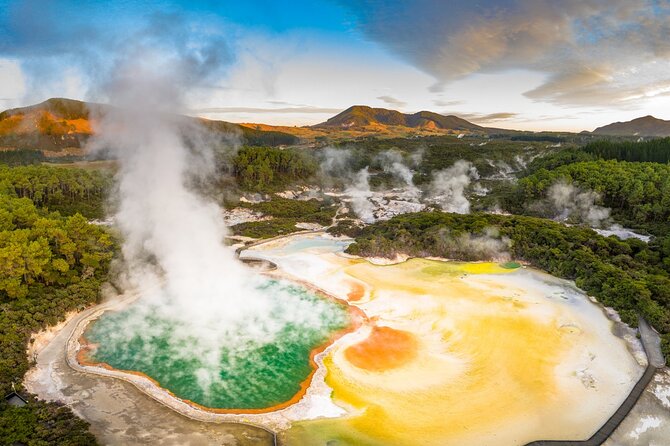
After the guided village portion, you get access to Whaka Geothermal Trails. This is where the combo feels worth the money, because you’re not limited to guided time only. You can take a self-guided, leisurely walk through geothermal trails with exclusive access to thermal areas.
The trail experience is described as giving access to “untouched geothermal landscapes,” with visitors experiencing raw nature and the idea of Papatuanuku, mother-earth. Translation: you’ll be walking among bubbling thermal features where the ground chemistry is the star.
This is also an excellent section for photos. You can slow down, stand near steaming spots (within safe viewing areas), and capture the thermal textures, steam vents, and small bursts of activity that you might miss if you stayed strictly on a timed tour route.
Consideration: this is a walking-based add-on. The tour says most travelers can participate, but if you’re sensitive to uneven ground or steady walking, you’ll want to wear grippy shoes and pace yourself.
Same island, a completely different day:
- Rotorua Canopy Tours: 2.5Hour Native Forest Zipline Adventure
★ 5.0 · 4,563 reviews - Rotorua: Wai-O-Tapu Geothermal Park Entry Ticket
★ 4.6 · 2,601 reviews - Rotorua’s Ultimate Zipline: 6 ziplines, 400 m Tandem, Cliff Walk
★ 5.0 · 2,557 reviews - Rotorua Rafting: Kaituna River White Water Rafting & Free Sauna
★ 5.0 · 1,952 reviews
How the 1 to 3 hour flow fits your Rotorua day
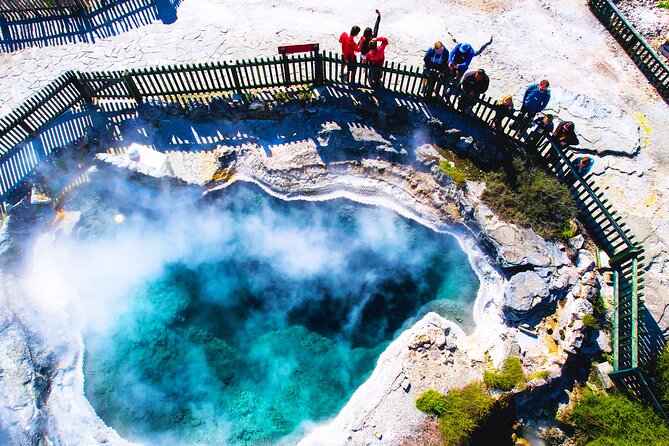
This combo is short by Rotorua standards, roughly 1 to 3 hours depending on your session and how you use the trail time. You start and end at 17 Tryon Street in Whakarewarewa, Rotorua. Since it returns you to the same meeting point, it’s easy to plug into an afternoon plan without guessing how you’ll get back.
The itinerary description includes a guided village tour with lookout platform visits and then time that can include a self-guided trail. In plain terms, expect: guided culture and geothermal explanations first, geyser viewing during the guided portion, then an optional or built-in walk through the thermal trails.
Two useful planning angles:
- If you want more time for photos, give yourself extra buffer so you’re not rushing the trail.
- If you have limited mobility, prioritize the guided viewpoints and consider spending less time on the trail loop.
Also, this is a maximum 20-person experience. Smaller groups usually mean fewer people blocking your view at platforms and more chances to ask a question without feeling lost in the crowd.
Guides and the difference they make: Angela, Daniel, and the rest
One of the best parts of this tour, based on what stands out in guide feedback, is how naturally the storytelling lands. Guides named in the experience reviews include Angela and Daniel, and others such as Mirama, Waimairia, Ben, and Michael. The common thread is that they explain life in the village with humor and clarity, and they are willing to answer questions.
That matters because Whakarewarewa isn’t just scenic. You’re learning how a community interacts with geothermal energy every day. If your guide is good at connecting the science to daily practice and doing it in a calm way, the whole experience clicks.
One caution from the lower rating: a visitor reported disappointment tied to a guide’s attitude and political framing. I can’t predict your guide, but it’s fair to say this is a cultural setting where conversation can become broader. If that’s not your style, you can steer questions toward culture, daily life, and geothermal science.
What you get for the price: value beyond the ticket number
The price is $54.30 per person, and it includes access to Whaka Geothermal Trails plus the village guided tour. The corn tasting is also part of the village experience. That means you’re not paying only for “look and walk,” you’re paying for guided interpretation and entry to a managed geothermal experience area.
What’s not included: coffee and/or tea, lunch, and bottled water. That’s normal for this kind of combo, but it affects your total day cost. If you’re hungry later, plan for snacks or a meal afterward.
Here’s the value logic I’d use when deciding:
- If you want both Māori village context and guided geothermal access, the combo is efficient.
- If you only want viewpoints and don’t care about the cultural explanations, you might feel like the guiding portion is “more than you needed.”
- If you’re traveling with teens or mixed ages, this format helps because the village stories, geyser timing, and walking trail give multiple ways to stay engaged.
With a reported 4.7 rating and 94% recommended, it’s clearly landing well for many people, especially those who appreciate living culture and real-world geothermal features.
Photo tips that actually help at Pohutu and on the trails
You’ll take photos here. Most people do. But a little planning helps your results:
- At geyser viewpoints, be ready for fast action. Steam changes quickly, and eruptions are not perfectly timed to your camera.
- For the trails, don’t rush. Some of the best visuals are smaller thermal details, not just the largest geyser moments.
- Keep an eye on where you place your feet. You want stable footing, not a frantic scramble while trying to frame a shot.
If you want a simple win, prioritize one “big” shot at the Pohutu platform and then a handful of close-up steam or bubbling pool photos on the trail.
Who should book this combo, and who might want to adjust
I think this tour is a strong match if you want:
- A family-friendly Rotorua experience that pairs culture with geothermal science.
- A living community perspective, not just a viewpoint.
- An activity that fits in short time without sacrificing meaning.
It’s also a good choice if you like guided learning. The tour is built around learning more than you would on your own, and the format gives you guided context before you wander.
You might consider adjusting your plan if:
- You’re very sensitive to walking on uneven ground. The trail portion is self-guided but still a walk through geothermal terrain.
- You prefer very neutral, strictly scientific narration. One low-star account mentioned a political tone issue with a guide, so you may want to choose questions carefully and keep your focus on daily life and geothermal use.
Should you book the Whaka Trails and Māori Village combo tour?
Yes, if your Rotorua day includes both culture and geothermal sights. For $54.30, you get guided village access, Pohutu geyser viewpoint time, and Whaka Geothermal Trails with a corn on the cob cooked in thermal water. That’s a lot of “why this place matters” for a short outing.
Book it especially if:
- You want the Pohutu Geyser experience with context, not just a photo stop.
- You like resident-led stories, the kind you can ask questions about.
- You want an easy walking option that still feels like a real experience.
Skip or modify if:
- You hate walking on uneven ground.
- You have very specific preferences about how cultural topics are discussed.
If the weather forecast looks solid, this is one of those Rotorua combos that gives you both the science and the human story, in a format that doesn’t eat your entire day.
FAQ
What does the Whaka Trails and Māori Village combo tour include?
It includes a guided tour of the Living Māori Village at Whakarewarewa and access to the Whaka Geothermal Trails. The experience also includes a corn on the cob cooked in the hot pool tasting during the village portion.
How long is the tour?
The duration is listed as about 1 to 3 hours.
Where do I meet for the tour?
The meeting point and ticket redemption point are at 17 Tryon Street, Whakarewarewa, Rotorua 3010, New Zealand. The activity ends back at the meeting point.
Does the tour include Pohutu Geyser viewing?
Yes. The itinerary includes visiting lookout platforms to view Pohutu Geyser eruptions.
How often does Pohutu Geyser erupt during the tour?
Pohutu Geyser erupts as mother nature intends, up to 2 times per hour, according to the itinerary description.
Is the corn on the cob tasting included?
Yes. The corn on the cob cooked in the hot pool is included.
What is the group size?
The experience has a maximum of 20 travelers.
Is the tour family-friendly?
It’s described as family-friendly, and most travelers can participate.
Are coffee, tea, or bottled water included?
No. Coffee and/or tea, lunch, and bottled water are not included.
What happens if the weather is poor?
The experience requires good weather. If it’s canceled due to poor weather, you’ll be offered a different date or a full refund. Free cancellation is available up to 24 hours in advance for a full refund.
Just added near Rotorua
- Thrilling Riverbug Adventure on the Rangitāiki River★ 5.0 · 4 reviews
- Te Puia: Tuku Iho Trail with Cultural Show★ 5.0 · 5 reviews
- Te Puia: Te Pō Indigenous Combo – Tour, Dinner + Haka★ 4.4 · 52 reviews
- Te Puia: Te Rā Guided Day Tour + Haka Cultural Performance★ 4.7 · 128 reviews
- Tauranga: Wai-o-Tapu with Redwood Forest Walk or Forest Spa★ 5.0 · 4 reviews
- Taupo: Orakei Korako Geothermal Park and Cave Entry Ticket★ 4.6 · 158 reviews
- Rotorua: White Island, Mount Tarawera & Waimangu Volcanic …★ 4.4 · 5 reviews
- Rotorua: Velocity Valley – One Ride Pass★ 4.9 · 15 reviews
Maori Cultural Experiences, compared.
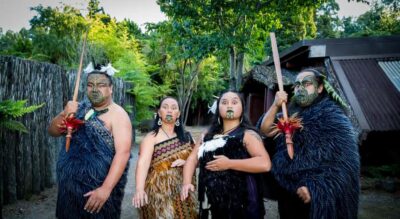
Mitai Maori Village: Cultural Experience and Dinner Buffet
Read our review →
Cultural Experience & Seasonal Māori Cuisine at Te Pā Tū
Read our review →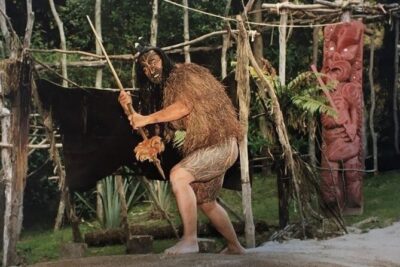
Mitai Maori Village Cultural Experience in Rotorua
Read our review →
Lake Taupo: Classical Sailing to the Māori Rock Carvings
Read our review →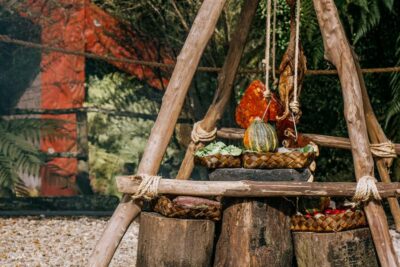
Te Pa Tu Māori Cultural Experience with Dinner
Read our review →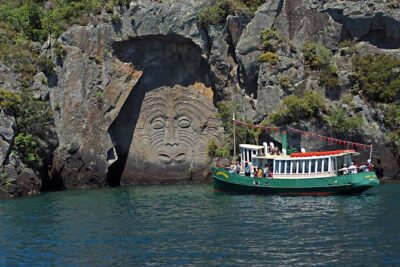
Lake Taupō Māori Rock Carvings Scenic Cruise aboard Ernest Kemp
Read our review →
Waitomo Caves & Rotorua – Te Puia Small-Group Tour from Auckland
Read our review →
Lake Taupo: Maori Rock Carvings 10.30 AM 1.5-Hour Cruise
Read our review →Browse the lists this tour appears in