
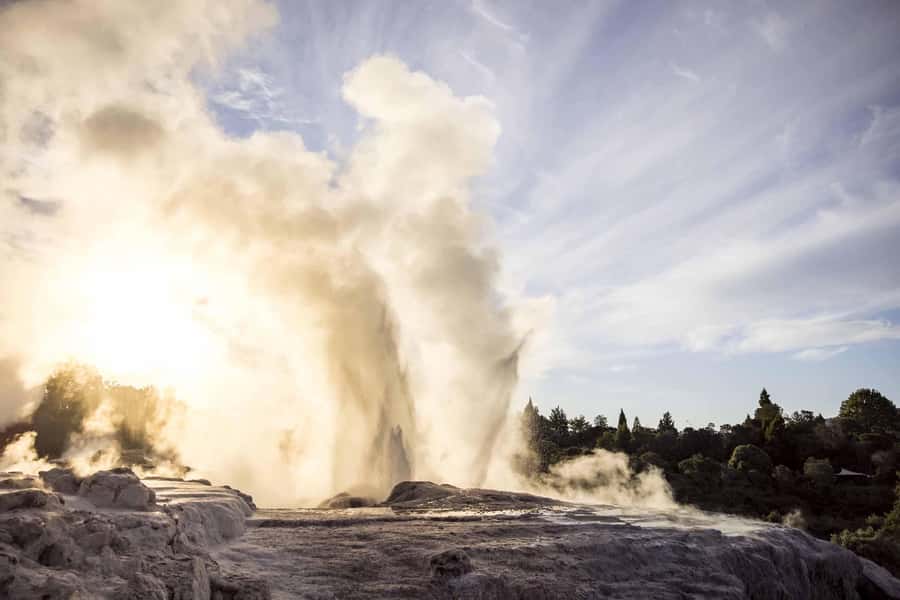
REVIEW · MAORI CULTURAL EXPERIENCES
Te Puia: Tuku Iho Trail with Cultural Show
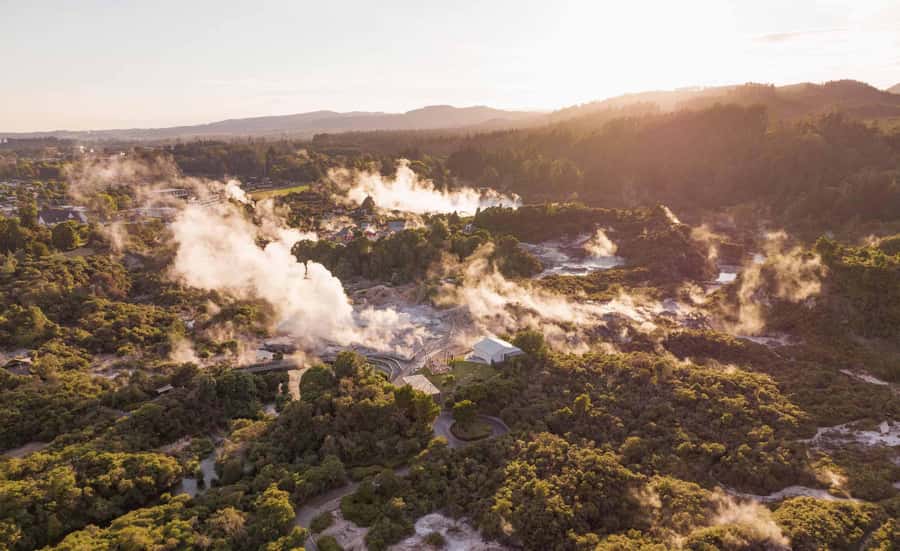
Te Puia turns geology into a story you can walk through. I love the combo of geothermal cooking on the Tuku Iho Trail and the live cultural performance that brings Māori tradition to life. One thing to consider, though, is the walking is moderate and the route is not set up for mobility or wheelchair access.
This is a small-group experience with a guided geothermal valley walk and a stop at the Kiwi Conservation Centre, plus time at Māori cultural sites. You get a lot in about 2.5 hours, but it is still a schedule you should respect, especially if you want photos in good light.
In This Review
- Key highlights at a glance
- Te Puia’s geothermal valley and Māori culture, packed into one guided run
- The Tuku Iho Trail walk: sinter paths, bush, and active geothermal scenery
- Sweetcorn in the ngāwhā and the Hatupatu story you will remember
- Kiwi Conservation Centre: seeing kiwi birds while you’re already in the right mood
- Rotowhio marae grounds: where the land meets ceremony
- The New Zealand Māori Arts and Crafts Institute, for more than sightseeing
- Te Aronui a Rua cultural performance: pōhiri, waiata, mōteatea, poi, haka
- Price and value: is $89 worth it for 2.5 hours?
- Guide quality can make or break it
- Who should book this tour, and who should skip it
- Quick packing list and comfort tips for the geothermal valley
- Should you book the Te Puia Tuku Iho Trail with Cultural Show?
- FAQ
- How long is the Te Puia Tuku Iho Trail with Cultural Show?
- Where does the tour start?
- How much does the tour cost?
- Is the tour guided and what language is used?
- Is food included?
- What cultural elements are included in the show?
- Are there limits on group size?
- What should I bring?
- Is the tour suitable for wheelchair users or mobility scooters?
Key highlights at a glance
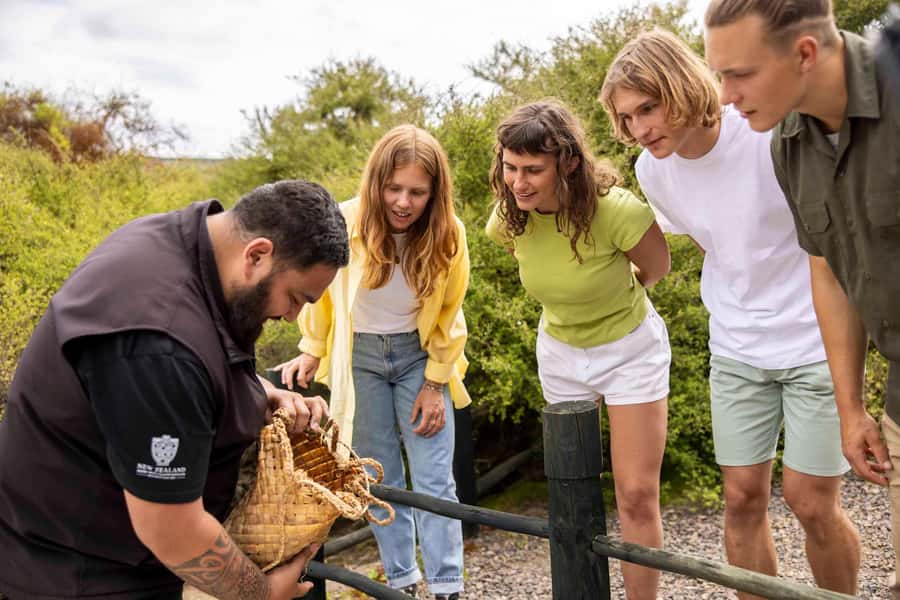
- Sweetcorn in a hot pool (ngāwhā), paired with the Hatupatu tale
- Sinter paths and bushland walking through a geothermal valley with geyser views
- Kiwi Conservation Centre visit, with kiwi birds to see
- Rotowhio marae grounds, connecting place with tradition
- New Zealand Māori Arts and Crafts Institute, for hands-on cultural context
- Cultural performance at Te Aronui a Rua featuring pōhiri, waiata, mōteatea, poi, and haka
Te Puia’s geothermal valley and Māori culture, packed into one guided run
If you are trying to get your bearings in Rotorua, this kind of tour is smart. You spend a short chunk of time in one place, Te Puia, and you cover the geothermal side plus the Māori cultural side without needing to organize separate stops.
I like that the guide keeps it grounded in the reality of the land. You are not just looking at steaming ground, you hear how mineral-rich geothermal pools have been used for centuries, including cooking and bathing. The tour also blends story and movement, with a walk through geothermal paths that feels like it has a direction, not just a loop.
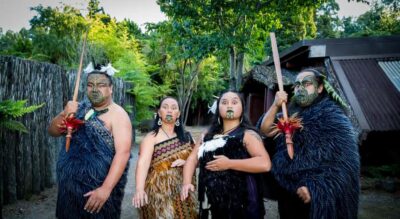
The cultural show is not an afterthought. It is built into the experience in a meeting house setting, Te Aronui a Rua, with multiple performance elements. If that is what you came for, you will feel like you got your money’s worth in that final half hour.
More Maori Cultural Experiences in Rotorua
- Mitai Maori Village: Cultural Experience and Dinner Buffet
★ 4.7 · 3,575 reviews - Cultural Experience & Seasonal Māori Cuisine at Te Pā Tū
★ 5.0 · 1,546 reviews - Mitai Maori Village Cultural Experience in Rotorua
★ 4.5 · 1,294 reviews
The Tuku Iho Trail walk: sinter paths, bush, and active geothermal scenery
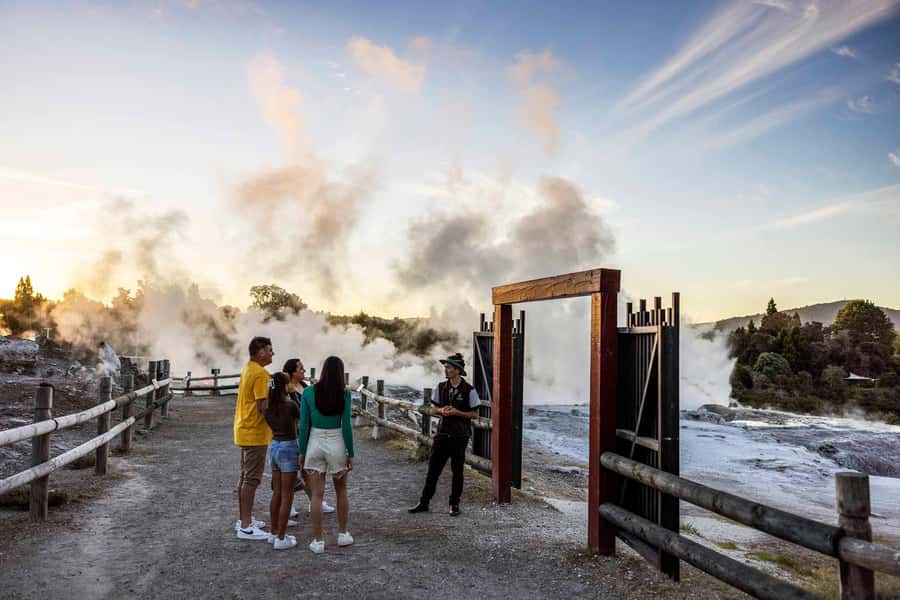
The heart of this experience is the guided walk through hidden areas of the geothermal valley. You move through bushland and follow winding geothermal sinter paths, which is exactly the sort of terrain where having a guide matters. The ground is part of the attraction, so you want someone pointing out what you are seeing and why it matters.
Plan on comfortable walking shoes and a steady pace. The walking is described as moderate, so you should assume some uneven footing and time outdoors. Also, the tour is not set up for barefoot walking, and high-heeled shoes are not allowed, so bring something you can trust on slippery or hot spots.
A practical bonus is the way the guide structures the route. You get to see geothermal features up close without it turning into a self-guided scavenger hunt. That means less guesswork for you, and more time spent on the details the guide shares.
Sweetcorn in the ngāwhā and the Hatupatu story you will remember
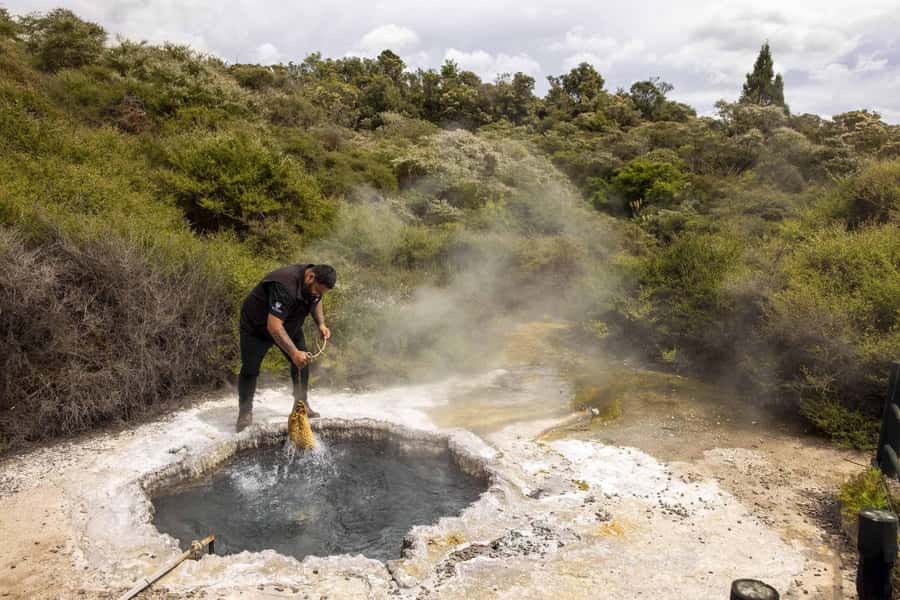
One of the most memorable moments is the sweetcorn cooked in a hot pool, a ngāwhā, while you hear the tale of Hatupatu. This is not just a food stop. The guide ties the cooking method to ancestral use of the geothermal pools and then threads that theme into a local legend.
Hatupatu’s story centers on escape and survival, with the mythical birdwoman Kurungaituku in the background. The tale also includes a quieter detail, the idea that love can appear even when things are falling apart. Even if you do not catch every word, the emotion of the story comes through with the way it is told in that place.
The sweetcorn itself is simple, but that is the point. It is a warm, sweet bite that connects you to the geothermal energy you have been walking beside. If you like experiences where food has a reason, not just a menu item, you will enjoy this part.
Kiwi Conservation Centre: seeing kiwi birds while you’re already in the right mood
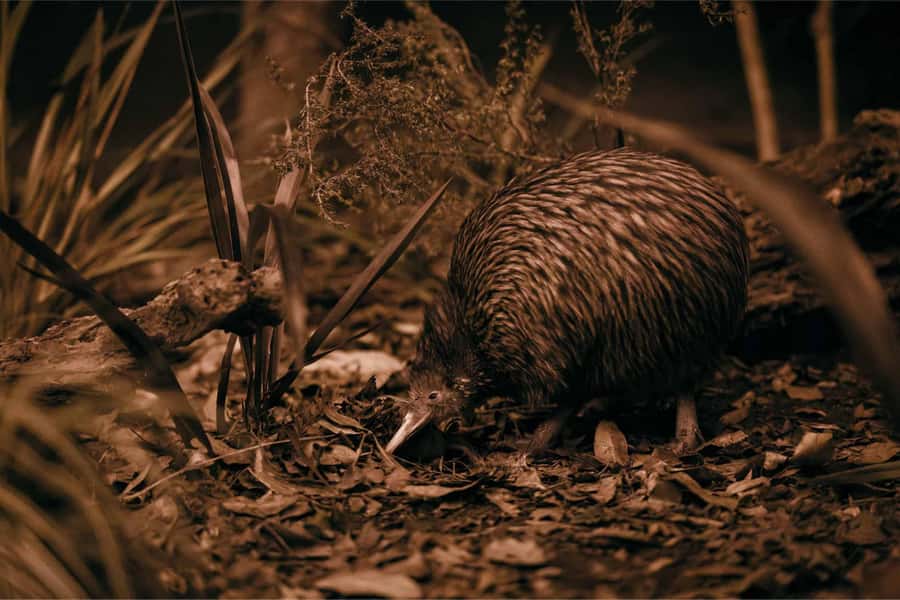
You also get time at the Kiwi Conservation Centre. This is valuable because kiwi viewing is often the hardest “real” animal moment to line up in New Zealand. Instead of spending your day searching, you have a dedicated stop while you are already at Te Puia.
The experience includes seeing kiwi birds, and that is the kind of stop that tends to change how you remember the place. Geothermal valley scenery is dramatic, but kiwi viewing adds a living connection. It makes Te Puia feel less like a set piece and more like a conservation site with an active mission.
One tip: bring your camera and keep it ready. Kiwi moments can be brief, and you will want to capture what you can when the chance appears.
Same island, a completely different day:
- Rotorua Canopy Tours: 2.5Hour Native Forest Zipline Adventure
★ 5.0 · 4,563 reviews - Rotorua: Wai-O-Tapu Geothermal Park Entry Ticket
★ 4.6 · 2,601 reviews - Rotorua’s Ultimate Zipline: 6 ziplines, 400 m Tandem, Cliff Walk
★ 5.0 · 2,557 reviews - Rotorua Rafting: Kaituna River White Water Rafting & Free Sauna
★ 5.0 · 1,952 reviews
Rotowhio marae grounds: where the land meets ceremony
The tour includes the Rotowhio marae grounds. Marae spaces matter because they are not just buildings, they are cultural centers where community life and ceremony happen. On this tour, the marae stop works like a bridge between your geothermal walking and the performance to follow.
If you like context, you’ll appreciate that the guide connects daily place with tradition. Geothermal features are tied to ancestors and daily practices, and then the marae grounds shift the focus to how culture is performed, shared, and respected. That flow helps it all click.
You should treat the marae area with the right level of attention. Follow the guide’s direction, keep your movement respectful, and take the time to look around before you rush into photos.
The New Zealand Māori Arts and Crafts Institute, for more than sightseeing
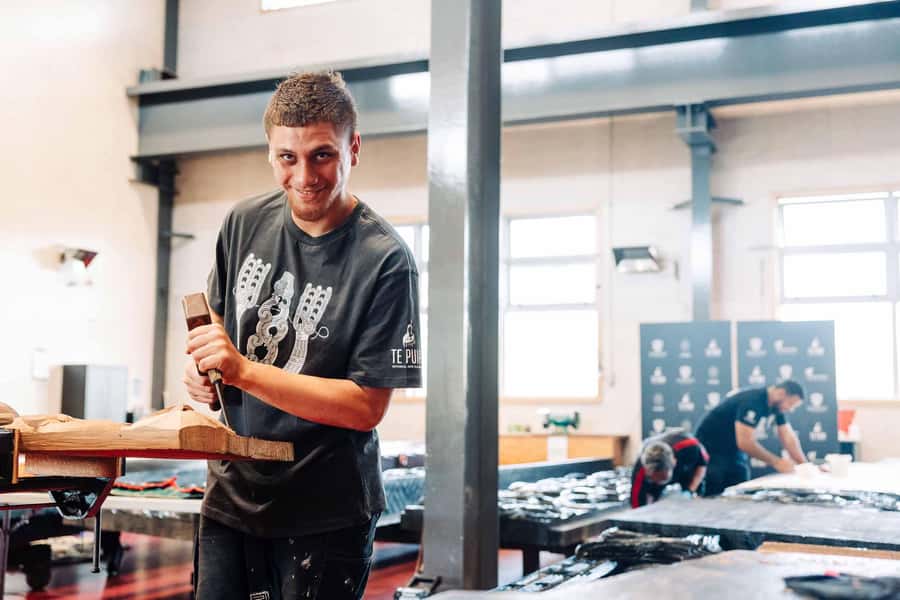
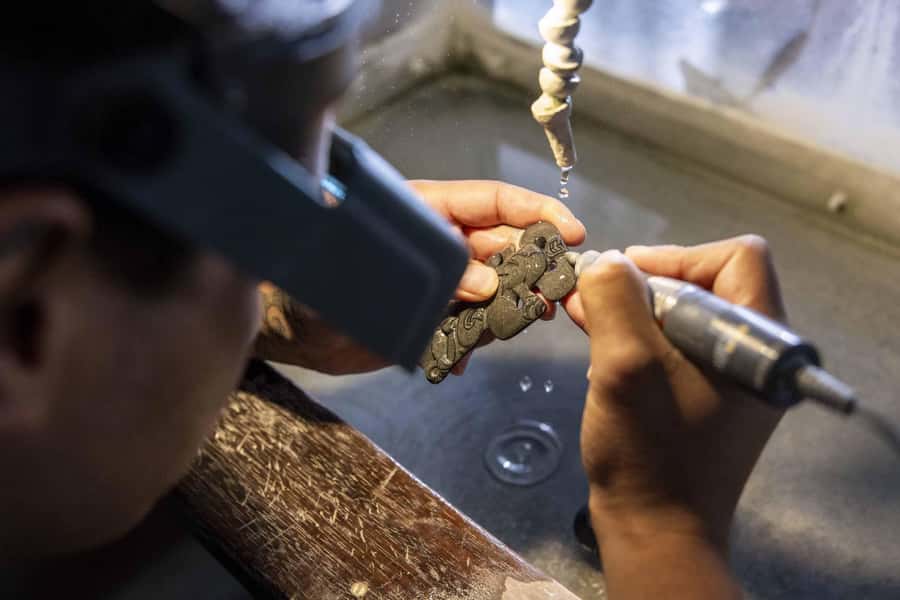
Another stop is the New Zealand Māori Arts and Crafts Institute. This is where the tour adds depth beyond the geothermal valley and the stage performance. You get to see Māori arts and crafts through an institutional lens, which helps you understand that these traditions are not frozen in time.
The value here is practical. If you watch poi and haka later, you are more likely to understand the effort behind the movements when you have already spent time seeing arts and crafts in context. It turns a short show into something you can interpret, not just watch.
Even if you are not a craft person, this stop can still be worthwhile because it explains the why behind what you see. It is one of those segments that makes the entire day feel more coherent.
Te Aronui a Rua cultural performance: pōhiri, waiata, mōteatea, poi, haka
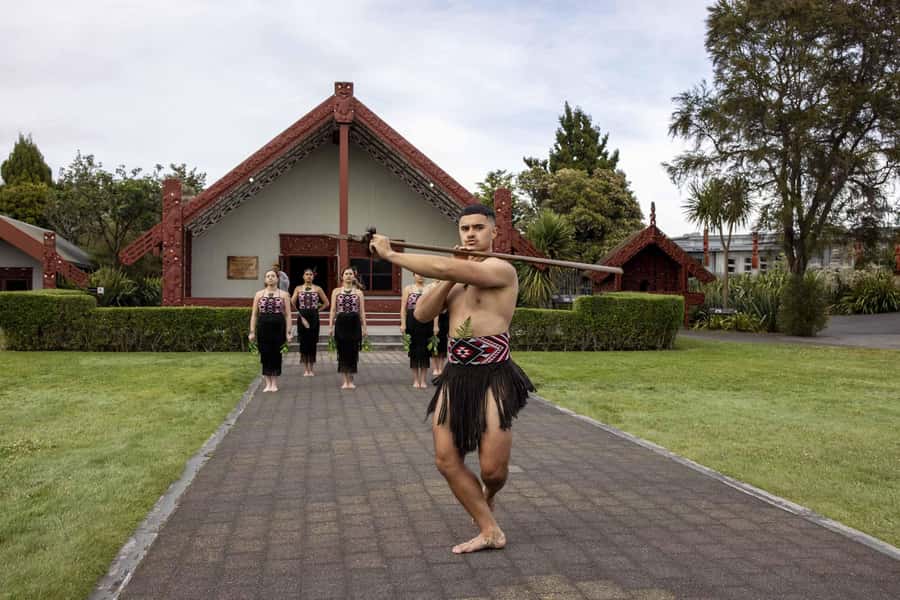
The cultural show takes place in Te Aronui a Rua, the carved meeting house. This is where the tour becomes a full experience instead of a collection of stops.
The show includes:
- pōhiri, a traditional welcome
- waiata, songs
- mōteatea, traditional chant
- poi performance
- haka
What I like about this structure is that it uses multiple modes of expression. You hear, you watch rhythm and movement, and you witness a formal welcome that sets the tone for the rest of the performance. The guide frames it, so it does not feel like you are only watching choreography.
If you want to understand what you’re seeing, pay attention to the pacing. The pōhiri sets formality, the waiata and mōteatea carry language and meaning, and then the poi and haka add physical impact. That sequence helps you stay oriented even if you do not know every term.
One reviewer also called the performance moving, and I get that. The show lands best when you treat it as a real cultural moment, not background entertainment.
Price and value: is $89 worth it for 2.5 hours?
At $89 per person, you are paying for guided access to multiple named sites plus the cultural performance. This is not just entry into a park. You are getting a guided walk through geothermal terrain and inclusion of cultural programming that is part of the Te Puia experience.
The value shows up in three ways. First, you get the geothermal trail segment, plus the Kiwi Conservation Centre stop, plus Māori cultural sites in one package. Second, the guide adds context, especially around ancestral use of hot pools for cooking and bathing. Third, the small group size helps reduce the feeling of being rushed at each station.
Timing is the tradeoff. You will be moving and you will want to stay with the group. If you prefer long, independent wandering, this may feel tighter than you like. But if you want a fast, well-organized sampler of Te Puia’s best moments, the schedule makes sense.
Guide quality can make or break it
This is one of those tours where the guide matters. The day is short, so you rely on the guide to connect the dots between geothermal science, cultural practice, and story.
One name that comes up clearly is Paul, who led the experience for a verified booking and was described as fantastic. When guides hit that balance, you get both information and atmosphere, and this tour is built for that kind of delivery.
A quick tip for you: listen early. The sweetcorn moment and the Hatupatu story land better if you have been paying attention to the geothermal context the guide has been building along the walk.
Who should book this tour, and who should skip it
This experience fits best if you:
- want a guided geothermal walk with named sites at Te Puia
- care about Māori culture and want to see a structured performance with pōhiri, waiata, mōteatea, poi, and haka
- like animal viewing and want kiwi birds without guessing your schedule
- have moderate fitness for walking on bushland and geothermal paths
It is not suitable for people with mobility impairments or wheelchair users. It is also listed as not suitable for visually impaired people and people with low level of fitness. If you are traveling with someone who needs accessibility support, you should look for an alternate plan.
Age also matters. The tour notes it is not suitable for people over 95 years. If that applies to you, ask about other options at Te Puia.
If you are flexible and comfortable walking outdoors in moderate conditions, this is a great way to compress a lot into one morning or afternoon block.
Quick packing list and comfort tips for the geothermal valley
Bring:
- comfortable shoes
- a camera
- water
Wear sturdy footwear and keep your pace steady on paths that can be uneven. High-heeled shoes are not allowed, and pets are not permitted, so plan accordingly.
Also note the tour does not allow smoking, vaping, alcohol, or drugs. That keeps the experience focused and also helps keep things comfortable around geothermal areas.
And no, bare feet are not part of this plan, so you do not want to rely on that mindset even if you see hot pool steam nearby.
Should you book the Te Puia Tuku Iho Trail with Cultural Show?
I think you should book it if you want a tight, well-guided Rotorua experience that connects geology, conservation, and Māori culture in one go. The sweetcorn cooked in a ngāwhā is a standout moment because it is practical, atmospheric, and story-driven. Add the Kiwi Conservation Centre and then finish with a full cultural performance at Te Aronui a Rua, and you end up with more than “a few highlights,” you get a flow.
Skip it if you cannot handle moderate outdoor walking, or if you need accessibility accommodations not supported by this route. This tour is designed for a specific type of participant, and that is better to accept early than to force it.
If you match the fitness and comfort requirements, this is a strong value way to experience Te Puia without spending the whole day moving between unrelated stops.
FAQ
How long is the Te Puia Tuku Iho Trail with Cultural Show?
The guided tour is listed at about 2.25 hours, and there is a cultural performance segment of about 30 minutes. The overall premium experience is described as about 2 hours 45 minutes.
Where does the tour start?
The starting location is 20 Hemo Road. You exchange your ticket at the starting point and show your confirmation on check in at Admissions.
How much does the tour cost?
The price is listed as $89 per person.
Is the tour guided and what language is used?
Yes, it is a live guided tour with English language support.
Is food included?
No food and drinks are not included. The tour does include sweetcorn cooked in a hot pool as part of the experience.
What cultural elements are included in the show?
The performance includes pōhiri, waiata, mōteatea, poi, and haka.
Are there limits on group size?
It is described as a small group limited to 6 participants, and also noted that the tour is limited to 20 participants.
What should I bring?
You should bring comfortable shoes, a camera, and water.
Is the tour suitable for wheelchair users or mobility scooters?
No. The tour is not suitable for mobility impairments, wheelchair users, or mobility scooters.
Just added near Rotorua
- Thrilling Riverbug Adventure on the Rangitāiki River★ 5.0 · 4 reviews
- Te Puia: Te Pō Indigenous Combo – Tour, Dinner + Haka★ 4.4 · 52 reviews
- Te Puia: Te Rā Guided Day Tour + Haka Cultural Performance★ 4.7 · 128 reviews
- Tauranga: Wai-o-Tapu with Redwood Forest Walk or Forest Spa★ 5.0 · 4 reviews
- Taupo: Orakei Korako Geothermal Park and Cave Entry Ticket★ 4.6 · 158 reviews
- Rotorua: White Island, Mount Tarawera & Waimangu Volcanic …★ 4.4 · 5 reviews
- Rotorua: Velocity Valley – One Ride Pass★ 4.9 · 15 reviews
- Rotorua: Wai Ariki Hot Springs & Spa 1hr Restorative Bathing★ 4.8 · 16 reviews
Maori Cultural Experiences, compared.
Mitai Maori Village: Cultural Experience and Dinner Buffet
Read our review →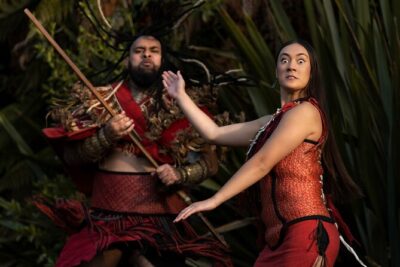
Cultural Experience & Seasonal Māori Cuisine at Te Pā Tū
Read our review →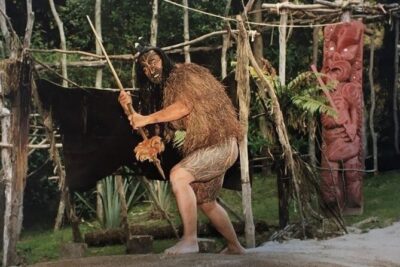
Mitai Maori Village Cultural Experience in Rotorua
Read our review →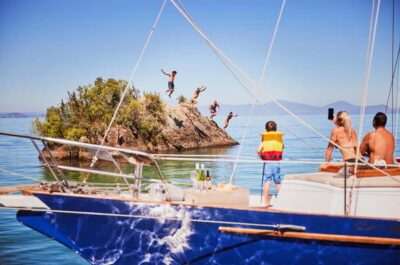
Lake Taupo: Classical Sailing to the Māori Rock Carvings
Read our review →
Te Pa Tu Māori Cultural Experience with Dinner
Read our review →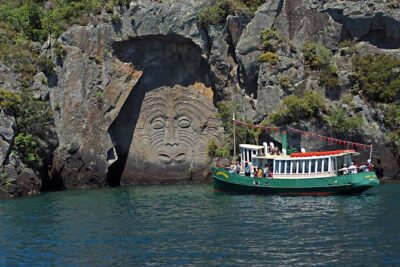
Lake Taupō Māori Rock Carvings Scenic Cruise aboard Ernest Kemp
Read our review →
Waitomo Caves & Rotorua – Te Puia Small-Group Tour from Auckland
Read our review →
Lake Taupo: Maori Rock Carvings 10.30 AM 1.5-Hour Cruise
Read our review →Browse the lists this tour appears in