
REVIEW · MAORI CULTURAL EXPERIENCES
Te Puia: Te Pō Indigenous Evening Experience Combo
Rotorua gets serious after dark. This Te Puia Te Pō combo strings together geothermal valley sights, a hāngī dinner, and Māori culture in one evening that runs about 4.5 hours. You start in the visitor area, head out with a guide to learn what you are seeing, then finish with a cultural show and a hot-chocolate sendoff.
I especially like two parts. The guided walking time through geysers, mud pools, and native bush feels practical, not rushed, and you also visit the Kiwi Conservation Centre and the New Zealand Māori Arts and Crafts Institute. I also really like that dinner is not a sad add-on, it is a hāngī buffet at Pātaka Kai Restaurant and Bar with a view over the geothermal valley.
One drawback to plan for: the arts institute stop can feel brief if you want long, close time with carvers and weavers, so this is best if you want an overview plus a cultural night, not a slow art workshop.
In This Review
- Key highlights you should care about
- Why Te Pō feels like a Rotorua evening, not just a ticket
- 4pm at Te Puia: how the evening starts and what it means
- New Zealand Māori Arts and Crafts Institute: the stop that sets the cultural tone
- Kiwi Conservation Centre: a small moment that can stick with you
- Geysers and mud pools with a guide: what you gain by not going solo
- Hāngī at Pātaka Kai: dinner that actually feels like the place
- The cultural performance in Te Aronui a Rua: what you see in 45 minutes
- Wrapping up under the geysers: hot chocolate and a final stroll
- Price and value: what you are really paying for
- Who should book Te Pō, and who might skip it
- FAQ
- What time does Te Pō start, and where is the meeting point?
- How long does the Te Pō experience take?
- What is included in the Te Pō Indigenous Evening Experience Combo?
- What is the dinner like at Pātaka Kai?
- What cultural elements are part of the performance?
- Is alcohol included with dinner?
- If I cancel, can I get a refund?
- Should you book Te Puia Te Pō?
Key highlights you should care about
- 4pm start with a full guided geothermal tour, then dinner and performance in the same evening
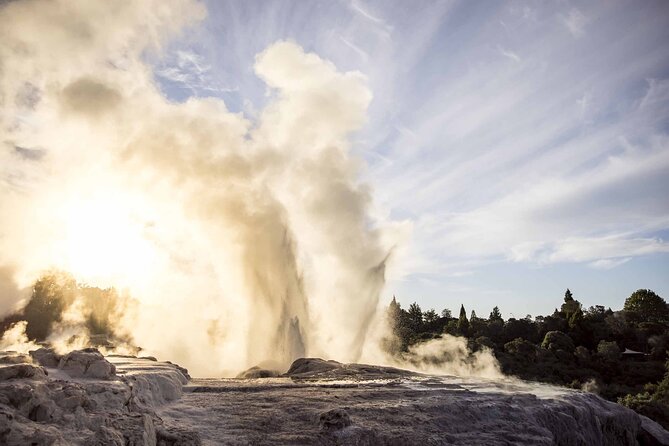
- Powerful geyser moments, including Pōhutu Geyser, the largest in the Southern Hemisphere
- Kiwi Conservation Centre access, with a chance to see a kiwi up close in the sanctuary area
- Hāngī buffet at Pātaka Kai Restaurant and Bar, with traditional meats, vegetables, and kai moana (seafood)
- A 45-minute cultural performance in the carved meeting house Te Aronui a Rua, featuring pōhiri, waiata, mōteatea, poi, and haka
- Hot chocolate at the geyser terrace as you wrap up your night
Why Te Pō feels like a Rotorua evening, not just a ticket
If you like your Rotorua experience to have flow, Te Pō delivers. You are not bouncing between separate venues and time slots. You start at Te Puia, get the geothermal context with a guide, eat at Pātaka Kai with a view, then end inside a carved meeting house for a full Māori cultural performance.
What makes this combo work is the order. The geothermal valley can feel chaotic if you are just walking around on your own. With a guide, you get the why behind what you see, then food and performance land while the whole place is still fresh in your mind.
Also, the show is not random dancing. The performance includes pōhiri (traditional welcome), waiata, mōteatea, poi, and haka, and it is presented in Te Aronui a Rua. That combination matters, because you experience culture as a sequence, not as a few disconnected moments.
This experience has a strong track record too: it is rated 4.6 out of 5 with a 97% recommendation rate. That does not guarantee your night will match someone else’s taste, but it is a solid sign the basic formula lands for most people.
More Maori Cultural Experiences in Rotorua
- Mitai Maori Village: Cultural Experience and Dinner Buffet
★ 4.7 · 3,575 reviews - Cultural Experience & Seasonal Māori Cuisine at Te Pā Tū
★ 5.0 · 1,546 reviews - Mitai Maori Village Cultural Experience in Rotorua
★ 4.5 · 1,294 reviews
4pm at Te Puia: how the evening starts and what it means
The evening begins at 4:00 pm at Te Puia in Whakarewarewa (Hemo Road). You are back at the same meeting point when it ends. That simplicity is underrated. You can focus on what you came for, geothermal valley, food, and cultural performance, without figuring out transport between different buildings.
The tour runs about 4 hours 30 minutes. The timing is long enough to feel like a proper evening out, but not so long that you end up exhausted. If you are also doing daytime Rotorua stops, this helps you keep your schedule flexible.
It is also designed for all ages. That usually means the pacing is guided and straightforward, not hardcore hiking. You still should wear practical shoes, because the experience includes time in the geothermal valley and on terraces.
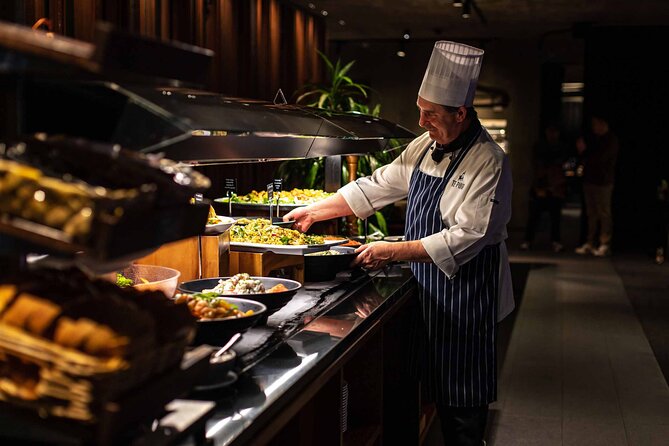
New Zealand Māori Arts and Crafts Institute: the stop that sets the cultural tone
One of your first stops is the New Zealand Māori Arts and Crafts Institute. This is where the evening gets more than scenic. You are shown what people make, and you learn how the institute’s students and teachers, the tauira and pouako, approach their mahi (work).
I like this part because it gives you a lens before the performance. When later you see poi and hear waiata and mōteatea, you have context for why skills, storytelling, and tradition matter here. It also helps you avoid treating the cultural show like a separate event. It feels like it belongs to the same place and people.
That said, there is a practical consideration. If you want deep time with carvers and weavers, the window you get can feel short. You may catch highlights and get a taste of the craft, but you likely will not leave thinking you spent an entire afternoon here. Plan for an overview plus a strong performance later.
Kiwi Conservation Centre: a small moment that can stick with you
The guided walk also includes the Kiwi Conservation Centre. This is one of those stops that changes the mood of the night. You go from steam and minerals to a living conservation mission.
In the sanctuary area, you might even get a glimpse of kiwi up close. One review memory described seeing the kiwi’s tail end, which is funny, but it also captures the reality: you are often watching for movement, not posing for a photo. The payoff is seeing conservation made concrete, not just hearing a promise.
This stop is also useful for families and first-time visitors. Kids can stay engaged because it is a clear, living goal, and adults appreciate that conservation is part of the story, not a side note.
Same island, a completely different day:
- Rotorua Canopy Tours: 2.5Hour Native Forest Zipline Adventure
★ 5.0 · 4,563 reviews - Rotorua: Wai-O-Tapu Geothermal Park Entry Ticket
★ 4.6 · 2,601 reviews - Rotorua’s Ultimate Zipline: 6 ziplines, 400 m Tandem, Cliff Walk
★ 5.0 · 2,557 reviews - Rotorua Rafting: Kaituna River White Water Rafting & Free Sauna
★ 5.0 · 1,952 reviews
Geysers and mud pools with a guide: what you gain by not going solo
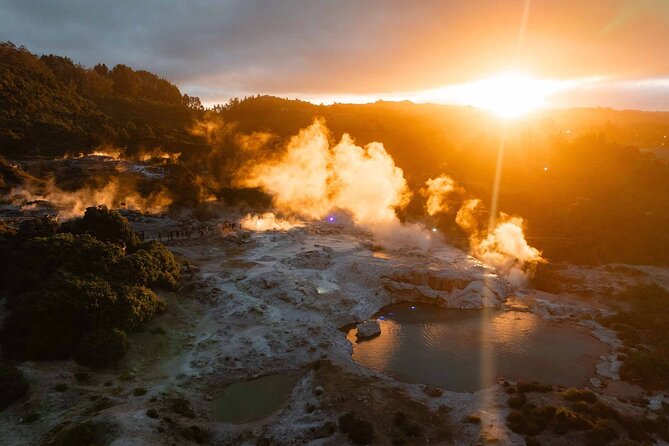
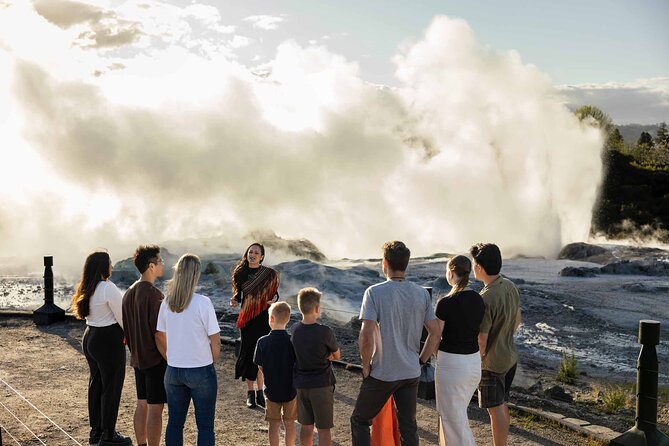
The core of the experience is the guided valley tour. You explore geysers, mud pools, native bush, and you learn about Māori culture from the guide while you are looking at the geothermal features.
Pōhutu Geyser is called out as a highlight, and it is for a reason. Seeing it is one thing. Understanding what you are looking at is another. A guide helps you connect the physical spectacle to the cultural and environmental context of the valley.
The mud pools add variety. Geysers can be all about eruptions and steam, but mud pools show the slower, stranger side of geothermal energy. That contrast makes the walk more interesting, especially for people who think they already know what geothermal tourism looks like.
I also like that the tour is structured, not a wandering loop. You get stops, explanations, and a rhythm. The evening stays social, but it does not feel like a big bus ride.
Hāngī at Pātaka Kai: dinner that actually feels like the place
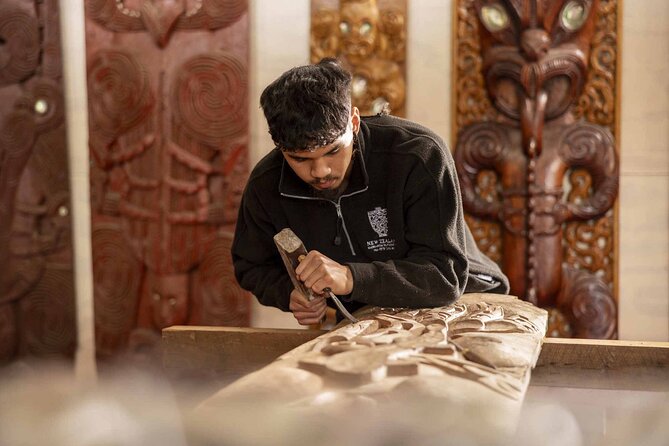
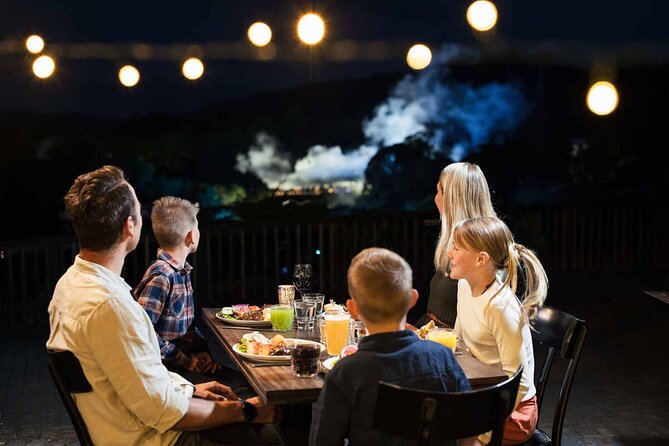
After the valley tour, you go to Pātaka Kai Restaurant and Bar for the hāngī buffet. The restaurant overlooks the geothermal valley, so even dinner comes with a sense of place.
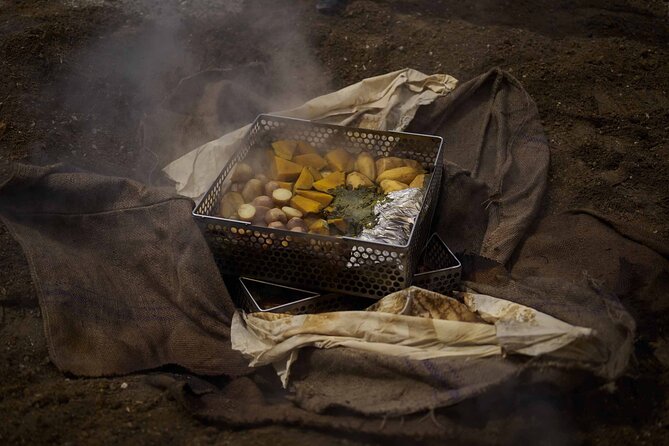
This meal is built around traditional hāngī style cooking, and it is not just one or two items. Expect fresh produce, traditionally cooked meats and vegetables, kai moana (seafood), and sweet desserts. Coffee and/or tea are included.
I like buffet formats when they are done well, because you can match the meal to your appetite. You can try a bit of everything, and you can also slow down and eat without feeling rushed. For people with different dietary preferences, it is still a real meal, not a token plate.
One practical note: alcoholic beverages are not included. If you want wine or beer, you should plan to pay for it separately.
Also, if you are the type who gets anxious about finding food in the dark, this is one of the reasons the combo works. You are fed before the show, so you are not sitting through haka and poi with a growling stomach.
The cultural performance in Te Aronui a Rua: what you see in 45 minutes
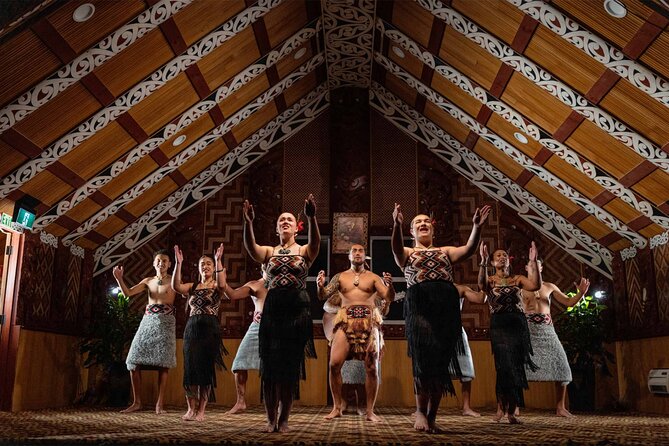
The final big moment is a 45-minute traditional Māori cultural performance in Te Aronui a Rua, a carved meeting house. This is where the earlier cultural context pays off.
The show includes pōhiri, waiata, mōteatea, poi, and haka. Each element plays a role. Pōhiri is a traditional welcome, so it frames you as more than an audience member. Waiata and mōteatea bring song and voice into the story. Poi adds rhythm and visual texture. Haka provides intensity and presence.
I like that the performance is long enough to feel complete, but short enough that it does not drag. Forty-five minutes hits a sweet spot for most people, including kids. You get a full arc, then you are not trapped inside a room while everyone else heads out.
If you care about cultural etiquette, pay attention to the flow of the welcome and any prompts from the performers. A performance like this is meant to be witnessed with respect, not treated like a concert where you tune out between beats.
Wrapping up under the geysers: hot chocolate and a final stroll
After the show, the experience finishes with a stroll back into the geothermal area while sipping hot chocolate at the geyser terrace. This is a nice touch because it helps you decompress.
It also turns the evening into a loop. You start with geothermal context, then you end with geothermal atmosphere. The hot chocolate keeps things cozy after a performance, and the terrace setting gives you one last moment to look at the valley in quieter mode.
It is also the time when the practical details become clear. By now, you know where you are, how the pathways feel, and what kind of nighttime walking you have ahead of you. That makes the final stretch feel calm rather than chaotic.
Price and value: what you are really paying for
At $173.14 per person, Te Pō is not a cheap evening. But the value math works when you consider what is included:
- A guided geothermal valley tour covering geysers, mud pools, native bush, and key cultural sites
- Kiwi Conservation Centre access
- A hāngī buffet dinner at Pātaka Kai with coffee or tea included
- A 45-minute Māori cultural performance in Te Aronui a Rua
- Hot chocolate at the geyser terrace
You are paying for more than entertainment. You are paying for guided interpretation, a full meal, and a performance in a meaningful setting, all in one scheduled block starting at 4:00 pm.
The main way value can slip is if you are the type who wants to go slow and linger, especially at the arts institute. If you hate time limits, you may feel the evening is a fast sampler. But if you want a structured night that hits the biggest ideas without planning logistics, this combo is a strong deal.
Who should book Te Pō, and who might skip it
I think Te Pō fits best if you want three things in one go: geothermal context, a true hāngī dinner, and a cultural performance that includes multiple elements like pōhiri, waiata, mōteatea, poi, and haka.
It also works well for families because it is built for all ages and lasts about 4.5 hours, not an all-nighter. First-time Rotorua visitors benefit from the guided pacing, because you leave with a clearer picture of what you saw and why it matters.
You might consider skipping if you only want a quick look at geysers and you are not interested in the crafts institute or the show. In that case, other options might suit you better.
But if you want an evening that connects place, food, and performance, this is one of the more complete ways to do it.
FAQ
What time does Te Pō start, and where is the meeting point?
The experience starts at 4:00 pm at Te Puia, Rotorua, on Hemo Road, Whakarewarewa, Rotorua 3010. It ends back at the same meeting point.
How long does the Te Pō experience take?
It lasts around 4 hours 30 minutes.
What is included in the Te Pō Indigenous Evening Experience Combo?
Included are the hāngī buffet dinner, coffee and/or tea, the Te Rā guided tour of the valley, a 45-minute traditional Māori cultural performance, and hot chocolate at the geyser terrace.
What is the dinner like at Pātaka Kai?
You get a hāngī buffet at Pātaka Kai Restaurant and Bar with fresh produce, traditionally cooked meats and vegetables, kai moana (seafood), and sweet desserts.
What cultural elements are part of the performance?
The 45-minute performance includes pōhiri, waiata, mōteatea, poi, and haka in the carved meeting house Te Aronui a Rua.
Is alcohol included with dinner?
No. Alcoholic beverages are not included.
If I cancel, can I get a refund?
No. This experience is non-refundable and cannot be changed for any reason. If you cancel or request an amendment, the amount paid will not be refunded.
Should you book Te Puia Te Pō?
If your Rotorua plan includes one evening that needs to cover geothermal sights, a proper Māori food experience, and a real performance, book Te Pō. The 4:00 pm start keeps the night tidy, and the combo format is efficient without feeling like a checklist.
If you are picky about time spent at the arts institute or you dislike structured group pacing, you may feel the evening is too compact. But for most people, that structure is exactly the point, you get the big moments, guided, fed, and explained, all in one night.
More Evening Experiences in Rotorua
- Te Puia: Te Pō Indigenous Evening Experience – Haka + Dinner
★ 4.7 · 350 reviews - Te Puia: Te Pō Indigenous Evening Experience with Dinner
★ 4.5 · 89 reviews - Lake Rotoiti Evening Kayak Tour including Hot Springs, Glowworm Caves and BBQ Dinner
★ 5.0 · 60 reviews - Rotorua: Evening Starlight Gourmet Kayak Tour Glowworms
★ 5.0 · 35 reviews
Just added near Rotorua
- Rotorua to Auckland Afternoon Transfer with Waitomo Glow Worms★ 4.5 · 22 reviews
- Wai Ariki Hot Springs and Spa Restorative Journey (2hrs)★ 4.5 · 73 reviews
- Private Tour Waiotapu Geothermal Shore Excursion up to 8 passengers★ 5.0 · 6 reviews
- Rotorua: Te Rā Guided Experience + Haka★ 5.0 · 11 reviews
- Thermal Path Tour★ 5.0 · 70 reviews
- Voyages of Maori at Mitai Maori Village★ 5.0 · 66 reviews
- Shore excursion to Rotorua including Gondola and luge rides★ 4.5 · 11 reviews
- Tongariro Discovery Walk★ 5.0 · 6 reviews
Maori Cultural Experiences, compared.
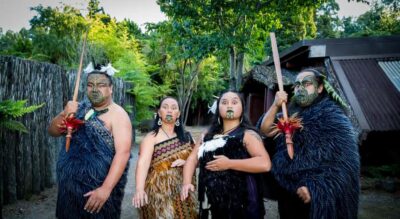
Mitai Maori Village: Cultural Experience and Dinner Buffet
Read our review →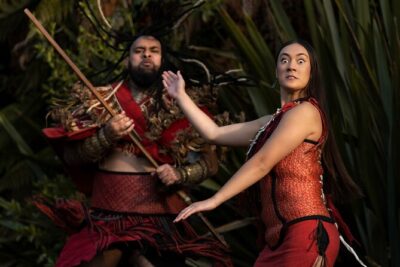
Cultural Experience & Seasonal Māori Cuisine at Te Pā Tū
Read our review →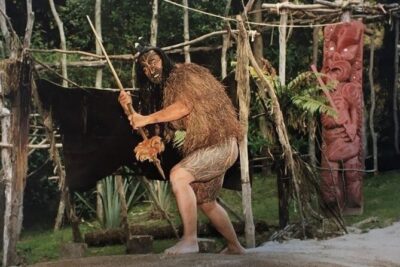
Mitai Maori Village Cultural Experience in Rotorua
Read our review →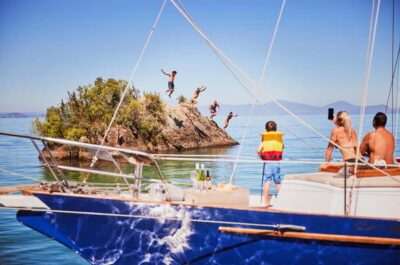
Lake Taupo: Classical Sailing to the Māori Rock Carvings
Read our review →
Te Pa Tu Māori Cultural Experience with Dinner
Read our review →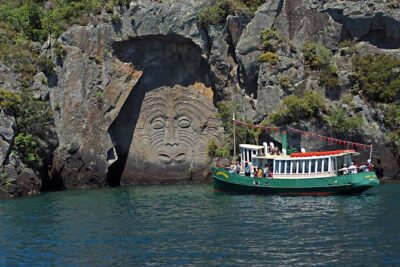
Lake Taupō Māori Rock Carvings Scenic Cruise aboard Ernest Kemp
Read our review →
Waitomo Caves & Rotorua – Te Puia Small-Group Tour from Auckland
Read our review →
Lake Taupo: Maori Rock Carvings 10.30 AM 1.5-Hour Cruise
Read our review →Browse the lists this tour appears in