
REVIEW · STARGAZING TOURS IN MOUNT COOK & LAKE TEKAPO
Mount John Observatory Stargazing Experience, Tekapo
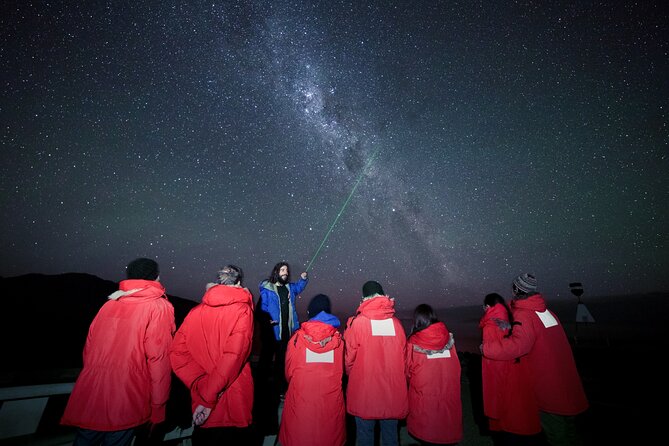
Mount John turns stargazing into a real lesson. Up on the 1,029m summit of the Aoraki McKenzie International Dark Sky Reserve, guides use laser pointers and advanced observatory equipment to help you make sense of what you’re seeing. This is set at a world-class research site, so it feels less like a show and more like a guided night under the Southern Hemisphere sky.
I really like the mix of teaching and hands-on observing. You get naked-eye stargazing first, then telescope time, with the University of Canterbury team behind the observatory. If you are brand new, the format is built to bring you along, and reviews specifically point to guides who stay upbeat and engaging, with names like Kieran, Alice, and Olive showing up.
One thing to plan for: it is weather-dependent. If clouds move in, the outdoor session can be cancelled, and while an indoor alternative may be offered, some nights still won’t deliver the same clear-sky magic you booked for.
In This Review
- Key highlights you should care about
- The Dark Sky Reserve effect on Mount John
- Price and what $139.39 buys you in Tekapo
- Stop 1: Check-in with Dark Sky Project in Lake Tekapo
- Stop 2: University of Canterbury summit viewing with laser pointers and telescopes
- Naked-eye stargazing first, then the telescopes
- What you might see on a good night
- Guide energy is a real part of the value
- What to wear, what to expect on the summit, and camera reality
- Group size, language rules, and who this tour fits best
- Weather, clouds, and the indoor alternative trade-off
- My booking advice for Mount John Stargazing in Tekapo
- FAQ
- How long is the Mount John Observatory stargazing experience?
- Where do I check in before going up to Mount John?
- What languages are offered, and do I need to speak the tour language?
- Do I get a chance to use telescopes during the tour?
- Will I be warm enough on the summit?
- What happens if the weather is cloudy?
- Is this experience suitable for families and kids?
Key highlights you should care about
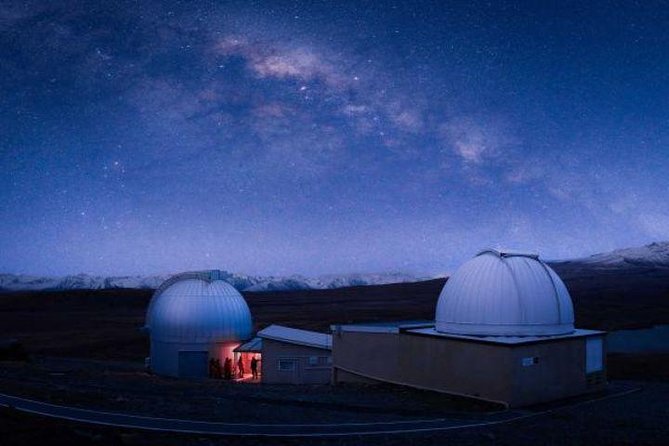
- Summit access with a real astronomy team: exclusive time on Mount John tied to the University of Canterbury research setting.
- Laser-guided “learn the sky” observing: you’ll point at constellations and features while you get the science and stories.
- Telescopes used for real targets: reviews mention views like the moons of Jupiter and star clusters.
- Cold-weather kit included: extreme cold weather jackets are provided, because the summit gets properly chilly.
- Dark-sky discipline is part of the deal: expect rules about avoiding white light and staying close to the guide in the dark.
- A small-group feel: caps are tight, with a maximum of 22 people per time slot and the activity noting up to 30 travelers.
The Dark Sky Reserve effect on Mount John
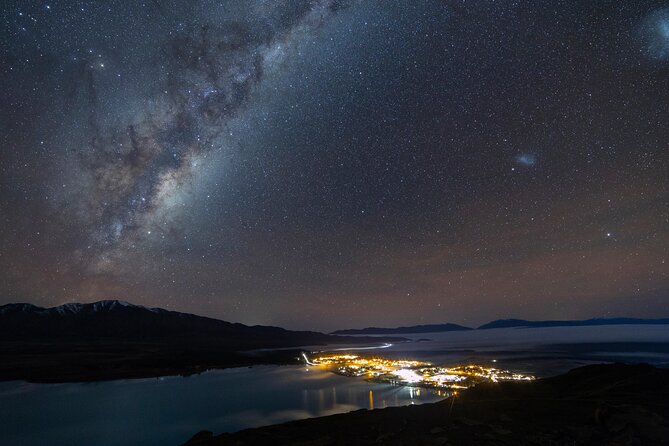
Tekapo is already a great place to look up, but Mount John is where it gets serious. You are on the 1,029m peak overlooking lakes and mountain country, and the sky here is protected by the International Dark Sky Reserve designation. That matters because dark skies are not just a vibe, they make faint objects easier to spot and keep the night experience feeling calm instead of chaotic.
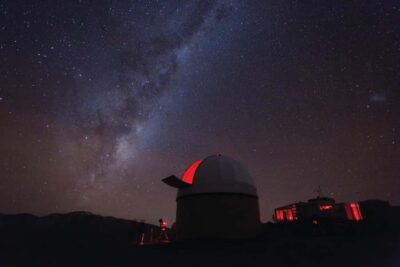
Also, this is not random campsite stargazing. You’re at an astronomical research center, in partnership with the University of Canterbury. That “real facility” tone shows up in how the night is run, with expert-style explanations paired to what the sky is doing above you.
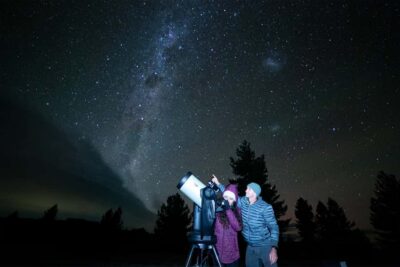
What I like about the whole setup is that it respects beginners. You do not need a star map app, or a background in astronomy. The guides use laser pointers to show you what you should look for, then the telescopes bring out detail when the sky cooperates.
More Stargazing Tours in Mount Cook & Lake Tekapo
- Lake Tekapo: Alpine Stargazing Experience with a Guide
★ 4.5 · 626 reviews - Lake Tekapo: Stargazing Experience
★ 4.9 · 607 reviews - Chameleon Stargazing Shared Tour
★ 5.0 · 181 reviews
Price and what $139.39 buys you in Tekapo
At $139.39 per person for about 1 hour 45 minutes, you are paying for three things that are hard to DIY well. First, you get transportation from Tekapo township up to the summit and back. Second, you get admission access to the summit observatory experience. Third, you get guided interpretation, plus telescope viewing through observatory equipment.
You also get practical gear: extreme cold weather jackets are provided. That sounds like a small line item, but it is a big comfort factor when you’re standing outdoors in the Southern Alps region.
If you are comparing this to self-guided stargazing, the difference is time and guidance. Doing it on your own can be cheap, but you’ll likely spend your effort figuring out what you’re seeing, not learning it. Here, you’re paying to skip the guesswork and spend the time looking.
Stop 1: Check-in with Dark Sky Project in Lake Tekapo
Your night starts with checking in with the Dark Sky Project team in Lake Tekapo. From there, you are transported up to Mount John, 1,029m above Tekapo, overlooking the surrounding mountains and lakes. This first step is short, about 15 minutes, but it sets the tone and gets you organized before you step out into the dark.
You’ll also hear the practical reality of the evening up front: this experience depends on the night sky being in good shape. That matters because cloud cover can change everything, fast. Some nights still work, even if things are not perfectly clear, but you should go in ready for “weather happens.”
The stop includes an admission ticket at this stage. You get a mobile ticket, which is a nice low-friction detail when you are juggling dinner, packing layers, and travel schedules.
Stop 2: University of Canterbury summit viewing with laser pointers and telescopes
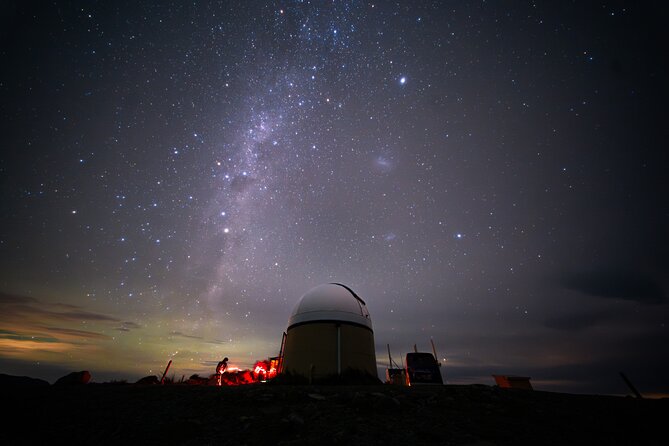
The main event happens at the University of Canterbury Mt. John Observatory on the summit. Here, you get an exclusive summit experience with a guide who mixes educational storytelling and live observing. The session is about 1 hour 30 minutes, and it is built around the idea that you learn by looking.
More stargazing nights near Lake Tekapo:
- Lake Tekapo: Mountaintop Stargazing at Mount John Summit
★ 4.5 · 176 reviews - Silver River Stargazing Experience in Lake Tekapo
★ 4.5 · 106 reviews - Stargazing Experience at Cowan’s Private Observatory
★ 4.0 · 85 reviews - Dark Sky Indoor Maori Cultural Astronomy Experience
★ 4.5 · 70 reviews
Naked-eye stargazing first, then the telescopes
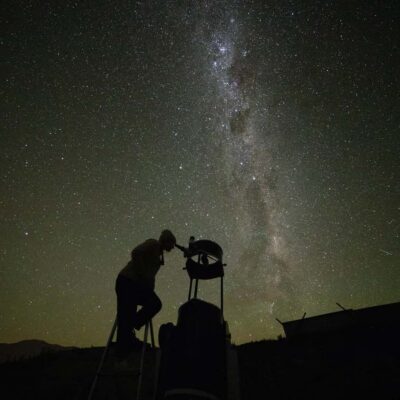
The flow is part of what makes this work. You start with guided naked-eye stargazing, using laser pointers so you can track the guide’s directions without losing your place. You’ll work on recognizing constellations and Southern Hemisphere features, including the Southern Cross.
One review also mentioned learning the difference between the fake southern star and the true southern star. That’s the kind of detail that is easy to miss if you are trying to figure things out alone.
Then, you move into telescope viewing with advanced observatory equipment. Reviews mention multiple telescopes, and at least one person specifically noted time using three telescopes. The whole point is to go beyond “I saw something bright” and get to “now I understand what that is.”
What you might see on a good night
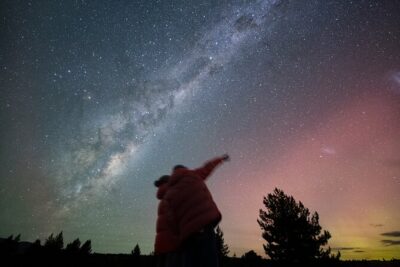
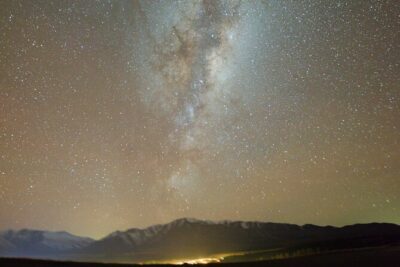
The sky changes from night to night, but the experience is designed around a few big hits: the Milky Way, far-off planets, star clusters, and constellations. You might even see something like a distant galaxy when conditions are right.
Reviews give you a sense of the kinds of targets that can come up, including the moons of Jupiter and a star cluster described as being from just after the Big Bang. Even if you never memorize the names, you’ll leave with a mental map of where those objects sit and why they matter.
Guide energy is a real part of the value
This is one of the most consistent strengths in feedback: guides are engaging, enthusiastic, and quick to explain. Names like Kieran, Alice, and Olive show up in reviews tied to memorable nights. That matters because stargazing is slow by nature. If your guide keeps things moving, you stay interested even when your eyes are adjusting to the dark.
What to wear, what to expect on the summit, and camera reality
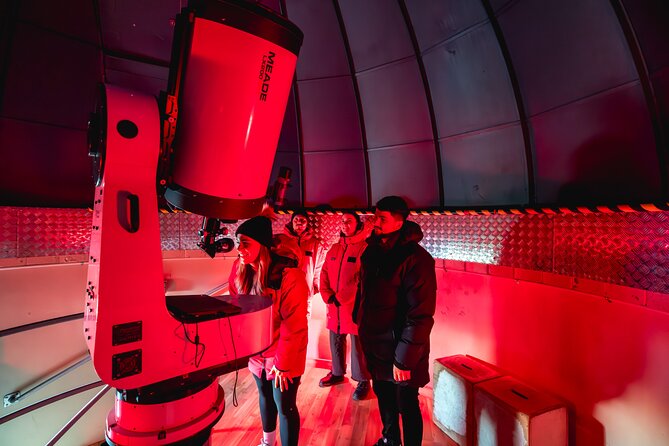
Let’s talk comfort, because the summit is cold. You’ll get extreme cold weather jackets, and that helps a lot. Reviews also say even in warmer seasons you should still dress in layers, because the wind and temperature up high can be brutal.
The dark-sky rules are also practical. One review notes you are not allowed to use white light or torches, and you should stay close to the guide and your group because it can be hard to see where you’re walking. So bring zero expectations of roaming freely with your flashlight.
On cameras, go with a humble mindset. One review said that if there is any wind at all, they will not take pictures for your camera. That’s not something you control, so plan to enjoy the experience as viewing first. If you get usable photos, great, but do not treat it like a guarantee.
Also, this is not the kind of tour I’d choose if you have mobility concerns. The experience is not recommended with travelers with mobility issues, and it takes place on a mountain summit setting.
Group size, language rules, and who this tour fits best
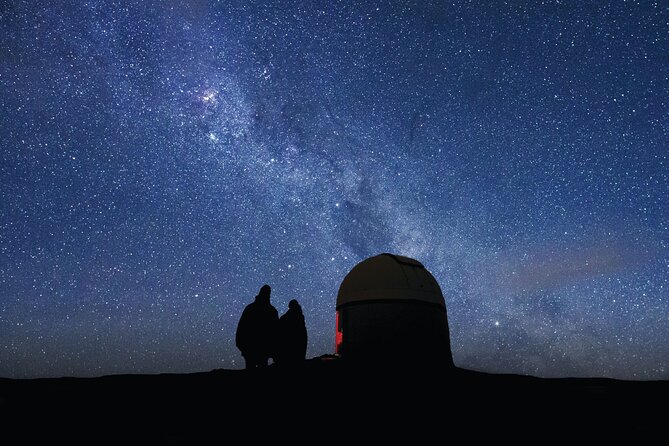
The experience runs with small group limits. The activity notes a maximum of 30 travelers, while also stating a maximum of 22 people per trip time. Either way, you should expect a more personal feel than large bus tours, which helps during the guided pointing and telescope rotations.
Language is a big deal here. Guides are offered in English and Mandarin, but the rules say you must speak the language of the tour for health and safety reasons. If you cannot, you will not be allowed to join. So when you book, double-check which language option you selected.
This experience is well suited for:
- Stargazing beginners who want context, not just pretty dots
- People who want a guided first look at Southern Hemisphere constellations
- Families where children can stay with an adult throughout the night
Children must be accompanied by an adult. If you are traveling with kids, this can be a good choice because the guide-led pacing gives you something to focus on besides waiting for stars.
Weather, clouds, and the indoor alternative trade-off
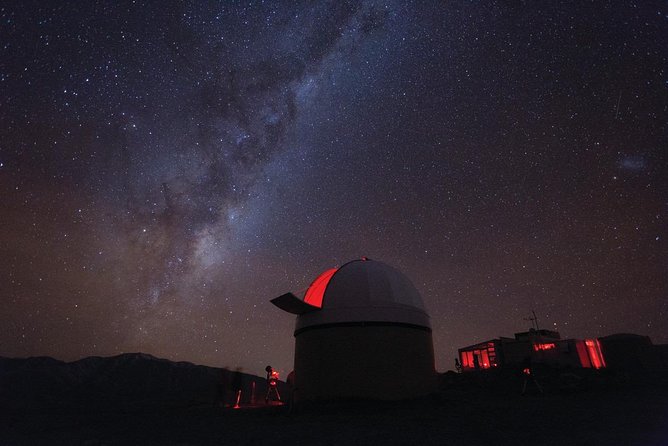
Weather is the controlling factor for any stargazing trip, and this one is no exception. The experience requires good weather. If weather prevents operation, you’ll be offered an alternate indoor experience as a substitute, and the cancellation terms also allow different dates or a full refund depending on what happens.
Here is the balanced reality from feedback: on some nights, even with cloud cover at times, guides still manage to show a lot of the sky by working around shifting conditions. On other nights, clouds can lead to full cancellation of the outdoor portion, and the indoor alternative may feel less impressive.
So my advice is simple: book it as one of your top priorities, but do not stack it as the only plan on your last night in Tekapo. Build in a bit of flexibility, and keep your layers ready either way.
If you can pick timing, one review suggested planning for a night without a full moon for better Milky Way visibility. You can also take that idea into your decision-making: the darker the sky, the more faint detail tends to be visible.
My booking advice for Mount John Stargazing in Tekapo
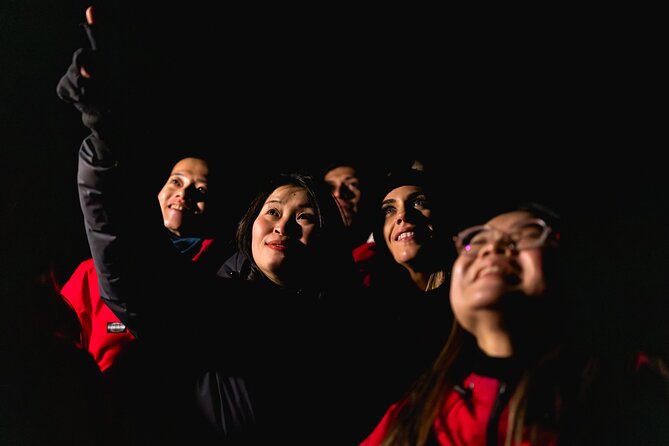
If you want a guided, structured stargazing night with telescope time and clear explanations, this is a strong pick. The value is not just the views, it’s the way the guides connect what you see to what it means, using laser pointers and live telescope viewing at a real observatory.
I would book it if:
- You are excited by the Milky Way and Southern Hemisphere constellations
- You like learning while you watch, even at night
- You want warm gear included and simple round-trip transport from Tekapo
I would think twice if:
- You are highly sensitive to disappointment from weather cancellations
- You rely on moving around freely in the dark without following rules
- You need mobility-friendly access on a summit setting
- You do not speak the selected tour language
In short, if your schedule can handle a weather swing, the Mount John Observatory experience is exactly the kind of activity that makes Tekapo feel special. You’ll leave with a clearer map of the southern sky, and likely a new habit of looking up when you travel.
FAQ
How long is the Mount John Observatory stargazing experience?
It runs for about 1 hour 45 minutes (approx.), with roughly 15 minutes for the transport and check-in stage, plus about 1 hour 30 minutes at the summit for the guided stargazing.
Where do I check in before going up to Mount John?
You check in with the Dark Sky Project team in Lake Tekapo, then you are transported up to the summit of Mount John.
What languages are offered, and do I need to speak the tour language?
Guides are available in English and Mandarin. You are required to speak the language of the tour for health and safety purposes, and if you cannot, you will not be allowed to join.
Do I get a chance to use telescopes during the tour?
Yes. Telescope viewing through advanced observatory equipment is included, along with guided naked-eye stargazing with laser pointers.
Will I be warm enough on the summit?
Extreme cold weather jackets are provided. Reviews also recommend dressing in layers, since it can stay freezing even in seasons that are not peak winter.
What happens if the weather is cloudy?
If weather prevents the tour from operating, an alternate indoor experience may be offered. You may also be offered a different date or a full refund, depending on how the cancellation is handled.
Is this experience suitable for families and kids?
Most travelers can participate, and children must be accompanied by an adult. The tour is not recommended for travelers with mobility issues.
Just added near Lake Tekapo
- Tekapo Star Gazing Tour – Soak in the Stars★ 4.5 · 109 reviews
- Mt Cook Day Tour From Tekapo (Small Group, Carbon Neutral)★ 4.5 · 11 reviews
- Silver River Stargazing Experience in Lake Tekapo★ 4.5 · 106 reviews
- Scenic 4WD Tour Lake Tekapo Backcountry★ 5.0 · 77 reviews
- Lake Tekapo Scenic Wilderness Cass Valley Tour★ 4.5 · 19 reviews
- Lake Tekapo to Mt Cook One-Way Small Group Tour★ 4.0 · 5 reviews
- Day Trip: Lake Tekapo to Mt Cook National Park★ 4.5 · 31 reviews
- Lake Tekapo Ultimate Stargazing Experience★ 5.0 · 3 reviews
Stargazing Tours in Mount Cook & Lake Tekapo, compared.
Silver River Stargazing Experience in Lake Tekapo
Read our review →
Stargazing Experience at Cowan’s Private Observatory
Read our review →
Dark Sky Indoor Maori Cultural Astronomy Experience
Read our review →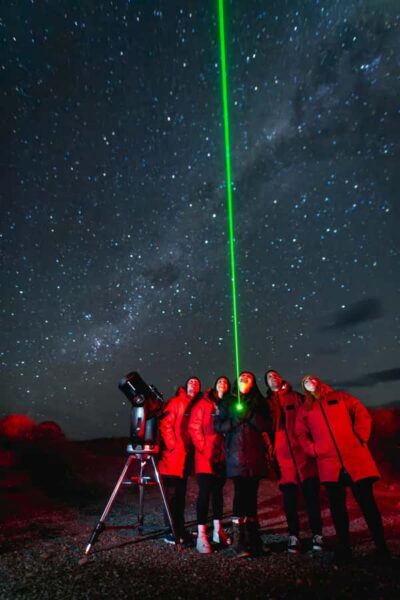
Browse the lists this tour appears in