REVIEW · WORKSHOPS
Beginner Surf Lesson at Te Arai Beach
Your first wave starts on soft sand. At Te Arai Beach near Omaha in Auckland, you get a beginner-focused lesson paced to the tides, so you’re not just paddling around hoping for the best. You start on land, learn key safety points, then move into the water when conditions are set up for first-timers.
I love how this lesson keeps things simple and structured, from board basics to paddling and your first pop up. The small group setup, up to 12 people, also means the instructor can spot what you’re doing wrong and fix it fast, including calmer, confidence-building coaching you might see with instructors like Locke and Lydia.
One thing to plan for: transport to the lesson is not included, and the experience requires good weather, so it may shift if conditions are poor.
In This Review
- Key things to know before you go
- Te Arai and Omaha for beginners, why this is the right Auckland surf start
- Meeting point and timing, what your 2 hours actually feel like
- Gear check and safety, the part that makes you less nervous
- Beach basics to paddling, learning the skills in the right order
- Getting into the water, first wave coaching without the drama
- Souvenir photos and videos, how you turn one lesson into motivation
- Price and value, what you’re really paying for at $49.03
- Who should book this beginner surf lesson
- How to get the most out of your lesson
- Should you book Saltwater Eco’s beginner lesson at Te Arai?
- FAQ
- How long is the beginner surf lesson at Te Arai Beach?
- What does the lesson cost?
- What’s included in the lesson?
- Are photos or videos included?
- How many people are in the group?
- What if the weather is bad, or I need to cancel?
Key things to know before you go
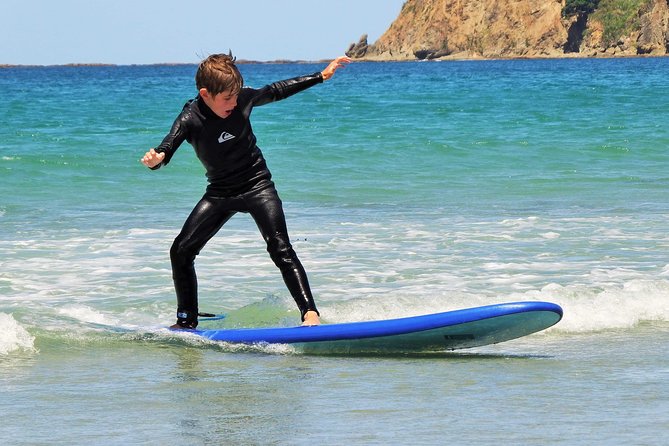
- Tide-timed sessions help match beginner surf conditions to the lesson flow
- Small groups (max 12) keep the instruction targeted, not generic
- Wetsuits and surfboards are included, so you can show up and go
- You practice on the beach first, then add the ocean skills step by step
- Souvenir photos and videos capture your first-wave moment
Te Arai and Omaha for beginners, why this is the right Auckland surf start
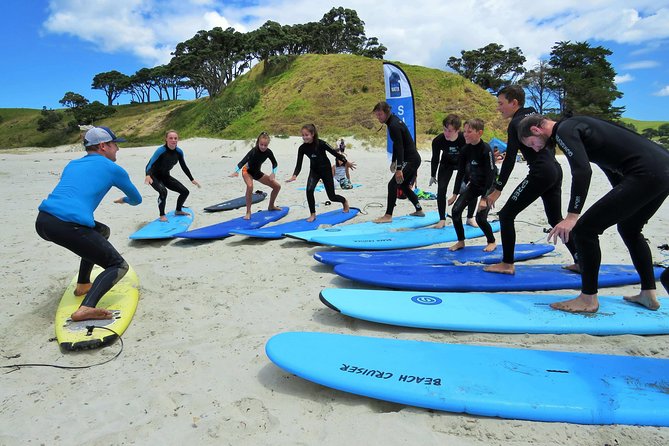
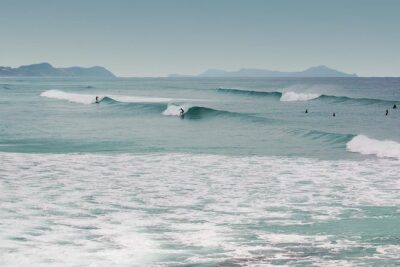
If you want to learn to surf in Auckland without making it complicated, Te Arai Beach (near Omaha) is a smart place to begin. The area is known for beginner-appropriate surf, and the goal here is not performance surfing. It’s confidence. The lesson is built around the idea that you learn fastest when you combine short instruction with immediate practice.
The other big reason I like this setup is the timing. The lesson times are tuned to the tides, which matters more than most people expect. Beginner surfing is hard enough. When the timing is right, you can focus on paddling, positioning, and popping up, instead of wrestling the water.
Also, this is a short, approachable format. It’s about two hours, so you can fit it into a day trip from central Auckland. You get enough time to learn core skills, then walk away with footage and a sense of what to practice next.
A few more Auckland trips worth comparing
- Wētā Workshop Unleashed Tour – Auckland
★ 4.5 · 903 reviews - Auckland: Wētā Workshop Unleashed Guided Tour Ticket
★ 4.6 · 406 reviews - 2 Hour Surf Lesson – Te Arai Beach
★ 5.0 · 119 reviews
Meeting point and timing, what your 2 hours actually feel like
You meet at 708 Te Arai Point Road, Te Arai 0975. The activity ends back at the meeting point, so you don’t need to worry about getting back from the beach on your own.
The lesson runs in a window of 11:00 AM to 1:00 PM (based on the activity hours listed), and the actual surfing moment is planned around tide timing. That means your schedule may feel like this: meet, gear up, safety and skills on sand, then a move into the water when it makes sense.
This is also why showing up on time matters. If you’re late, you shorten your practice time. And with surfing, practice time is the whole game.
Transport is the only real “logistics catch.” Transport to the lesson location is not included, so you’ll want to arrange your ride, or use whatever local options work best for you that day. If you’re visiting from the city, plan for a bit of driving time and allow buffer time.
Gear check and safety, the part that makes you less nervous
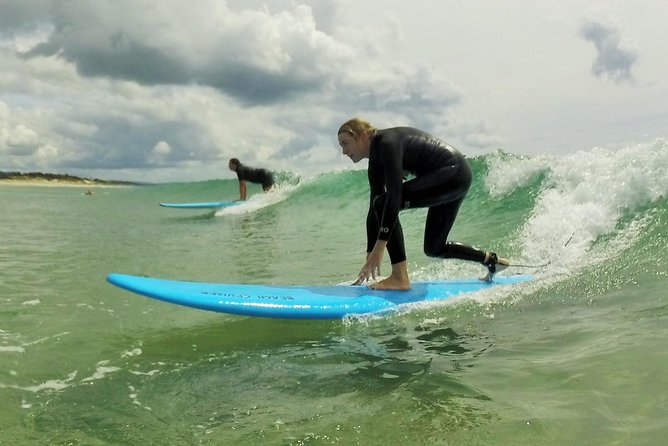
Before you touch the ocean, you’ll do water and beach safety, plus equipment basics. This is not the boring stuff you skip. It’s what keeps the day fun.
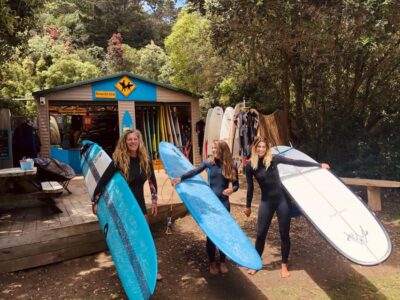
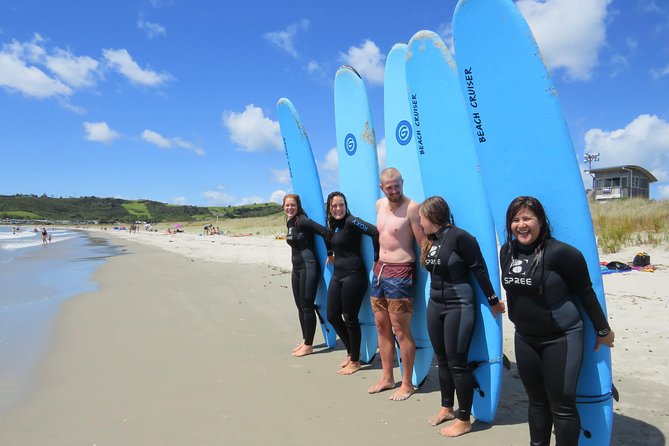
You’ll get a wetsuit and a surfboard as part of the lesson. For most first-timers, that alone is a win. Trying to learn in rental gear you don’t fit, or showing up without the right setup, turns a beginner lesson into an exercise in frustration.
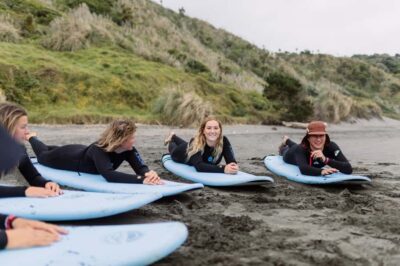
What I appreciate about this lesson flow is that it starts on land and in shallow context before you go full commitment into waves. You practice the parts that are repeatable: how to hold and use your board, how to manage yourself in the water, and how to build the movement sequence for standing up.
Instructors also tailor coaching to your ability and fitness. That matters because surfing looks like one skill from far away, but it’s really a chain of smaller movements. If you can’t paddle well yet, you need different cues than someone who can. If you’re nervous, you need reassurance and simpler tasks first.
Beach basics to paddling, learning the skills in the right order
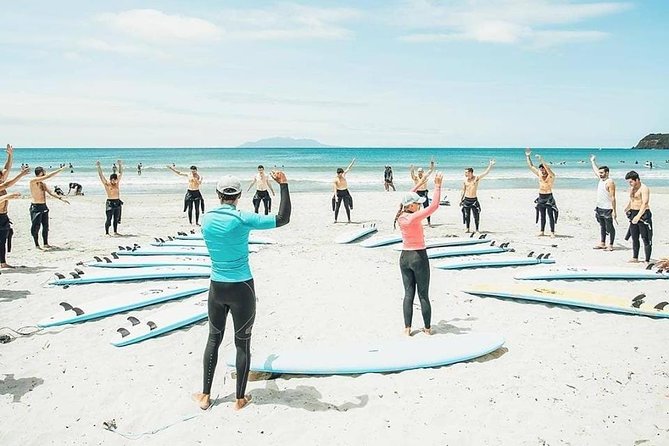
A good beginner lesson has a secret weapon: it teaches you the steps in the right sequence. This one does.
You’ll work on paddling techniques first. That’s the engine room of surfing. If you can’t get moving with control, catching waves becomes luck. By learning a technique (instead of just flailing), you give yourself a real chance to get in position.
Then you build toward the Pop Up. The pop up is where many beginners freeze. Your lesson focuses on what to do, and how to do it effectively for your body and fitness level. You’re not trying to copy a fancy stance. You’re trying to stand up without face-planting and without losing control of the board.
This is also where the small group size pays off. When you’re in a group of up to 12, instructors can actually watch what you do, not just give general pointers from a distance. That kind of real-time correction is exactly what you want when learning new muscle memory.
If you’ve got kids or teens in your group, this pacing tends to work well because they’re not stuck watching for long stretches. They’re practicing, resetting, and trying again. You can see that in how lessons have helped younger surfers progress quickly with patient coaching, including instructors like Locke, who’s known for keeping first-timers calm and moving.
Same island, a completely different day:
- Waiheke Island: Ferry & Hop-On Hop-Off Explorer Bus Tickets
★ 4.6 · 3,311 reviews - Hobbiton & Waitomo Caves Guided Day Trip from Auckland incl lunch
★ 5.0 · 2,677 reviews - From Auckland: Hobbiton & Waitomo Caves Day Trip with Lunch
★ 4.9 · 2,505 reviews - Auckland Dolphin and Whale Watching Eco-Safari Cruise
★ 4.5 · 1,790 reviews
Getting into the water, first wave coaching without the drama
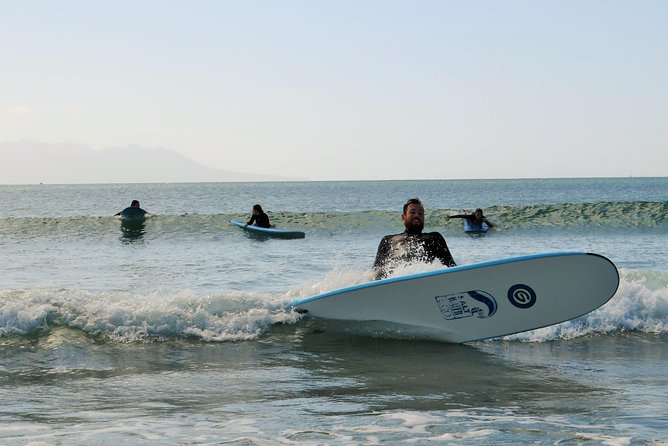
When you finally go into the ocean, the lesson shifts from technique to timing and positioning.
Since lesson times are planned around the tides, you’re more likely to hit a window where beginner wave conditions are workable. That matters because beginner mistakes are normal. People will fall. Boards will get away. It happens. The difference between a frustrating day and a fun first surf lesson is whether the water gives you a fair chance to try again.
Instructors focus on effective surfing technique for your ability. In a practical sense, that means you get guidance that matches what you’re actually doing in the water right then. If you’re falling too early, you get cues about balance and timing. If you’re paddling but not catching, you get cues about angle and where you sit relative to the wave.
The teaching style also matters for confidence. From what I’ve seen in how this team operates, the vibe is supportive, patient, and very focused on progress. Instructors like Lydia and Kirsty are associated with a calm, encouraging approach that reduces the fear factor for solo beginners and nervous kids.
And yes, it’s still the ocean. Some people go in expecting instant success and instead meet water reality. But the lesson is built so that getting one solid ride is within reach, even if you’re brand new.
Souvenir photos and videos, how you turn one lesson into motivation
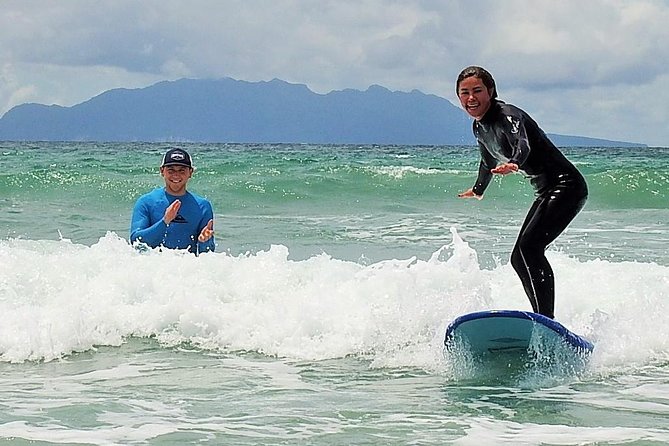
Most beginner lessons end with a good memory and a blurry selfie attempt. This one includes souvenir photos and videos of your lesson. That’s not a random perk. It’s a learning tool.
When you can see what happened, you understand your next step faster. Was your pop up late? Did you point the board too high or too low? Were you starting your paddling too far from the action? You get the visual feedback that helps you improve when you practice later.
It also makes the day feel worth capturing. If you’re doing this as a family activity, the footage becomes instant proof that your kid actually stood up. For first-timers, it turns uncertainty into something you can point to later when you’re thinking about going back for another session.
Price and value, what you’re really paying for at $49.03
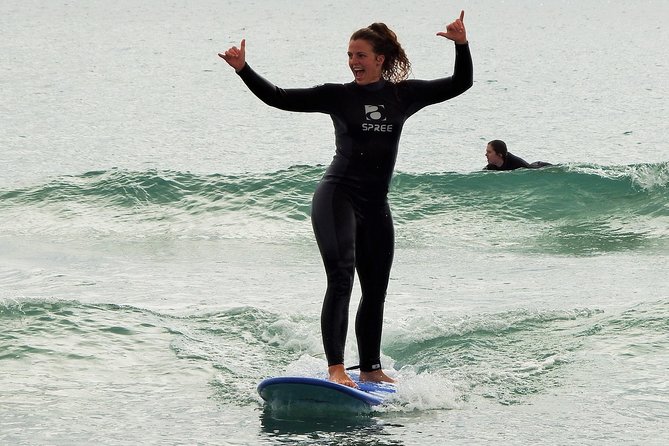
At $49.03 per person for an approximately two-hour lesson, the value is strong when you consider what’s included.
You’re paying for:
- Instruction that’s tailored to beginners, not a one-size talk
- Equipment access, specifically a surfboard and wetsuit
- Tide-aware lesson timing
- Souvenir photos and videos
The equipment part is the clearest value driver. Surfboards and wetsuits are not free, and for beginners, getting the right fit and setup matters. Even if you already own a board, a beginner surf lesson is still about coaching and safety, not just having gear.
Also, the small group size matters. If you’re used to tours where you get general pointers and then lots of waiting, this format gives you more chances to learn. More coaching per person usually means better learning per hour.
So for Auckland visitors, it’s a cost-effective way to try surfing without needing to commit to gear right away. And for locals, it’s a structured refresher if you want to clean up fundamentals.
Who should book this beginner surf lesson

This is a good fit if you:
- Want your first surf experience, and you want it guided
- Prefer a calm, supportive learning environment
- Appreciate step-by-step teaching, beach basics first then ocean skills
- Are planning a day trip around Auckland and want something active but short
It’s also a solid option for families. In practice, this kind of lesson works well for kids because the session is paced and the group format keeps them engaged. The skill goals are clear, like paddling, pop up basics, and water safety, so younger surfers know what they’re trying to do.
If you’re traveling solo and nervous, you’ll probably feel better in a group of up to 12 with an instructor who focuses on first-timer technique. Surfing is intimidating when you feel like everyone is watching. Here, the instruction is meant to get you moving quickly.
If you’re hoping for transport included, then adjust expectations. Transport to the lesson location is not part of the price, so plan your ride ahead. And if you’re booking during a stretch where weather is iffy, remember the experience requires good weather, so you may need flexibility.
How to get the most out of your lesson
Want better results in your two hours? Do these simple things:
- Arrive ready to change and get into the wetsuit. The smoother your gear change, the more you surf.
- Listen closely during the safety and beach setup. Those instructions often save you from common beginner mistakes.
- Think of each attempt as practice, not failure. Surfing teaches you through repeats.
- After you get the photos and videos, use them. Watch once, then go back to the one thing you want to fix next.
If you’re traveling with a group, coordinate your timing. One person late can throw off the whole flow, especially when lessons are tide-timed.
Should you book Saltwater Eco’s beginner lesson at Te Arai?
Yes, if you want a structured first surf session with real beginner coaching and equipment included. The combination of tide-timed learning, small groups up to 12, and wetsuits and boards included makes this feel like a practical first step, not a pricey gamble.
Skip it only if you cannot make it work logistically, because transport isn’t included and the lesson depends on good weather. Also skip if you’re looking for a long, full-day experience. This is about two hours of focused basics, not all-day exploring.
If you’re on the fence, book it. Learning to surf is one of those activities where the difference between thinking about it and doing it is huge. This lesson is designed to get you from anxious beginner to riding your first wave, then leaving with something you can rewatch and practice.
FAQ
How long is the beginner surf lesson at Te Arai Beach?
It lasts about 2 hours.
What does the lesson cost?
The price is $49.03 per person.
What’s included in the lesson?
The lesson includes surf equipment, specifically a surfboard and a wetsuit.
Are photos or videos included?
Yes. Souvenir photos and videos of your lesson will be provided.
How many people are in the group?
The maximum group size is 12.
What if the weather is bad, or I need to cancel?
The experience requires good weather. If it is canceled due to poor weather, you’ll be offered a different date or a full refund. You can also cancel for a full refund if you cancel at least 24 hours before the experience’s start time.
Just added near Auckland
- Black Abyss: Ultimate Waitomo Caving – Private Tour from Auckland★ 5.0 · 17 reviews
- Bay of Islands Private Tour★ 5.0 · 17 reviews
- 6 Hours Sightseeing Tour in Auckland★ 5.0 · 160 reviews
- Bay of Islands 2-Day Small Group Tour & Cruise from Auckland★ 5.0 · 33 reviews
- Beautiful Nature Tours Auckland – Private Tour★ 5.0 · 10 reviews
- Private Tour: Bay of Islands Day Trip from Auckland★ 4.0 · 6 reviews
- Bay of Islands Explorer Experience Small Group Tour From Auckland★ 5.0 · 8 reviews
- Bay of Islands Heritage Experience from Auckland incl. Waitangi & Russell★ 5.0 · 10 reviews