
REVIEW · HIKING & TREKKING
Tongariro Alpine Crossing: Premium Guided Hike
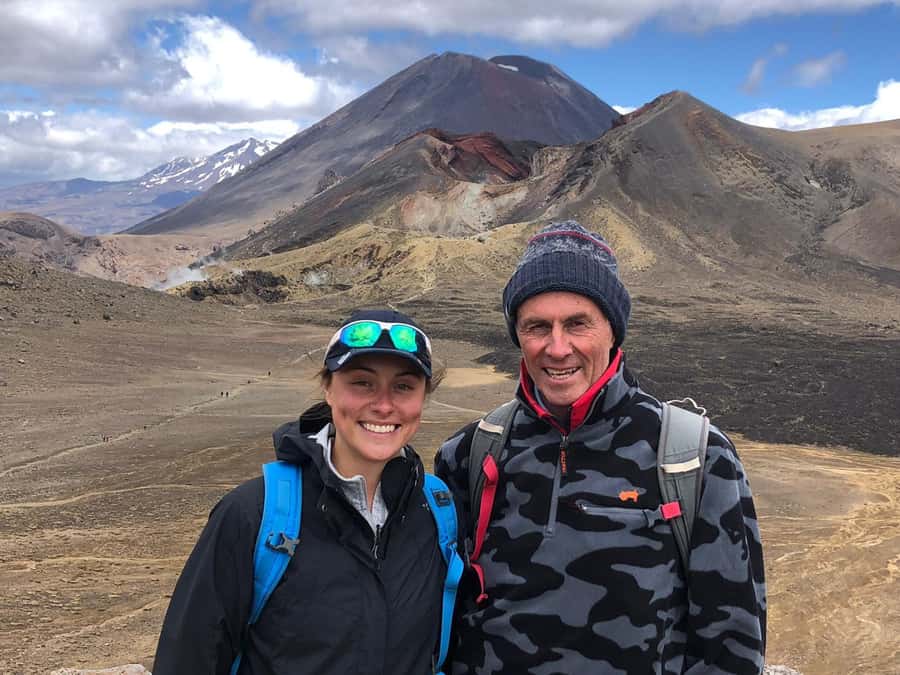
Volcano colors and big effort, one day only. The Tongariro Alpine Crossing takes you between Mt. Ngauruhoe and Mt. Tongariro, past crater terrain plus the Blue and Emerald Lakes, with a guide helping you handle changing conditions. I love the way the hike blends dramatic volcanic scenery with stretches of native bush, and I also love the hands-on support, including crampons and ice axes if winter weather calls for them. One drawback to plan for up front: the exact route and how far you go can change with wind, ice, avalanche risk, or hypothermia concerns, so reaching the Ketatahi end is not guaranteed.
The good news is you do not need prior alpine experience. You get training on the day, pace guidance for a steady climb and a safe descent, and options to help different fitness levels move together. I’d still treat this as a tough hike, especially if you get nervous in exposed spots like the gorge area where wind can pick up fast.
In This Review
- Key things I’d focus on before you go
- Tongariro Alpine Crossing: what makes it worth a guided hike
- Starting at Adrift Tongariro: the 9-hour day rhythm
- The core walk: between Mt Ngauruhoe and Mt Tongariro
- Blue and Emerald Lakes: why those colors matter
- Crater terrain and the red rock moments
- Mt Ngauruhoe, Mt Tongariro, and the view shifts you cannot control
- Weather, wind, and the gorge area: how the day can change
- How hard is it: fitness, fatigue, and the tricky descent
- Gear and what to pack: summer vs winter in plain terms
- Summer packing priorities
- Winter packing priorities
- Price and logistics: where the $254 really goes
- Who this hike suits best, and who should think twice
- Should you book this Tongariro Alpine Crossing premium guided hike?
- FAQ
- How much does the Tongariro Alpine Crossing premium guided hike cost?
- How long is the guided Tongariro Alpine Crossing?
- Where does the tour meet?
- Is lunch included?
- Do I need prior alpine experience?
- Are crampons and ice axes included?
- Is reaching the Ketatahi end guaranteed?
- What is included in the price besides the guide?
- Are return transfers from nearby towns included?
Key things I’d focus on before you go
- A guided line through the popular parts, with alternative paths used to reduce crowd pressure without skipping the famous sights
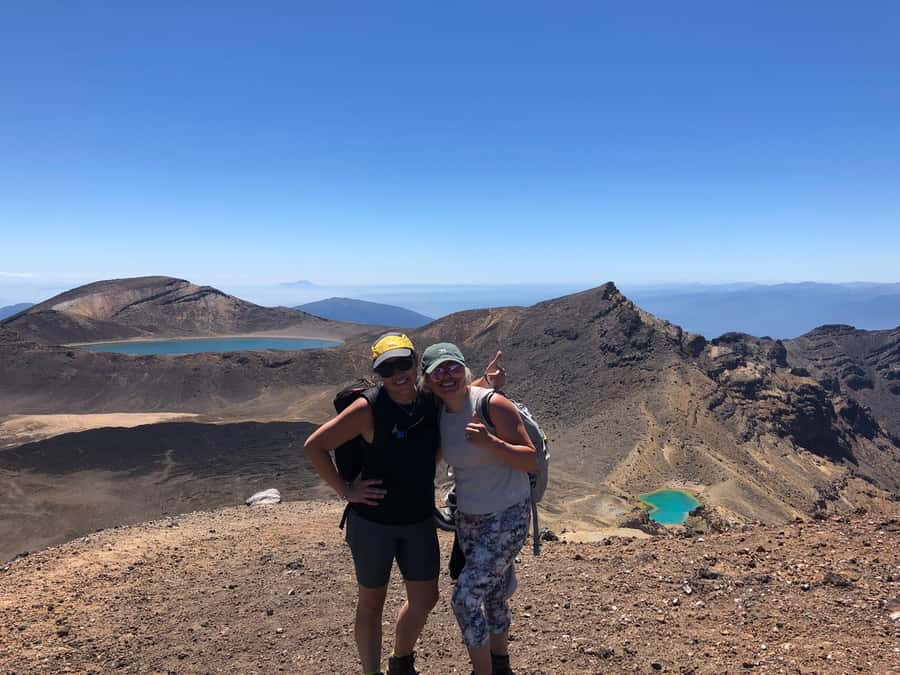
- Blue Lake and Emerald Lakes for that mineral color you only get here, plus springs and crater-wall views along the way
- Winter-ready systems: crampons and ice axes can be supplied if required for conditions
- Wind and weather can rewrite the day, including possible route changes and sometimes shortened completion
- Guides actively support you, from pacing help for first-timers to practical fixes when cramps or nausea hit
Tongariro Alpine Crossing: what makes it worth a guided hike
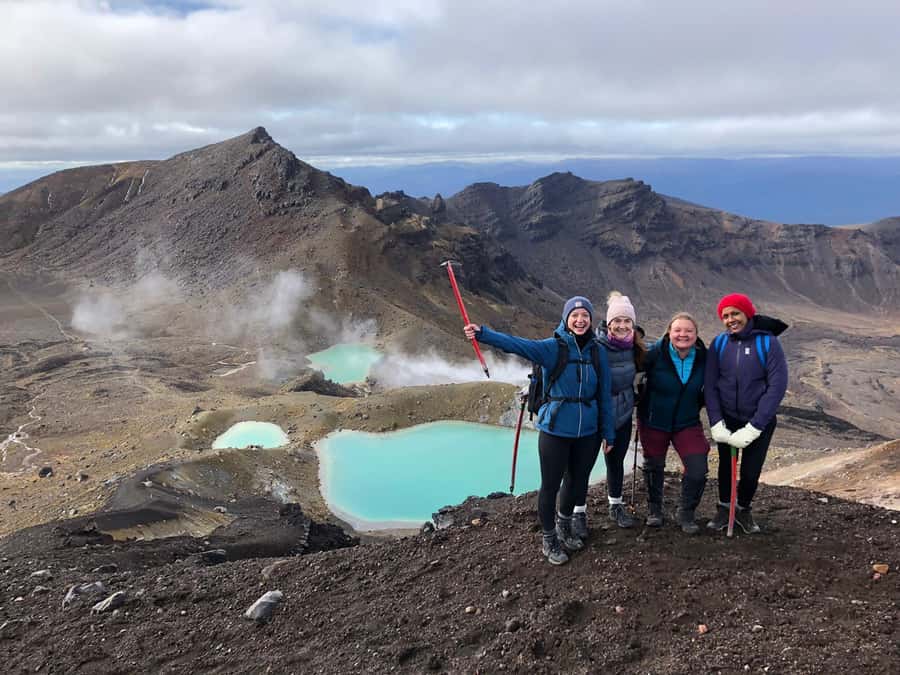
Tongariro Alpine Crossing is one of New Zealand’s most famous one-day hikes, and it earns that reputation. You are walking across volcanic ground with mineral-stained craters, scoured rocks, mountain springs, and those unreal near-jewel lake colors. The big reason to choose a guided premium option is not just convenience. It is the way your guide manages risk and flow when weather shifts, wind strengthens, or the trail gets icy.
I also like that the hike is not treated like a rigid marching drill. The operator plans alternate paths so you can still experience the key sights while aiming to escape the heaviest crowd pockets. That matters on a trail as famous as this, because it is not the view that makes or breaks your day, it is how long you spend waiting and how steady your footing feels.
Finally, the guide component is what turns this from a tough hike into a safer, more learnable experience. Guides share what you are looking at, including volcanic-material explanations tied to minerals like sulphur, aluminium, silica, and others. On my last day on this track in my notes, I kept thinking about how much more sense the scenery makes once you know what formed it and why colors change from section to section.
More hikes near Taupo:
- Premium Mt Ruapehu Summit Plateau Guided Group Hike
★ 5.0 · 9 reviews - Franz Josef Glacier Heli-Hike
★ 4.5 · 618 reviews - Heli Hike Fox Glacier
★ 5.0 · 563 reviews
Starting at Adrift Tongariro: the 9-hour day rhythm
Your day starts at Adrift Tongariro base and shop at 53 Carroll Street in National Park. The hike itself runs about 8 hours, wrapped by van transport that totals around 25 minutes each way.
That timing is useful for planning your rest of the trip. You are not just committing to a “morning walk.” You are committing to a full day with real movement time on the trail plus a buffer for gear checks and group management. It also means you should come fed and hydrated, because once you’re moving, the focus becomes your footing and breathing, not finding energy later.
Language is English, so you can expect your guide’s explanations to be clear and practical, not just background storytelling.
The core walk: between Mt Ngauruhoe and Mt Tongariro
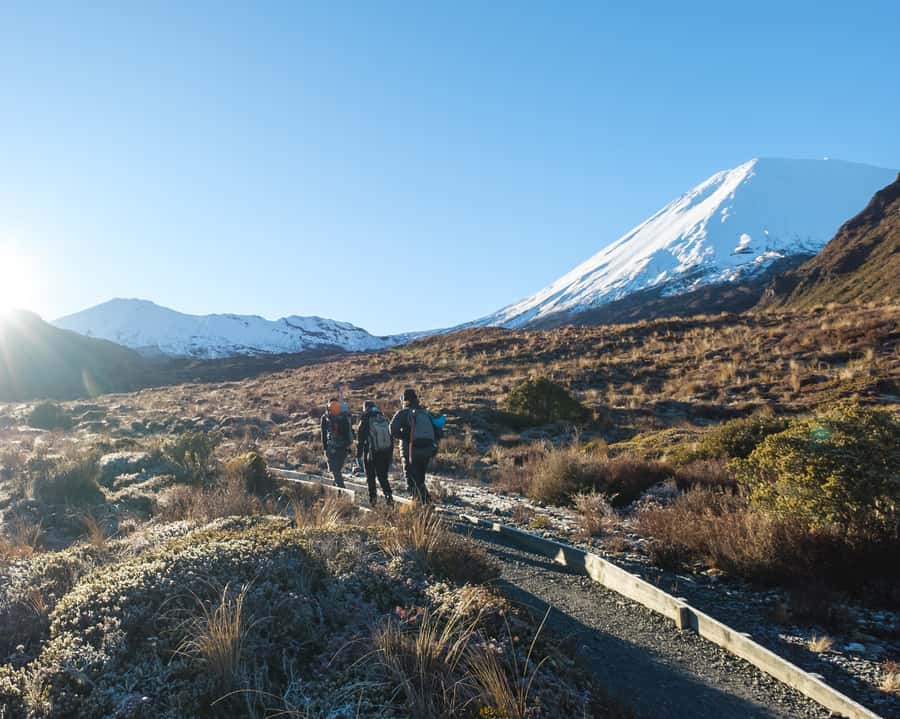
This is a traverse-style hike with big-name volcano scenery. The main promise is walking between Mt. Ngauruhoe and Mt. Tongariro, with views that connect you visually to the wider Tongariro volcanic system. As you move, you pass craters formed during different active periods, so the ground looks varied rather than repetitive.
What I’d want you to understand is that the guide is not there to point at the view and move on. Their job is to keep the group together safely while navigating terrain that can feel straightforward in one moment and slippery or exposed the next. That shows up in how you’re taught the trail approach, how breaks are timed, and how routes may shift if conditions deteriorate.
Also pay attention to the volcano lineup you’ll see from the trail area: Mt Ngauruhoe, Mt Tongariro, and Mt Ruapehu are part of the experience. Even if the light or clouds change what you see, those reference points help you mentally map where you are on the crossing and why the terrain feels like it belongs to a living system.
Blue and Emerald Lakes: why those colors matter
The Blue Lake and Emerald Lakes are not just photo stops. They are where you see the mineral story made visible. The lakes take on bright colors from mineral deposits released from within the Earth’s crust. Guides can explain how different materials help create the look, so you can stop thinking of the lakes as random shades and start seeing them as evidence.
These lake areas also act like emotional checkpoints. On a hike this demanding, those stops help you reset. You get a moment of less climbing, a chance to adjust layers, and time to drink water while your guide keeps the group moving.
If weather turns, lake sections can also become the most important time to manage your comfort. In strong wind or cold spells, your body energy gets diverted to staying warm, and you want to use every pause wisely, not waste it by underdressing.
A few more Taupo trips worth comparing
- Waikato River Jet Boat Ride from Taupo
★ 5.0 · 1,441 reviews - Lake Taupo: Classical Sailing to the Māori Rock Carvings
★ 4.8 · 1,275 reviews - Lake Taupō Māori Rock Carvings Scenic Cruise aboard Ernest Kemp
★ 4.5 · 901 reviews - Taupō: Huka Falls 30-Minute Jet Boat Experience
★ 4.8 · 759 reviews
Crater terrain and the red rock moments
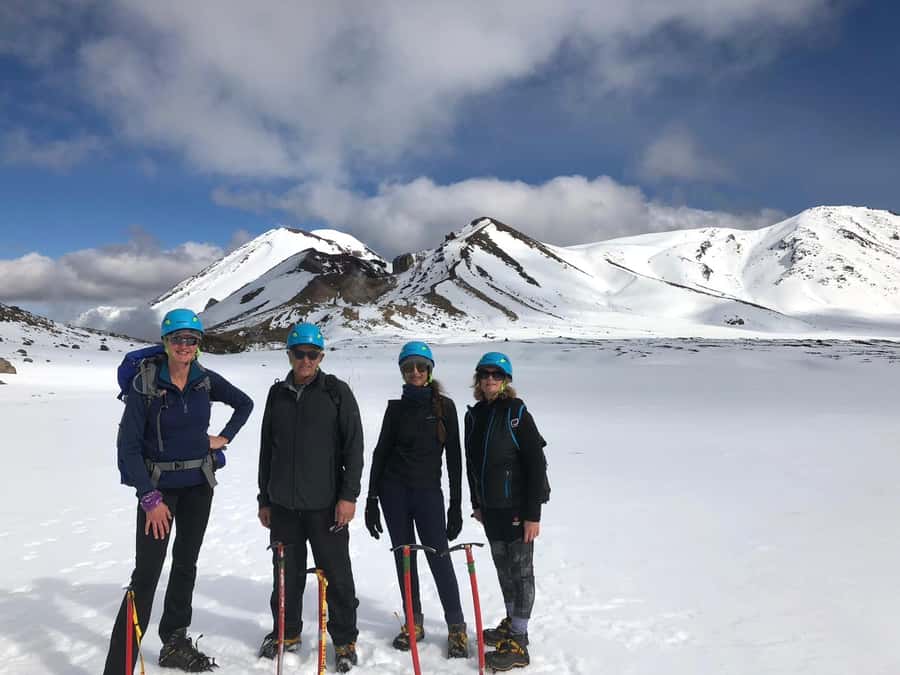
One of the most memorable parts of this crossing is the crater terrain, including stunning red craters. The red tones come from volcanic materials and mineral mixes, and the way the ground is carved and scoured gives you a close-up sense of how active this region has been.
This section of the hike can also be mentally intense because the terrain feels like it has rules you did not learn yet. That is exactly where having a guide helps. If you are new to hiking, you may not know how to distribute effort, when to slow down, and how to keep your pace consistent across different ground textures.
In the experiences I took notes on, the guides did more than keep people on the trail. They used pacing cues, taught small adjustments for fatigue, and kept morale steady on the long sections. One reason people rate this tour so highly is that support shows up where it matters, when legs start to burn or when weather makes everyone a little tense.
Mt Ngauruhoe, Mt Tongariro, and the view shifts you cannot control
Big volcano views come with a catch: the day can change. In good weather, you get those clear sightlines that make the crossing feel cinematic. In rough weather, clouds can hide the bigger peaks, and you may need to focus harder on the path itself rather than the horizon.
That is why guided routing is valuable. The operator considers safety and can secure the exact route for the day based on conditions like weather, ice, avalanche risk, and hypothermia. Some days you might get most of the crossing as planned. Some days you might not be able to complete everything to the Ketatahi end.
Even with changes, you still get what makes Tongariro special: the contrast between craters, scoured volcanic rock, mountain springs, and native bush sections, with the volcano names acting like a map for your eyes.
Weather, wind, and the gorge area: how the day can change
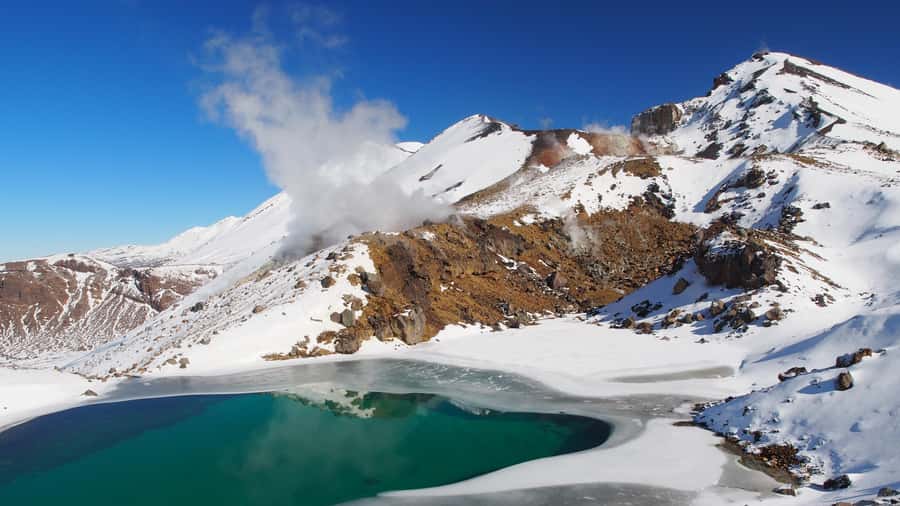
If you remember one thing, remember this: Tongariro is weather dependable in theory, but real weather is real. Guides plan routes with changing conditions in mind, and you should expect flexibility.
Wind is a specific issue. One review noted a gorge crossing where the wind can become very strong, and you only truly know once you’re up there. That’s a good reason to follow the guide’s spacing and instructions closely. Do not improvise if the conditions feel gusty and exposed.
You also might hear about days when other operators cancelled, while this team continued with modifications. On one very cold, storm-approaching day, a guide pushed the group ahead and finished in about 6 hours, but people still got soaked from a mix of rain and snow, even with rain gear. It is not meant to scare you. It is meant to help you dress like the worst hour can happen at any time.
Finally, reaching the Ketatahi end is not guaranteed. The operator explicitly factors weather and safety concerns, so if you are chasing a 100 percent completion goal on a tight schedule, you should discuss priorities with the team before you go.
How hard is it: fitness, fatigue, and the tricky descent
You do not need alpine experience, but you do need a reasonable fitness level. This is not a casual walk. Expect strenuous sections and a descent that can feel harder than the climb, especially when you are tired.
In real-life experiences captured from the trail, first-time hikers were able to finish, but it was not easy. One person described pushing through, being last in line at a point, and getting practical help like walking sticks plus snacks from other hikers and the guide. Another person mentioned quad cramps and appreciated quick, specific help from the guide with electrolyte gels and advice for walking to reduce cramping.
So here is my practical advice. If you have a history of cramps, knee pain, or stamina issues, tell the guide before you start. The operator says options can be discussed. Guides can pace the group differently, adjust how often you stop, and steer you along routes that are safer for that day’s conditions.
Also, plan to feel sore after. Even people who handled it well noted legs ache afterward. If you can, schedule a low-key day the day after the crossing.
Gear and what to pack: summer vs winter in plain terms
Good gear turns this into a manageable challenge. Bad gear turns it into a misery test.
The tour includes $60 of clothing and footwear hire, and crampons and ice axes can be supplied if required for winter conditions. That helps if you do not want to buy expensive cold-weather gear just for one hike.
But you still need to bring plenty. Here is what I think matters most, based on what the operator expects you to carry:
Summer packing priorities
- 1 to 2 litres of water
- warm layers, plus a windbreaker or waterproof raincoat
- sunscreen, sunglasses, and a sun hat
- hiking shoes or boots, and breathable clothing
- a packed lunch and snacks
- insect repellent
Winter packing priorities
- 1 to 2 litres of water
- thermal clothing and 3 warm top layers
- waterproof raincoat
- warm hat and gloves
- sunscreen and sunglasses
You should also bring a daypack, rain protection, and any personal medication you need. If you do not know what layer system works for you, aim for a mix that you can add quickly. Weather on Tongariro can shift dramatically, and once you get cold, you spend mental energy just trying to get warm again.
Price and logistics: where the $254 really goes
At $254 per person for a premium guided hike that runs about 9 hours, you are paying for several things at once:
- a live guide for the hike
- van transport between the Adrift Tongariro base and the activity area
- winter alpine gear support if required (crampons and ice axes)
- $60 clothing and footwear hire credit
Lunch is not included. Return transfers from Taupo CBD, Turangi, or Whakapapa Village are available at a surcharge, and the minimum is two people. If you are staying elsewhere, you may need to handle transport yourself.
So is it good value? For me, it is when you want the safety net and the storytelling plus weather flexibility. If you have solid hiking experience and already own appropriate cold gear for winter, you could technically go self-guided on some days. But for most people, the comfort comes from having a guide who plans for ice, wind, and route changes, and who helps you keep moving with less guesswork.
Also note that children under 12 years are not suitable. If you are traveling with family, this is likely not your best pick.
Who this hike suits best, and who should think twice
This guided crossing is for people who want the famous Tongariro experience but do not want to manage it solo. It suits:
- first-time hikers who can handle a strenuous hike with guidance
- hikers who want help navigating quickly changing conditions
- anyone who appreciates learning, including cultural context shared by guides like Ty, who shared Mauri culture insights during the walk
If you are very slow, very cautious about exposed sections, or you are traveling with companions who move at different speeds, consider asking about private options. One experience mentioned that the group could not complete the full walk due to conditions and slower members, and the person suggested a private tour if you are desperate to finish the whole thing.
If you are traveling alone, you can still book. The operator notes minimum numbers are generally met, especially on good weather days, so you are less likely to be left waiting for a group to form.
Should you book this Tongariro Alpine Crossing premium guided hike?
Yes, I think you should book it if your main goal is to experience Tongariro’s volcanic highlights with real safety planning and less trail stress. If you are the type who likes to understand what you’re looking at, guided support adds a lot. I also like that the team is explicit about route flexibility and why reaching the Ketatahi end is not guaranteed, because that honesty helps you plan realistically.
Wait or reconsider if you have an unusually tight schedule and cannot tolerate the possibility of a modified route. You should also only book if you are willing to pack for cold, wind, and sudden weather changes, even in summer. And take fitness seriously. This is a demanding hike, and your legs will judge you.
If you want a smooth day, show up prepared, follow the guide, and treat the crossing like a full-day effort rather than a casual checklist.
FAQ
How much does the Tongariro Alpine Crossing premium guided hike cost?
It is priced at $254 per person.
How long is the guided Tongariro Alpine Crossing?
The full experience runs about 9 hours, with an 8-hour guided guided tour and hike component.
Where does the tour meet?
You meet at Adrift Tongariro base and shop, 53 Carroll St, National Park 3948, New Zealand.
Is lunch included?
No, lunch is not included. You should bring a packed lunch and snacks.
Do I need prior alpine experience?
No alpine experience is required. Training and tuition are provided on the day.
Are crampons and ice axes included?
Crampons and ice axes are supplied if required for winter conditions.
Is reaching the Ketatahi end guaranteed?
No. Reaching the Ketatahi end is not guaranteed, and the exact route may change based on safety factors like weather, avalanche risk, ice, and hypothermia risk.
What is included in the price besides the guide?
Included items are the guide, transport between the base and the activity, winter alpine gear if required, and $60 of clothing and footwear hire.
Are return transfers from nearby towns included?
Return transfers from Taupo CBD, Turangi, or Whakapapa Village are available at a surcharge, with a minimum of 2 people.
Just added near Taupo
- Half Day Tongariro Alpine Guided Group Walk★ 4.5 · 16 reviews
- Premium Mt Ruapehu Summit Plateau Guided Group Hike★ 5.0 · 9 reviews
- Private Tongariro Crossing Guided Walk★ 4.5 · 26 reviews
- Tongariro Alpine Half Day Guided Group Walk★ 4.9 · 12 reviews
- Taupo: Huka Falls Helicopter Ride★ 5.0 · 9 reviews
- Taupō: Sail Barbary Eco Sailing to the Maori Rock Carvings★ 4.8 · 154 reviews
- Taupo: Maori Rock Carvings Kayaking Tour★ 4.8 · 130 reviews
- Taupō: Bungy Jump and Swing Combo★ 5.0 · 3 reviews
Hiking & Trekking, compared.
Queen Charlotte Track: Cruise & Self-Guided Hike from Picton
Read our review →
2.5 Hour Glacier Hike with Helicopter Transfer
Read our review →
Fox Glacier: Up to 3 Hours Hike with Helicopter Transfer
Read our review →
Rotorua Hiking: Mt Tarawera Guided Volcanic Crater Experience
Read our review →
Cardrona High Country Pub Trail Horse Trek (Intermediate level+)
Read our review →
Volcanic Valley Self Guided Walking and Hiking at Waimangu
Read our review →Browse the lists this tour appears in