
REVIEW · SKYDIVING
Skydive Mt. Cook – 45+ Seconds of Freefall from 13,000ft
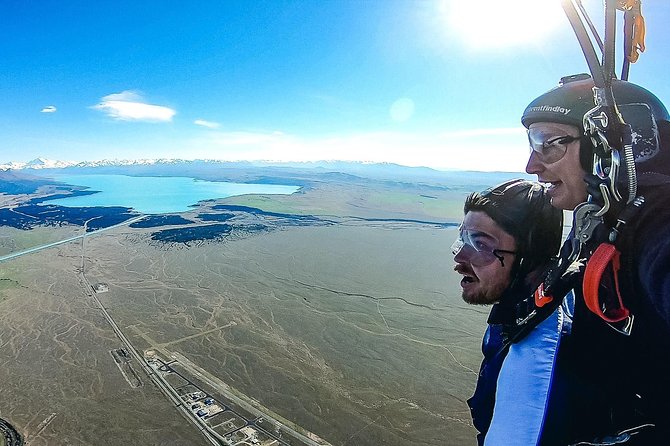
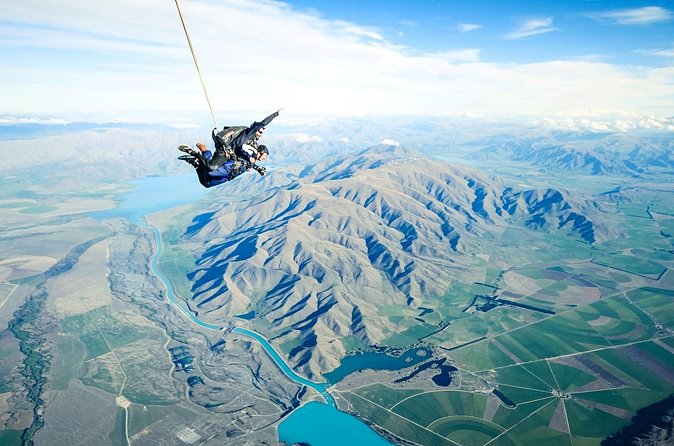
Mt Cook looks unreal from above. This skydive puts you over the South Island’s big-ticket views, with 45+ seconds of freefall starting at 13,000 ft.
I especially love the Pukaki setting. It’s made for sky-high mountain drama, and the team focuses hard on a calm, safety-first flow from arrival to final landing.
One consideration: the activity depends on good weather, and plans can be delayed or changed if conditions are not right. Also, it’s non-refundable if you cancel.
In This Review
- Key highlights you’ll feel the moment you arrive
- Pukaki Airport to Mt Cook National Park, one ride to the sky
- The jump spec that matters: 13,000 ft and 45+ seconds in freefall
- Views you can’t fake: glaciers, lakes, and the snowline above
- Safety culture you can feel in the pacing
- Price and value: why $266.23 can make sense here
- Timing is everything: plan for a weather decision
- Weight limits and surcharges, what to know upfront
- Mobile ticket and the kind of logistics that keep stress low
- Who should book Skydive Mt Cook, and who should rethink it
- Should you book Skydive Mt Cook?
Key highlights you’ll feel the moment you arrive
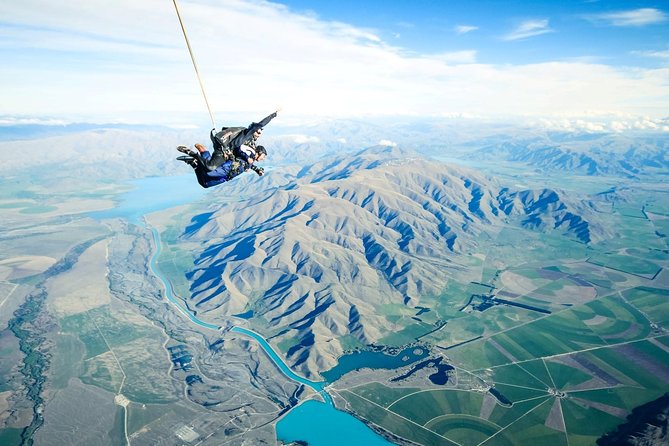
- 45+ seconds of freefall from 13,000 ft for a long, proper skydiving experience
- Pukaki Airport meeting point makes the day straightforward, with the activity ending back there
- Mt Cook National Park views including snow-capped mountains, glaciers, and lakes
- Safety-first tandem operation with time built in when the team decides you should not jump
- Max 9 travelers keeps the vibe from feeling too mass-market
- Weight limit and surcharges apply, with extra fees for 100 kg+
Pukaki Airport to Mt Cook National Park, one ride to the sky
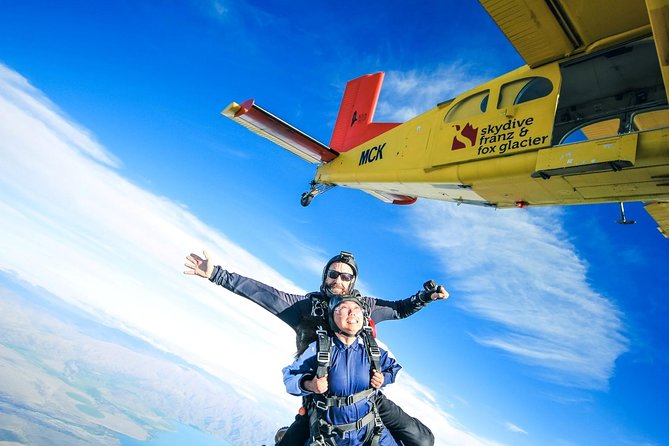
Skydive Mt Cook runs out of Skydive Mount Cook, 2 Swallow Drive, Pukaki Airport, Pukaki, Twizel 7999. That’s an important detail because the whole experience stays centered around one place, and you’re not bouncing between multiple stops.
You’ll spend the day at the drop zone area, and the experience finishes back at the meeting point. The total time is about 2 hours (approx.), which is a good fit when you want one big adrenaline hit without turning the day into a half travel saga.
The setting is part of the value. Pukaki is your launchpad for some of the South Island’s most recognizable scenery: Aoraki/Mt Cook National Park, glacier country, and lakes that look like they were painted. If you’re the type who loves seeing where the “name on the map” becomes real, this is built for you.
More skydives over Mount Cook:
- Skydive Mt. Cook – 20+ Seconds of Freefall from 10,000ft
★ 5.0 · 5 reviews - Skydive Mt. Cook – 70+ Seconds of Freefall from 16,500ft
★ 5.0 · 5 reviews - Skydive Auckland
★ 5.0 · 1,516 reviews
The jump spec that matters: 13,000 ft and 45+ seconds in freefall
The headline is clear and it’s what you’re paying for: a freefall run of 45+ seconds from 13,000 ft. Long freefall changes the feel of a skydive. Short hops can be over before you fully process what’s happening. Here, you get time to look, react, and actually feel the drop.
That also means you should mentally plan for the full sensory sequence. You’ll go from the anticipation phase into the climb, then the moment you leave the aircraft, and then a longer stretch of open-air experience. It’s not just a quick thrill, it’s a segment of your day that’s all about the air and the view.
If you’re nervous, that timing can help. You’re not rushed through the main event. You’re given a window where the experience settles into something you can enjoy, instead of a blink-and-it’s-done situation.
Views you can’t fake: glaciers, lakes, and the snowline above
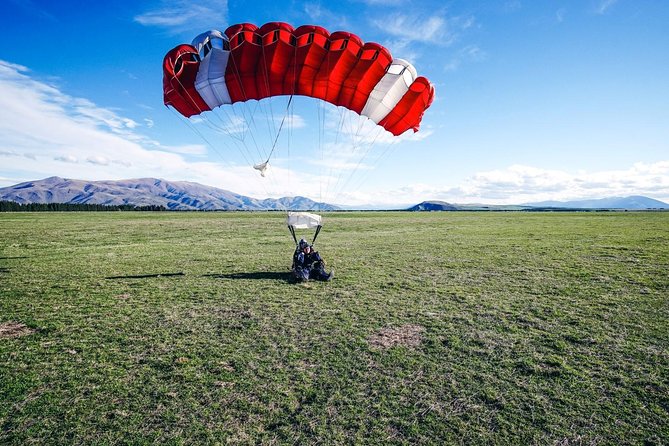
The scenery focus is strong here, and it’s not just “mountains in general.” This jump is described as one of New Zealand’s most stunning skydiving experiences, with views that include snow-capped mountains, glaciers, and lakes plus the Aoraki/Mt Cook National Park region.
Here’s why that matters for you: skydiving is visual. You can train for adrenaline, but you can’t replace the shock of seeing big geography from directly underneath you. When the aircraft path and the jump line align with Mt Cook country, your brain has something meaningful to latch onto during the freefall.
From the ground, Mt Cook area can look dramatic in photos. From above, the same peaks and valleys become a 3D map. Even if you’re not a “mountain person,” you’ll likely find yourself checking for shapes and scale, because the terrain fills the entire frame.
Safety culture you can feel in the pacing
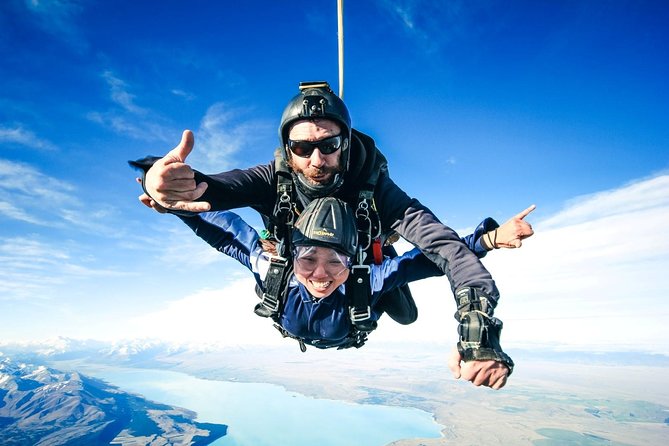
The best part of the operation is the safety mindset. The team takes safety seriously, and the process can include delays or postponements if conditions are not suitable. That’s not a small detail, it’s the whole difference between a rushed jump and one that feels controlled.
You also get reassurance baked into the workflow. If you’re the kind of person who gets nervous beforehand, you’ll appreciate how the crew keeps the experience steady and guides you through it right up to the moment you jump. That calm, no-fuss support is especially valuable when you’re dealing with big heights and the decision-making that happens right before exit.
On the practical side, if you’re within the 100-115 kg range, you’re not automatically ruled in or out. You’re assessed by the tandem master and you’ll do a harness fitting on the day. That’s a real point of fairness and safety, but it also means your jump depends on an on-site decision.
A few more Mount Cook trips worth comparing
- Mount Cook: Scenic Helicopter Flight with Alpine Landing
★ 4.8 · 442 reviews - Mt Cook Small Group Scenic Day Tour from Queenstown
★ 5.0 · 407 reviews - Mt Cook & Tasman Glacier lookout Small Group Tour from Queenstown
★ 5.0 · 296 reviews - Mount Cook: Ski Plane and Helicopter Glacier Combo Flight
★ 4.6 · 271 reviews
Price and value: why $266.23 can make sense here
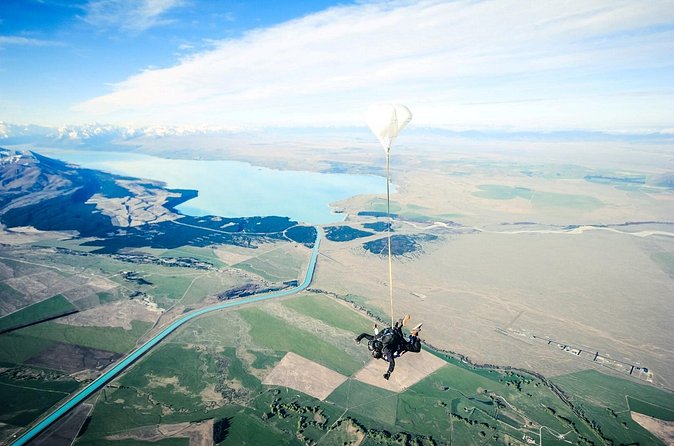
The price is $266.23 per person. It’s not cheap, but it also isn’t trying to be a budget activity. For me, the value makes sense because you’re paying for three things at once: the height (13,000 ft), the long freefall (45+ seconds), and the Mt Cook area scenery.
You’re also not dealing with an enormous group. The max is 9 travelers, so you’re more likely to get a smoother, less chaotic experience. Small-group operations tend to feel more personal, and they also make it easier for staff to run a safety-first schedule without bottlenecks.
Another value signal: it’s commonly booked about 29 days in advance on average. That tells me demand is real, and if you want a specific day (especially if you’re traveling in peak season), you should plan early rather than treat it like a last-minute gamble.
Timing is everything: plan for a weather decision
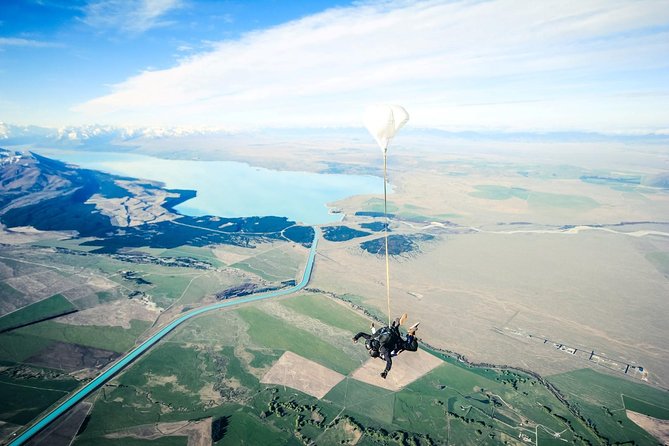
This skydive requires good weather. That’s not optional. If conditions are poor, the activity can be canceled, and you’ll be offered a different date or a full refund.
So how should you plan? Treat your skydiving day as a priority and keep your schedule flexible. If you’re building your South Island route, I’d avoid stacking too many tight commitments immediately after. Even when the crew is ready, weather can be the boss, and you want enough buffer time that a delay does not wreck the rest of your itinerary.
The upside is that when the day is good, you’re getting a very real, very long freefall over some of the most scenic terrain in the country. Weather is the gatekeeper, and you’re choosing the operator that follows the gatekeeper rules.
Weight limits and surcharges, what to know upfront
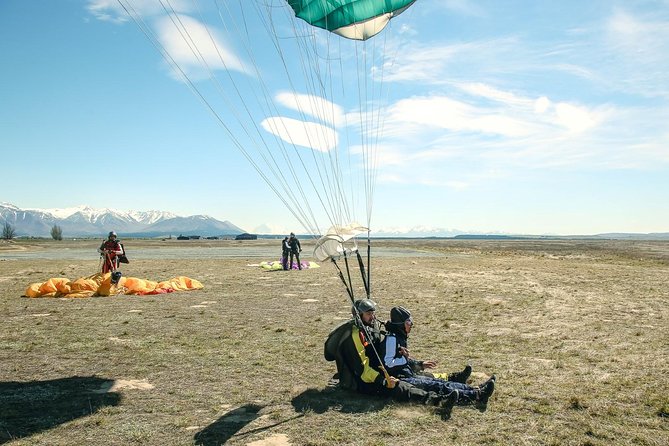
This part is crucial because the information is specific. There is a weight limit, and people weighing between 100-115 kg may be able to jump, but it’s subject to assessment by the tandem master and a harness fitting on the day.
There is also a surcharge for anyone 100 kg or over. The fee varies by weight:
- $40 for 100 to 110 kg
- $60 for 111 to 115 kg
If you’re near those ranges, build it into your budget and do not assume it will be the same price as the base rate you see. It’s also smart to be psychologically ready for the on-the-day assessment. Even with the surcharge, the final go/no-go depends on safety requirements and proper harness fit.
Mobile ticket and the kind of logistics that keep stress low
You’ll use a mobile ticket, which is great on travel days when you do not want to hunt for paper. The experience also provides confirmation at the time of booking, so you should have the essential info ready when you arrive.
The meeting point is clearly defined at Skydive Mount Cook at Pukaki Airport. You’ll be returning there when the activity ends, so you’re not trying to coordinate a new pick-up location after the jump.
Two other practical notes: service animals are allowed, and the meeting point is near public transportation. That can matter if you’re traveling without a car, or if you want more options for getting there without last-minute complications.
Who should book Skydive Mt Cook, and who should rethink it
This skydive fits best if you want a high-impact, high-view experience. You’re paying for a long freefall and a Mt Cook National Park view that you cannot replicate anywhere else with the same feeling.
It also works well for nervous first-timers, because the operation emphasizes safety and keeps the process steady. If you’re worried you’ll be thrown into it, the team’s approach is designed to manage that from the start.
I’d reconsider if you know you can’t handle weather uncertainty. Since the experience depends on good conditions and can be canceled, it’s better when you have some flexibility. And if you fall into the 100 kg+ range, double-check the surcharge and the on-day assessment factor before you commit.
Also think about group dynamics. With a max of 9 travelers, the group size is not tiny, but it’s also not a large crowd. If you strongly prefer private, one-on-one experiences, this may not be the match.
Should you book Skydive Mt Cook?
I’d book it if you’re chasing the full package: 13,000 ft, 45+ seconds of freefall, and Aoraki/Mt Cook National Park views from the air. At $266.23, the value comes from duration plus scenery, and the small group size helps keep the day from feeling like a production line.
I wouldn’t book it if weather stress would ruin your trip, or if you cannot absorb the possibility of delay due to safety decisions. Also, if you’re in the 100-115 kg range, consider the on-day assessment and the listed surcharges part of your planning, not a surprise.
If your schedule is flexible and you want one unforgettable South Island memory that isn’t just “another photo,” this is a strong choice.
Just added near Mount Cook
- Skydive Mt. Cook – 20+ Seconds of Freefall from 10,000ft★ 5.0 · 5 reviews
- Mt Cook to Queenstown Small Group Tour (One-Way)★ 4.5 · 25 reviews
- Skydive Mt. Cook – 70+ Seconds of Freefall from 16,500ft★ 5.0 · 5 reviews
- Mt Cook & Lake Tekapo 2-Day Small Group Tour from Queenstown★ 5.0 · 15 reviews
- Mt Cook to Christchurch One-Way Small Group Tour via Lake Tekapo★ 5.0 · 16 reviews
- Mount Cook Alpine Explorer Helicopter Flight with Alpine Landing★ 4.0 · 22 reviews
- Glentanner High Country Heli Hike★ 5.0 · 52 reviews
- Mount Cook: Mountains High 40-Minute Helicopter Flight★ 5.0 · 53 reviews
Skydiving, compared.
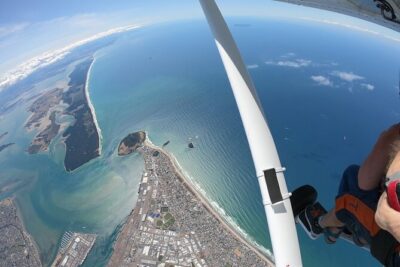
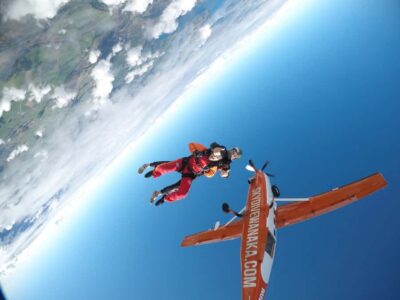
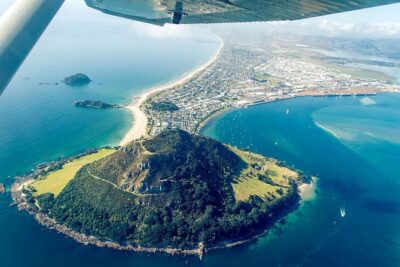
15,000ft Tandem Skydive in Tauranga – Bay of Plenty
Read our review →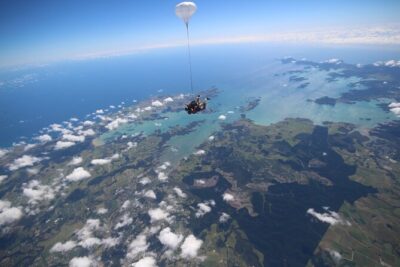

Browse the lists this tour appears in