
REVIEW · MAORI CULTURAL EXPERIENCES
Rotorua Geothermal Living Maori Village Tour Whakarewarewa 6.5hours Tour
Rotorua’s geothermal steam hits first, then the Māori stories land. This tour strings together a living Whakarewarewa village, a calm, safe view of Pohutu geyser, and a full cultural concert, all wrapped in a day trip that also shows you key Rotorua sights and the coast near Mount Maunganui. It’s long enough to feel like a real excursion, but paced so you still get a proper look at what matters.
I love the small group size (max 20) and the hands-on village guide, so the day feels personal rather than rushed. I also like that you get a light hangi-style lunch cooked the traditional way, plus a 30-minute performance with singing, dancing, and the haka.
One thing to plan for is the timing: you’re on the road a while to reach the village, and the geothermal area has a strong sulphur smell. Also, on busy days, the on-site village setup can sometimes mean bigger crowds once you arrive.
In This Review
- Key things to know before you go
- Rotorua Geothermal Living Māori Village: the point of the whole trip
- Entering Whakarewarewa, where geothermal life is more than a photo
- Pohutu geyser viewing, with safety and timing done the sensible way
- The Māori cultural performance and the haka: why 30 minutes feels like enough
- Rotorua and Government Gardens: what you’re really getting in the 10 minutes
- Tauranga, Mount Maunganui, and the kiwifruit route: the Bay of Plenty side of the day
- Hangi-style light lunch: what it adds to the experience
- Guides and pacing: why the human touch is the real value
- Price and logistics: is $166.93 worth it?
- Should you book this tour?
- FAQ
- How long is the Rotorua Geothermal Living Māori Village tour?
- What is included in the tour price?
- Where do I meet the tour?
- What is the main stop during the day?
- Do I get to see Pohutu geyser?
- Is the cultural performance included?
- Is lunch included?
- How big are the groups?
- What should I wear since it runs in all weather?
- What happens if weather is poor?
Key things to know before you go
- Whakarewarewa Living Māori Village for about 2 hours, led by someone from the community and focused on how life works with geothermal activity.
- A 30-minute Māori cultural performance, including singing, dancing, warrior demonstrations, and the haka.
- Max 20 travelers, typically in an air-conditioned vehicle, which makes the day more comfortable than large cruise buses.
- Pohutu geyser viewing from a safe distance during the day, not a risky stop or a long wait in the cold.
- Weather-proof planning, since it runs in all weather conditions, just dress in layers for Rotorua.
- Sulphur smell is part of the deal, so don’t be surprised if the air feels a bit intense by midday.
Rotorua Geothermal Living Māori Village: the point of the whole trip
If you’re doing Rotorua from the Tauranga or Mount Maunganui side, this is the kind of day where one anchor stop matters. Here, that anchor is Whakarewarewa, a living Māori village built into the geothermal region. Instead of just looking at hot springs from a viewpoint, you’re guided through how people have used them in daily life for centuries.
The value in this tour is the mix. You’re not choosing between culture and geothermal. You get both in one flow: village life and hot-water cooking, then a cultural concert, then other Rotorua and Bay of Plenty highlights on the ride back.
This is also a practical cruise-friendly format. You start at 1 Salisbury Avenue, Mount Maunganui, and the tour ends back at the meeting point, with port pickup and drop-off included. That convenience matters if you’re trying to protect your ship time without spending hours coordinating transfers yourself.
More Geothermal Experiences in Tauranga
- Rotorua Geothermal Wonderland Tour – Departs Tauranga
★ 5.0 · 123 reviews - Boutique tour , Mt Maunganui, NZ farm, Rotorua lakes/geothermal
★ 4.5 · 50 reviews - ROTORUA – Hell’s Gate Geothermal Park & Mud Spa Day Trip
★ 4.5 · 41 reviews
Entering Whakarewarewa, where geothermal life is more than a photo
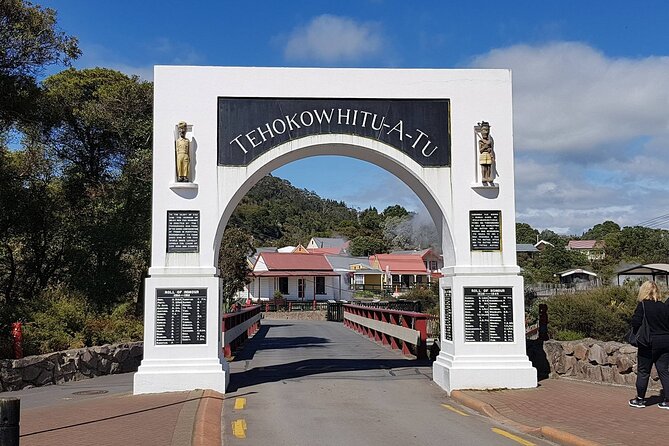
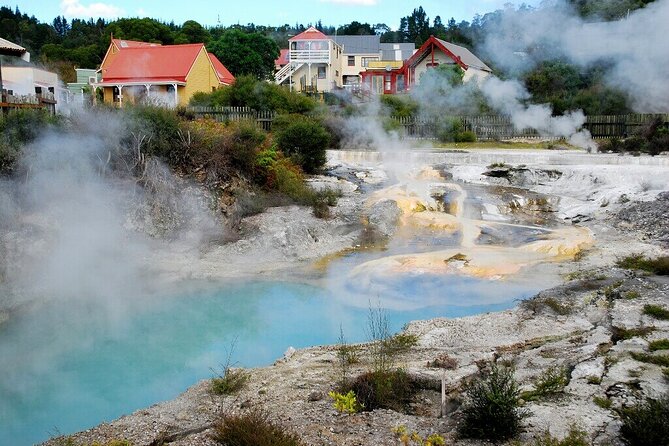
The main block of your day is around 2 hours at Whakarewarewa, where a Māori villager guides you through what geothermal energy means for their community. The big idea is simple: the environment is harsh, but it’s also useful. You’ll see how steam and hot water shape routine life, not just tourist highlights.
You’ll walk through areas with natural geothermal springs and steaming lakes, and the guide explains the everyday logic behind where things are placed and how tasks get done. This is one of those experiences where the details help you stop treating geothermal as a random attraction and start seeing it as infrastructure.
One of the strengths here is that the explanation comes from the community itself, not from someone reading a script in a bus window. The tour is designed for conversation, so questions feel normal, and you’re more likely to leave with a real understanding of the place instead of a list of things you saw.
Pohutu geyser viewing, with safety and timing done the sensible way
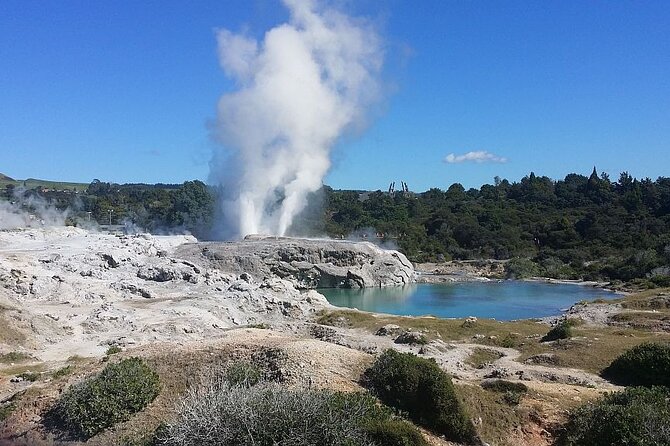
Rotorua’s Pohutu geyser is famous for a reason, and you do get to see it. The catch is how: you view it from a safe distance, and it erupts naturally during the day. That means the tour doesn’t depend on timing something exactly like a show.
For planning, that’s actually a plus. You don’t have to chase an eruption clock all morning, and you’re still able to enjoy the rest of the village experience. The best advice is to stay present when you’re near the viewing area. Don’t stand there scrolling photos for 20 minutes. Look up, listen, then enjoy the eruption when it comes.
Also, keep expectations grounded. This isn’t a behind-the-scenes access pass to the hottest zones. It’s an intentional viewing setup, which is exactly what you want when you’re in geothermal country.
The Māori cultural performance and the haka: why 30 minutes feels like enough
After the village walk, you’ll enjoy about 30 minutes of Māori cultural performance. The show includes singing, dancing, and warrior demonstrations, and it includes the haka. That combination is a big part of what makes the day memorable, especially if this is your only Māori cultural stop in New Zealand.
The best part is that the performance is integrated into the larger context of the village. You’re not watching from across a cultural fence. You’ve already been shown how life works there, so the haka and movements land with more meaning. It becomes less about spectacle and more about expression.
A practical tip: the show is short, so get settled and don’t treat it like background entertainment. If you’re traveling with kids or older family members, this timing can be a win. It’s long enough to matter, but short enough that energy doesn’t collapse midway through.
If you’re sensitive to volume or crowds, you’ll still want to be prepared. This is a performance with movement and sound, and on busier days it can be lively.
More Maori Cultural Experiences in Tauranga
- Tauranga Private Excursion: Rotorua -Te Puia-Geysers & Kiwi’s
★ 4.5 · 115 reviews - Rotorua Discovery Te Puia Tour
★ 4.5 · 21 reviews - Guided Māori History and Culture Tour to Rotorua and Tauranga
★ 5.0 · 21 reviews - Tauranga: Rotorua Redwoods Tour & Maori Village Experience
★ 4.9 · 8 reviews
Rotorua and Government Gardens: what you’re really getting in the 10 minutes
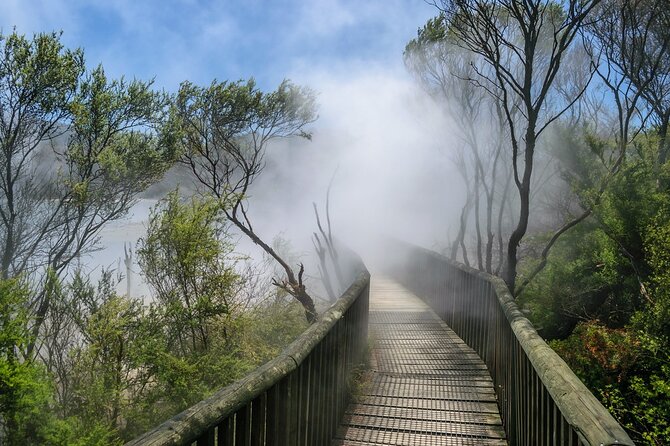
After the village, the tour shifts from geothermal life to quick-hit Rotorua and Bay of Plenty sightseeing. You’ll spend:
- Lake Rotorua (about 15 minutes), mainly for views of the lake, the central focal point of Rotorua.
- Government Gardens (about 10 minutes), including the Elizabethan-style building that dominates the gardens and now houses the Rotorua Museum. The building was the first health spa in New Zealand, which gives this stop an extra layer beyond just pretty grounds.
- Rotorua city (about 1 hour), where you get a broader sense of town and geography rather than deep museum time.
Here’s how to get the most out of it: don’t expect long wandering. This is a scenic and orientation-style portion. Use it to orient yourself. Where is the lake in relation to the town? What kinds of neighborhoods and green space show up around it? Then, if you want more later, you’ll know where to aim.
If you care a lot about photo stops, I’d mentally budget for limited viewpoints. Some parts are driven-through rather than walk-around, so your best shots will come when the vehicle stops and you have a quick window.
Tauranga, Mount Maunganui, and the kiwifruit route: the Bay of Plenty side of the day
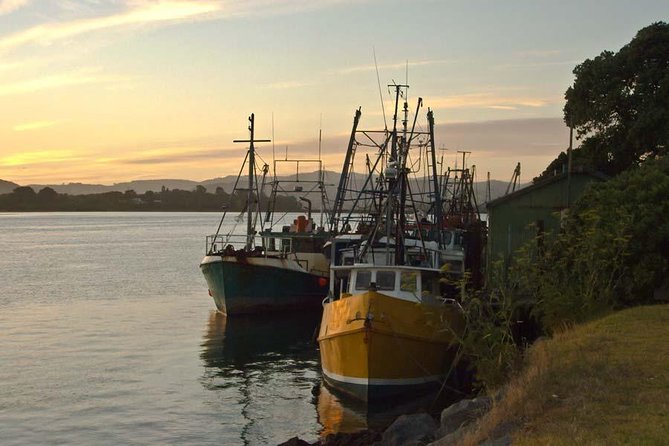
The tour doesn’t end at Rotorua. It includes the trip back through the region, with multiple stops along the way.
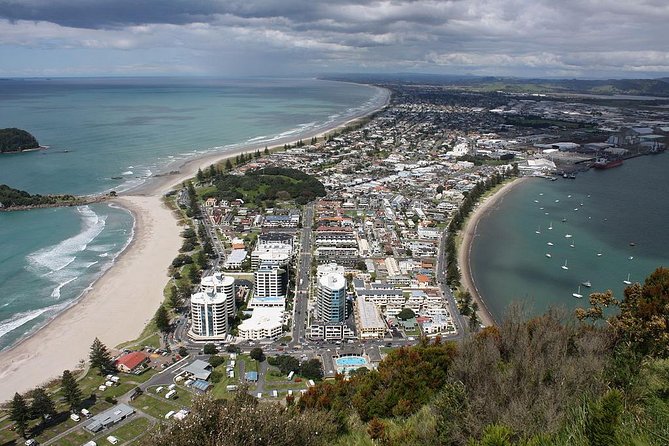
You’ll spend time in Tauranga (about 30 minutes), which the tour frames as one of New Zealand’s fastest-growing cities and home to the country’s largest port. Then you’ll also drive through Mount Maunganui (about 30 minutes), including the beach-side suburbs that make this area popular.
One fun regional detail is the stop through Te Puke, the kiwifruit region, described as the world capital of kiwifruit. You’ll pass through a landscape shaped by those orchards. Even if you don’t stop inside a packing house, just seeing how dominant the kiwifruit crop is gives you a different angle on the Bay of Plenty beyond beaches.
If you like variety in a day tour, this section helps. You go from geothermal steam, to performance, to lake and garden stops, then back to port-city energy and coastal views.
Hangi-style light lunch: what it adds to the experience
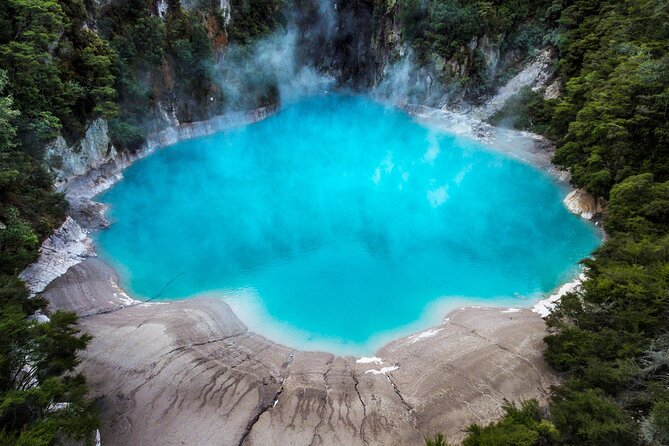
Food is often an afterthought on day tours, but here the lunch is part of the theme. You’ll get a free light lunch cooked in the traditional hangi method. Even if the meal itself is simple, the fact that it’s tied to geothermal cooking is meaningful.
The hangi method fits the day’s logic. You’ve learned how geothermal heat is used in daily life at the village. Then you taste the result. It makes the experience feel less like a lecture and more like something you can connect with your senses.
Practical tip: since you’ll be in and out of outdoor areas where sulphur air can hang around, take a moment before eating, especially if you’re sensitive to smells. A quick rinse or using any provided wipes or hand sanitizer can make a big difference.
Guides and pacing: why the human touch is the real value
The tour’s biggest differentiator isn’t just the attractions. It’s the guiding style. The day description includes an experienced professional guide, and the specific guides praised in past outings show up as repeat themes: clarity, good pacing, and storytelling that connects the geography to the people.
Names you may see associated with this tour include Richie, Jack, Brian, Peter, Charlie, Saskia, Alistair, Grahame, and Suskia. Some are described with teaching backgrounds and strong local context, which matters because you’re sitting for long stretches in a vehicle and you want that time to feel like it’s going somewhere.
Pacing is also part of the value. You get a solid 2 hours at the village, then performance time, then short sightseeing blocks. It’s structured so you’re not constantly sprinting for the next stop. You can feel when the guide is keeping the day on track, which is important on a shore excursion format.
Price and logistics: is $166.93 worth it?
At $166.93 per person for a 6 hours 30 minutes outing, this isn’t a budget tour. But I think the pricing makes sense if you value three things that are hard to replicate cheaply on your own from Tauranga or Mount Maunganui.
First, you’re paying for guided access to a living Māori village, including a cultural performance and entry included for the village. Second, you’re also getting a light lunch cooked in the hangi method, which is not just a random sandwich. Third, you’re buying convenience: port pickup and drop-off, plus transport in an air-conditioned vehicle with a controlled day plan.
Where the cost can feel heavy is if you’re the type who prefers long free time. This day doesn’t give you hours of independent roaming in Rotorua. It’s structured, and you trade flexibility for a curated, time-efficient experience.
So I’d look at it like this: if you want one well-built Rotorua day that combines geothermal sights and Māori culture without stress, the price becomes easier to justify.
Should you book this tour?
Book it if:
- You want the Whakarewarewa Living Māori Village experience, not just a roadside geothermal stop.
- You care about culture that’s tied to real community life and not only staged in a venue.
- You like the idea of a small group and a guide who can explain what you’re seeing while keeping the day moving.
Consider another option if:
- You hate car time. This route can include a long drive each way, and part of your day will be spent in transit.
- You’re extremely smell-sensitive. Rotorua geothermal areas have a sulphur scent, and you’ll be close enough for it to be noticeable.
- You want lots of extra walk-around viewpoints. Some stops are brief and driven-through, so your photo opportunities depend on where the vehicle stops.
If you’re on a shore schedule, or you’re basing yourself around Tauranga and Mount Maunganui, this is a solid way to make Rotorua count in one go.
FAQ
How long is the Rotorua Geothermal Living Māori Village tour?
It runs for about 6 hours 30 minutes.
What is included in the tour price?
You get an experienced professional guide, port pickup and drop-off, a Māori cultural performance, a free light lunch cooked in the hangi style, and transport in an air-conditioned vehicle.
Where do I meet the tour?
You start at 1 Salisbury Avenue, Mount Maunganui 3116, New Zealand, and the tour ends back at the same meeting point.
What is the main stop during the day?
The centerpiece is Whakarewarewa Living Māori Village, including a guided village tour.
Do I get to see Pohutu geyser?
Yes. You can view Pohutu geyser from a safe distance as it erupts naturally during the day.
Is the cultural performance included?
Yes. The tour includes a 30-minute Māori cultural performance with singing, dancing, warrior demonstrations, and the haka.
Is lunch included?
Yes. A free light lunch is included, cooked using the traditional hangi method.
How big are the groups?
The tour has a maximum of 20 travelers.
What should I wear since it runs in all weather?
Dress in layers and plan for outdoor time. The tour operates in all weather conditions, and it’s also suggested to bring a hat and sunscreen.
What happens if weather is poor?
The tour requires good weather. If it’s canceled due to poor weather, you’ll be offered a different date or a full refund.
More Geothermal Parks near Tauranga
- Rotorua: Wai-O-Tapu Geothermal Park Entry Ticket
★ 4.6 · 2,601 reviews - Auckland: Hobbiton, Rotorua and Wai-O-Tapu Day Tour
★ 4.8 · 458 reviews - Hobbiton & Rotorua including Wai-O-Tapu – Small Group Tour from Auckland
★ 5.0 · 450 reviews - Rotorua: Hells Gate Outdoor Mud Bath & Spa Experience
★ 4.6 · 398 reviews
Just added near Tauranga
- Tour of the Bay, Te Puna Sculpture Park and Historic Village★ 4.3 · 3 reviews
- Tauranga: Waimarino Adventure Park Supreme Pass Entry Ticket★ 3.8 · 6 reviews
- Tauranga: Daytime Scenic Lake McLaren Kayak Tour★ 4.6 · 16 reviews
- Tauranga: Kiwifruit Destination and Sights Shore Excursion★ 4.8 · 69 reviews
- Tauranga: Rotorua Redwoods Tour & Maori Village Experience★ 4.9 · 8 reviews
- Tauranga: Mount Maunganui Harbour Sightseeing Cruise★ 4.2 · 89 reviews
- Tauranga: Evening Big Kanu Glowworm Tour★ 4.2 · 34 reviews
- Tauranga City & Scenic Sightseeing 2-hour Local Tour★ 4.3 · 47 reviews
Maori Cultural Experiences, compared.
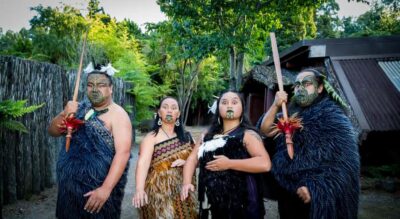
Mitai Maori Village: Cultural Experience and Dinner Buffet
Read our review →
Cultural Experience & Seasonal Māori Cuisine at Te Pā Tū
Read our review →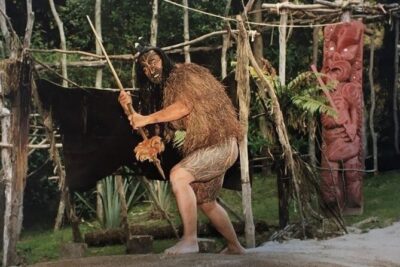
Mitai Maori Village Cultural Experience in Rotorua
Read our review →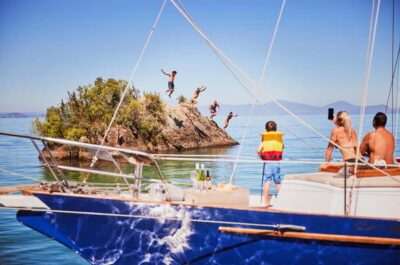
Lake Taupo: Classical Sailing to the Māori Rock Carvings
Read our review →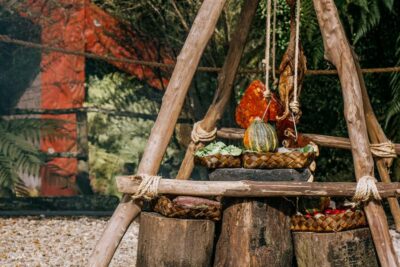
Te Pa Tu Māori Cultural Experience with Dinner
Read our review →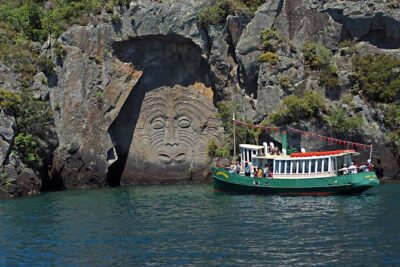
Lake Taupō Māori Rock Carvings Scenic Cruise aboard Ernest Kemp
Read our review →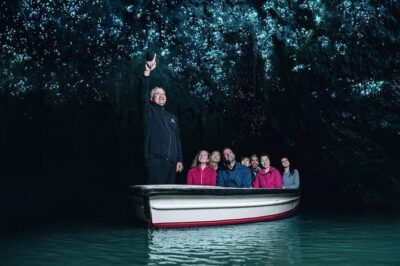
Waitomo Caves & Rotorua – Te Puia Small-Group Tour from Auckland
Read our review →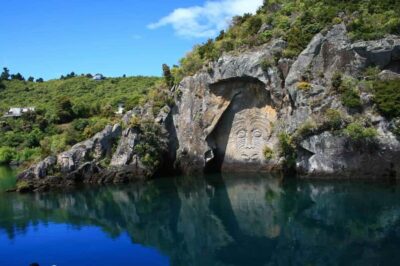
Lake Taupo: Maori Rock Carvings 10.30 AM 1.5-Hour Cruise
Read our review →Browse the lists this tour appears in