
REVIEW · CANOES & KAYAKS
Akaroa: Akaroa Marine Reserve Sea Kayaking Tour
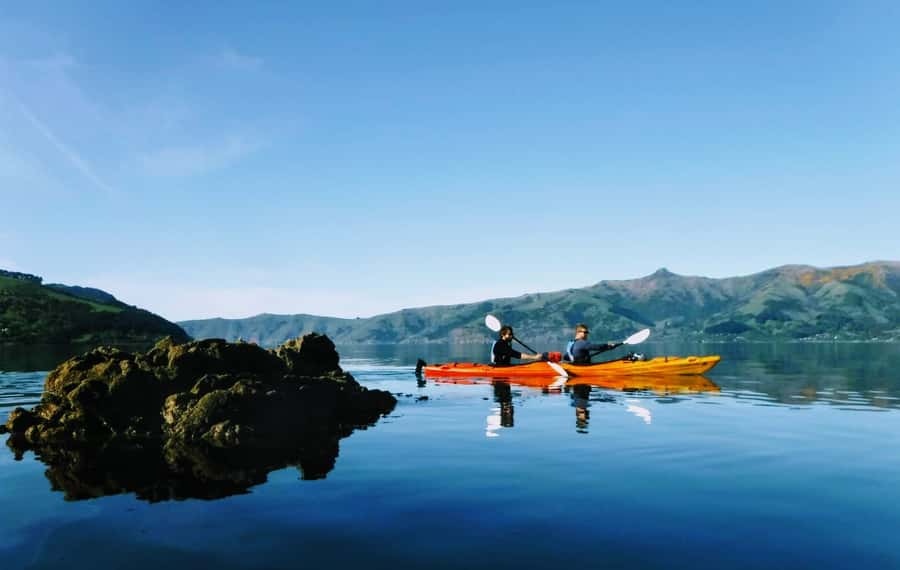
Sea kayaks meet dolphins in Akaroa. In a 2.5-hour paddle, you get through the sea-flooded volcanic crater and real Hector dolphin chances, guided all the way for safety. The one thing to plan for is effort, especially if wind comes up and the return feels a bit choppy.
I like that this tour is built for real people, not just strong paddlers. It is only about 80 minutes from Christchurch, runs with small groups (up to 8 people with one guide), and includes instruction, all gear, and even photos so you can focus on the water.
In This Review
- Key reasons this Akaroa sea kayaking tour is worth your time
- Akaroa Marine Reserve: why the scenery and wildlife feel connected
- Small-group kayaking with one guide: how it changes the day
- Getting to the water at Akaroa: what you need to know before you start
- The paddle route: harbour inlets, crater waters, and cave features
- Wildlife spotting that actually fits the habitat, from dolphins to penguins
- How hard is it? Wind, waves, and that real arm-work moment
- The guide experience: what makes the best ones feel personal
- Price and value: is $80 reasonable for 150 minutes in the reserve?
- Who should book this Akaroa kayaking tour
- Should you book the Akaroa Marine Reserve Sea Kayaking Tour?
- FAQ
- How long is the sea kayaking tour in Akaroa?
- How much does the Akaroa Marine Reserve sea kayaking tour cost?
- What is the group size and guide ratio?
- What wildlife can you look for during the tour?
- Where is the meeting point?
- What should I bring, and is luggage allowed?
- Is there free cancellation or pay later?
Key reasons this Akaroa sea kayaking tour is worth your time
- Sea-flooded volcanic crater paddling: you glide through inlets and bays shaped by old geology.
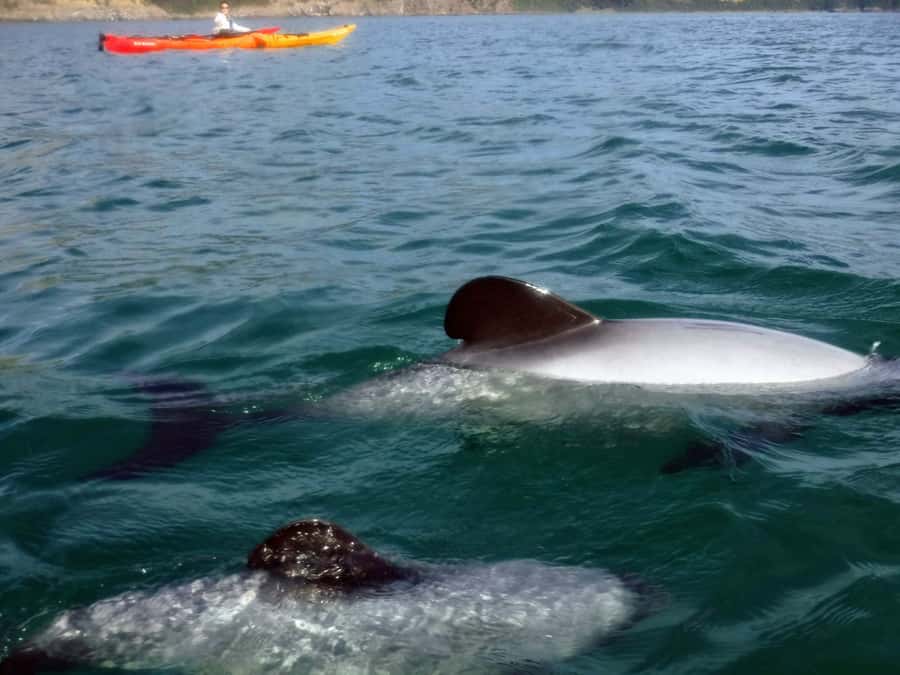
- Hector dolphin and white-flippered penguin habitat focus: the guide actively looks for rare local wildlife.
- Small-group format, max 8 people: you get closer attention and clearer instruction.
- Frequent chance wildlife sightings in season: seals, birds, and other sea life are part of the rhythm.
- Sustainability mindset on the marine reserve: the experience is designed to leave minimal impact.
Akaroa Marine Reserve: why the scenery and wildlife feel connected
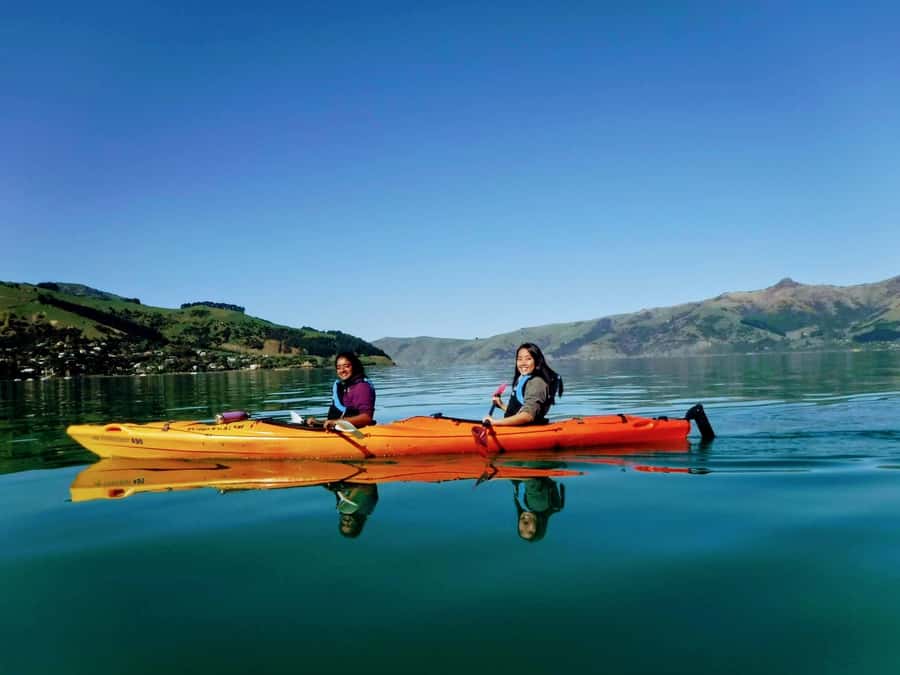
Akaroa is a sea-and-rock kind of place. You start in the harbour and head into a marine reserve setting where the water, caves, and sheltered bays let you move slowly and notice details. One big reason this kayak style works so well here is that the scenery is not just pretty, it is functional. The old crater walls and the inlets shape currents and hiding spots, which is exactly where wildlife tends to appear.
The extinct volcanic crater adds a built-in wow factor. You are not paddling through a generic shoreline. You are moving through a flooded structure, with features to work around and caves to pass. It makes the session feel like a guided route, not just a timed ride.
And because the tour is explicitly about the marine reserve, the guide’s wildlife focus makes sense. You are not hunting for a photo op. You are learning what lives here, why it is here, and how to watch for it without stirring things up.
More Kayak Tours in Akaroa
- Shore Excursion Guided Sea Kayaking through Akaroa Marine Reserve
★ 5.0 · 160 reviews - Sunrise wildlife sea kayaking in Akaroa marine reserve
★ 5.0 · 123 reviews - Akaroa: 4WD Safari and Guided Sea-Kayaking Experience
★ 4.8 · 120 reviews
Small-group kayaking with one guide: how it changes the day
This tour runs with one guide for a maximum of 8 persons, so you are not shouting over a crowd or guessing what to do next. That small-group size matters on the water. When someone is adjusting their paddle rhythm, the guide can spot it right away and coach them. When wind or chop changes, the guide can keep everyone together and set expectations early.
It is also designed to be taught, not just demonstrated. You get a safety briefing, full instruction, and the gear that matches sea kayaking. The kayaks are described as safe, stable, and comfortable, which is a great combo for a first-time or returning paddler.
Group size also affects the wildlife part. Hector dolphins and seals are not guaranteed. But with fewer people, your guide can manage positioning so you get a better chance to see what is happening, without turning it into a chaotic stampede.
Getting to the water at Akaroa: what you need to know before you start
The meeting point is opposite the bowling club in Akaroa, at the picnic benches on the grass. Plan to arrive a little early so you can get into your dry layer and set up your reusable water bottle before the briefing.
Here is what I would treat as your starter checklist, based on what the tour asks for:
- A windbreaker (wind can change fast on the water)
- Sun protection, including a sun hat
- Water in a reusable bottle
Also note what is not allowed: no luggage or large bags. So bring only what you can comfortably carry to the benches and then back out again. If you are doing this as part of a bigger day, consider leaving extra stuff in town.
Once you are kitted up, the guide handles the safety and basic technique. A clear start pays off later, especially if you are slightly nervous about steering or keeping your balance. Some reviews highlight how reassuring the guides were for nervous paddlers, which is exactly what you want in a small-group setup.
The paddle route: harbour inlets, crater waters, and cave features
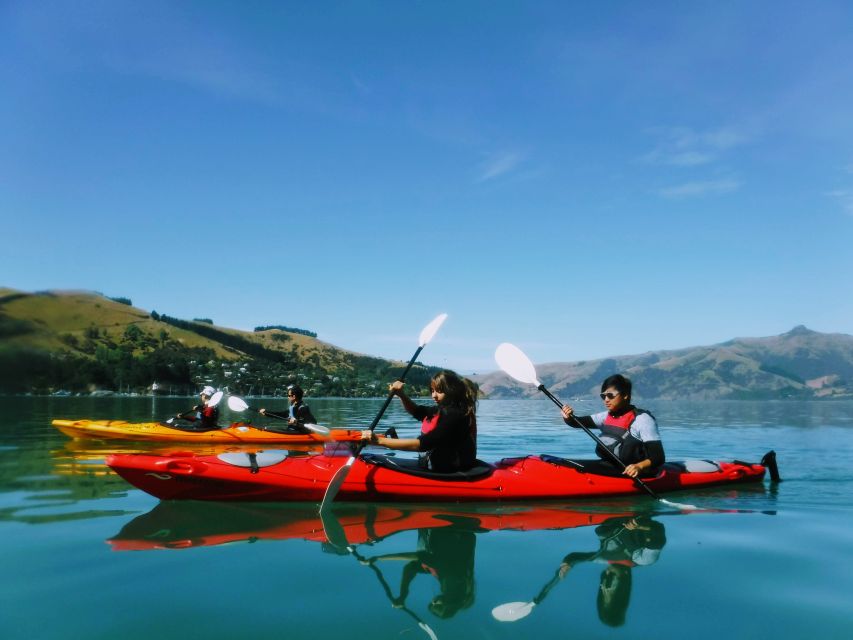
The core of the experience is a guided kayak through Akaroa Harbour and the marine reserve. You paddle across serene inlets and bays, moving through water that is described as turquoise. That color matters less than how it usually signals conditions that are rideable, especially for people still getting used to a sea kayak.
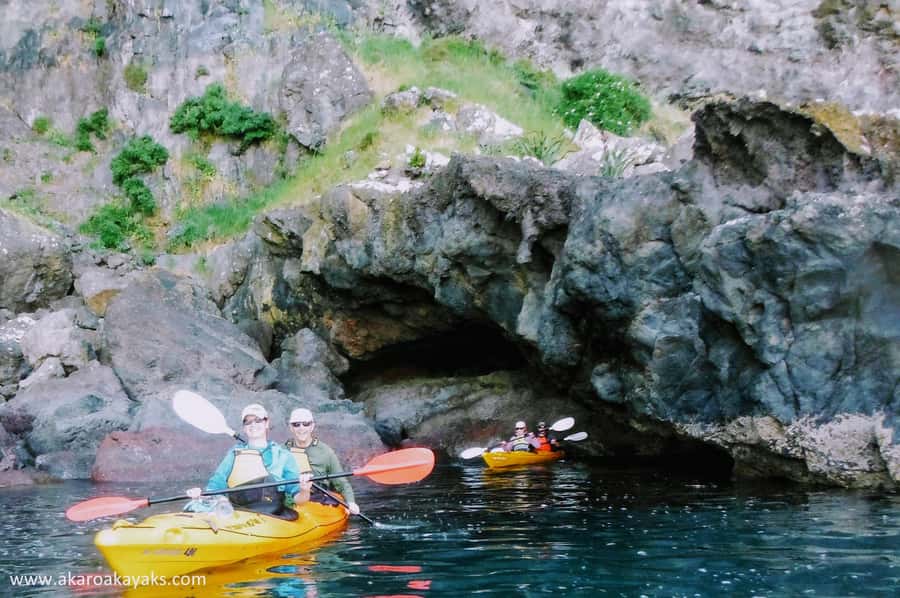
Your route includes a standout geological section: the extinct volcanic crater that is now sea-flooded. Paddling through a crater setting gives you variety. You are not stuck facing one direction. You pass features, and you work around the shapes of the shoreline. The tour description also points out that there are lots of caves and features to paddle through.
From a practical point of view, caves and rock features change how you feel on the kayak. Your attention narrows. You start watching your own line, your distance from rock, and your timing with the group. That is good. It turns the trip into an active experience, not a passive sit-and-snap situation.
You also get a guide-led pacing. That means fewer surprises and more time to look up, because the guide is making the calls. Reviews frequently mention good timing and excellent guidance, which is a big deal on a 150-minute tour where you want the best moments to happen without rushing.
More kayak trips in Akaroa:
- Small group guided sea kayaking in Akaroa marine reserve
★ 5.0 · 116 reviews - Guided Electric Mountain Bike & Sea Kayak Tour in Akaroa
★ 5.0 · 22 reviews - Electric Mountain Bike & Sea Kayak Tour in Akaroa
★ 4.5 · 3 reviews - Akaroa: Electric Mountain Bike and Sea Kayak Adventure
★ 3.4 · 3 reviews
Wildlife spotting that actually fits the habitat, from dolphins to penguins
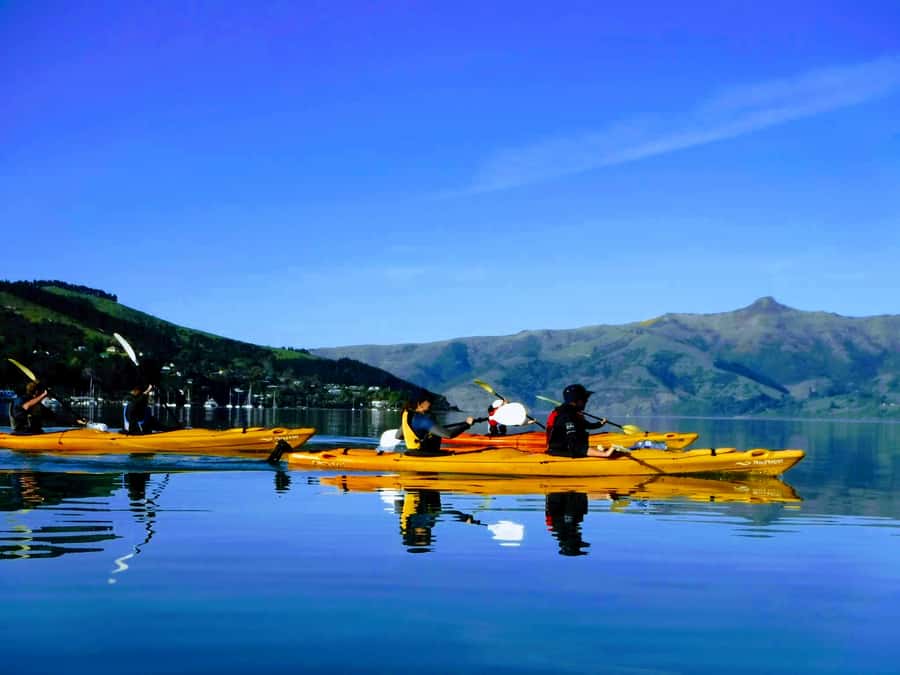
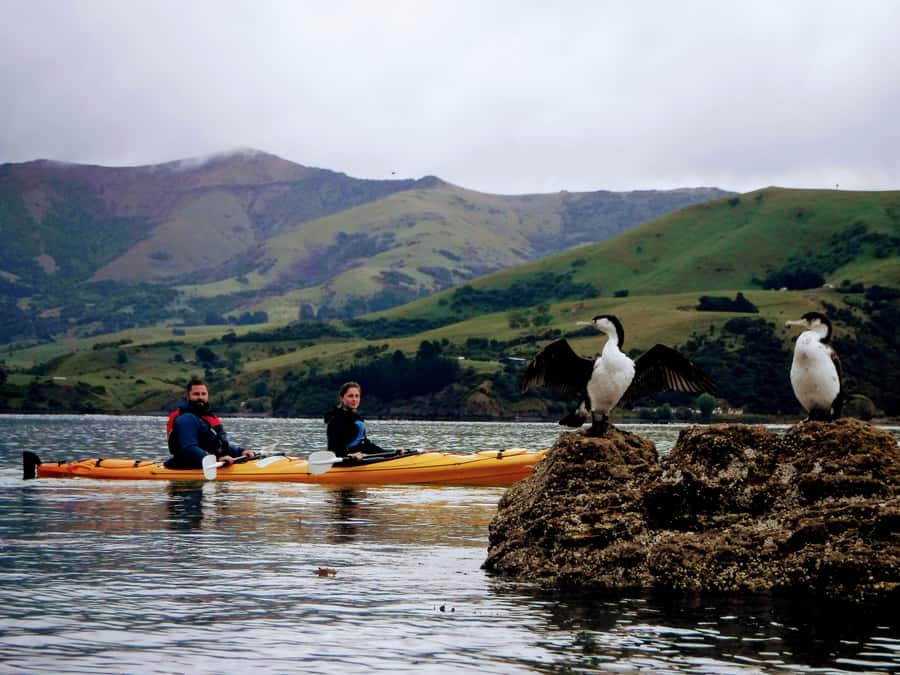
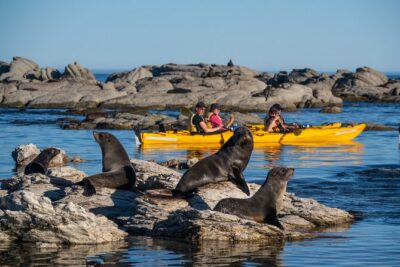
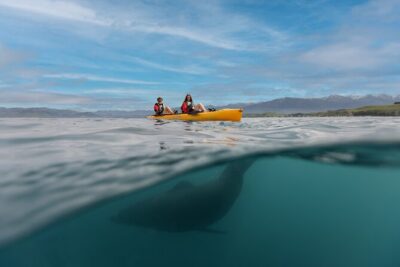
The wildlife component is the headline for a reason. The tour specifically talks about rare marine mammals and the kinds of animals that live in this reserve area, including white-flippered penguins and Hector dolphins, plus fur seals and lots of birdlife.
What you should know is that this is a chance-sighting experience. The guide will look, position the group, and share information as you watch. The tour description says chance sightings are very frequent during sea kayak season, and multiple reviews back up that the animals can show up close to the kayaks.
A few highlights from the guide stories in the reviews include:
- Hector dolphins swimming around the kayaks for ages
- Natural seals and penguins sighted
- Dolphins and seals showing up repeatedly as the group searched
The key is what your guide does while you wait. Several reviews mention guides keeping close eye on everyone’s safety and confidence, while also talking about birds, sea life, and geology. That matters because wildlife watching goes from frustrating to fun when you understand what you are seeing. You start to recognize signs like sudden surface movement or the way birds react.
If you are hoping for dolphins, treat this as a patience sport. Move when the guide asks, keep the kayaks steady, and give the guide room to manage the viewing angle. That is how you maximize your chances and keep it respectful for the reserve.
How hard is it? Wind, waves, and that real arm-work moment
Let’s be honest: sea kayaking is exercise. Even with stable kayaks and a guided route, you still have to paddle. One review calls it a bit tiring, and another notes arm strength as a real factor. So this is not a couch-to-cruise situation.
That said, the tour is described as suitable for all abilities, and I think that comes down to coaching and group management. If you can follow instruction, keep a steady pace, and take breaks when the guide suggests, you can have a solid time even if you are not a fitness person.
Weather is the big variable. One review mentions wind picking up on the way back, with waves. That is exactly why the tour asks for a windbreaker and a light wind or rain jacket.
My practical advice:
- Bring your windbreaker even if the morning looks calm
- Pack sunscreen and a hat because salt air does not block UV
- Bring water, then drink it, not just carry it
If you tend to get cold, bring a light layer. If you get hot easily, plan for sun protection and a hat with a secure fit. The 150-minute timing gives you enough time for a comfortable pace, but it is still long enough for weather to matter.
The guide experience: what makes the best ones feel personal
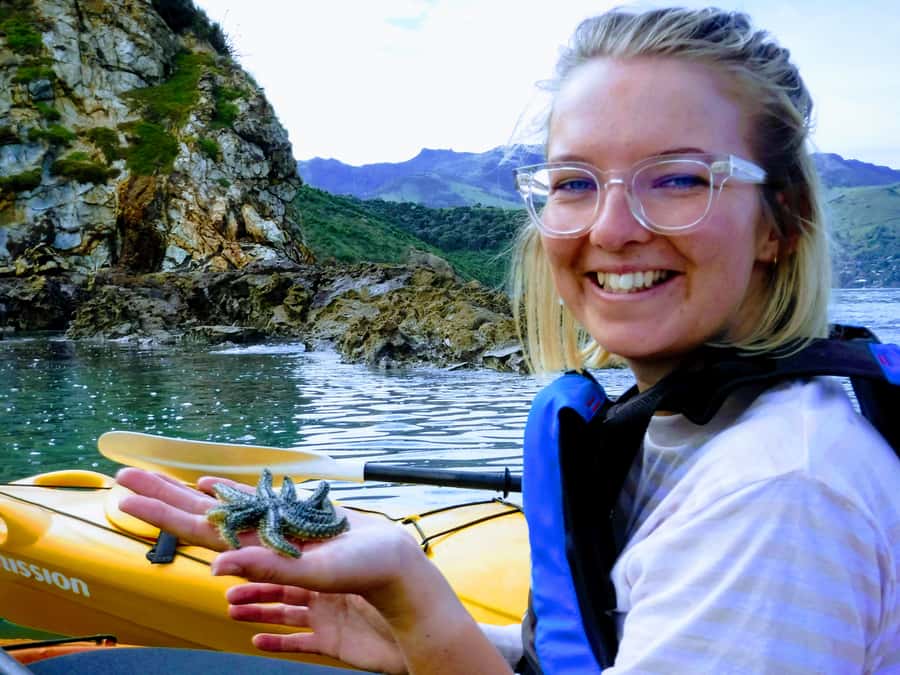
The biggest pattern in the reviews is clear: the guide quality makes the trip feel smooth. People describe guides as encouraging, enthusiastic, and very good at keeping safety and fun balanced. Names that come up include Alex, Luan, Max, Adam, William, Lucia, Thomas, Jack, Jake, and John.
What is consistent across those stories is how the guides connect three things:
- Technique and confidence on the kayak
- Wildlife and geology information while you paddle
- Group control so everyone feels included
For languages, the tour offers a live guide in English, Spanish, and French. That is useful if you are travelling with a mixed-language group or if you want the guide’s explanations in a language you are comfortable with.
Also, photos are included. That is a smart add-on because it saves you from trying to stop and aim your phone at moving wildlife. If you want memories without risking your grip on the paddle, this is the kind of extra you will appreciate.
Price and value: is $80 reasonable for 150 minutes in the reserve?
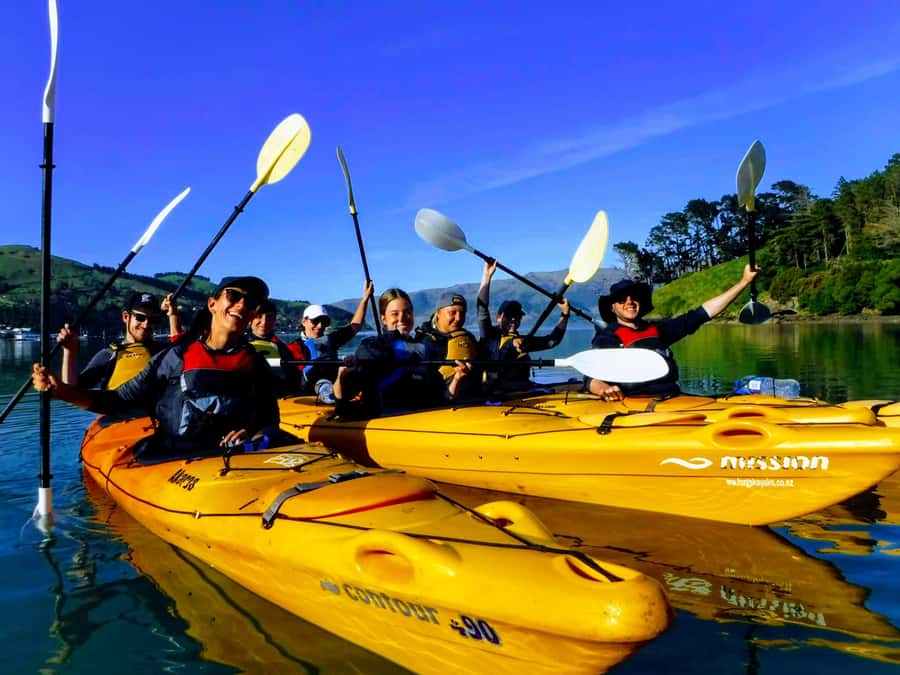
At $80 per person for 150 minutes, the pricing sits in the mid-range for a guided activity. The value comes from what is bundled and what is delivered.
You are getting:
- Sea kayaks described as safe, stable, and comfortable
- Full kayaking gear
- Full instruction and safety briefing
- 1 guide for up to 8 people
- Photos
Most importantly, you are paying for an experienced person to manage a fragile environment and help you look for wildlife properly. In a marine reserve setting, that kind of guidance is not just nice, it is the whole point. Wildlife viewing without the right positioning can turn into missed chances or risky behaviour. Here, the tour is built around doing it the right way.
Then there is the location advantage. Akaroa is close to Christchurch, so you can do this as a day trip and not lose half your trip just getting there. That is part of the value calculation for many people.
If you are comparing options, I would ask yourself one question: do you want to paddle by yourself, or do you want a guided route with wildlife education and safety coaching? If you want the guided part, $80 for 2.5 hours starts to look fair.
Who should book this Akaroa kayaking tour
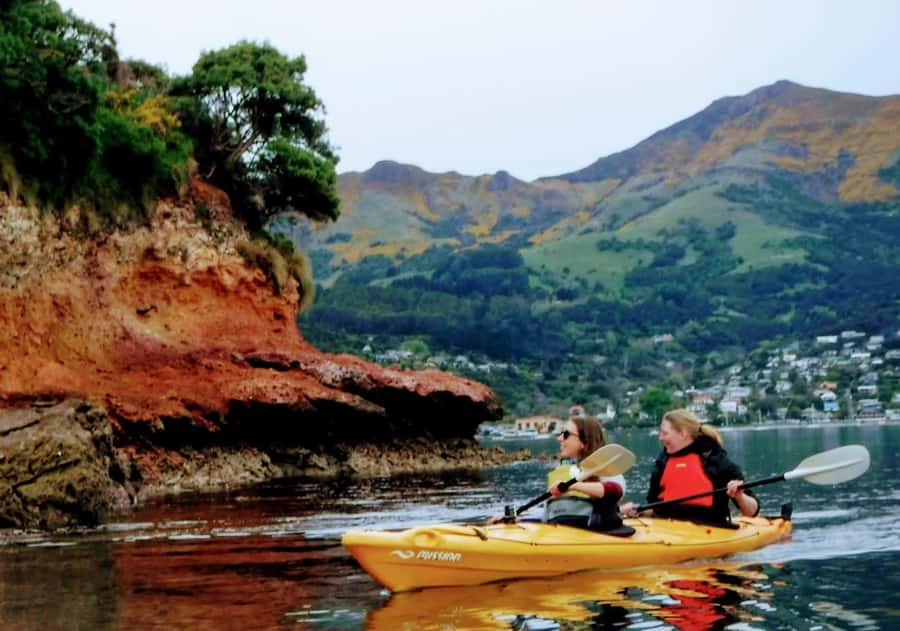
This tour makes sense if you want:
- A guided sea kayaking experience in Akaroa Harbour and the marine reserve
- A realistic wildlife chance for animals like Hector dolphins, plus seals and penguin habitat
- A geology-driven route through an extinct volcanic crater with cave features
- Small-group coaching so you feel safe and included
It is also a strong choice for people who are not sure about kayaking confidence. Reviews include moments where nervous paddlers felt instantly at ease when the guide explained everything clearly and made them comfortable on the water.
Who might think twice:
- If you know you dislike any paddling effort, you might find the workout tiring.
- If you hate the idea of wind affecting the return, this is still doable, but pack your gear and choose clothing like you mean it.
For couples, friends, and families, small-group attention is a major plus. For solo travellers, the guide-led format makes it easier to feel part of the group without social awkwardness.
Should you book the Akaroa Marine Reserve Sea Kayaking Tour?
I would book it if you want an active afternoon with real wildlife chances, not just a scenic paddle. The combination of small-group guidance, a volcanic crater route, and a guide who helps you spot and understand animals makes it a good use of time in Akaroa.
Also, if you are near Christchurch, this is the kind of outing that feels like a proper escape without long transit stress. Bring the right wind and sun gear, be ready for some arm work, and let the guide do the hard part of watching the water.
If those things sound like your kind of day, you will probably love this.
FAQ
How long is the sea kayaking tour in Akaroa?
The tour duration is 150 minutes, about 2.5 hours.
How much does the Akaroa Marine Reserve sea kayaking tour cost?
The price is $80 per person.
What is the group size and guide ratio?
Each group has one guide for a maximum of 8 persons.
What wildlife can you look for during the tour?
The guide shares information and you may have chance sightings of animals such as Hector dolphins, white-flippered penguins, fur seals, and various birdlife and sea creatures.
Where is the meeting point?
You meet opposite the bowling club in Akaroa, at the picnic benches on the grass.
What should I bring, and is luggage allowed?
Bring a windbreaker, sun hat, and water. You should also bring a reusable bottle for drinking water, sunscreen, and a light wind or rain jacket. Luggage or large bags are not allowed.
Is there free cancellation or pay later?
Yes, free cancellation is available up to 24 hours in advance for a full refund, and you can reserve now and pay later.
Just added near Akaroa
- Solar Explorer in Akaroa – Sun-Viewing Tour with Telescopes★ 5.0 · 5 reviews
- Akaroa Wildlife Cruise★ 5.0 · 101 reviews
- Small group guided sea kayaking in Akaroa marine reserve★ 5.0 · 116 reviews
- Night Awe – Stargazing tour in Akaroa★ 5.0 · 61 reviews
- Sailing and Wildlife Tour Akaroa Fox II Sailing★ 5.0 · 76 reviews
- Electric Mountain Bike & Sea Kayak Tour in Akaroa★ 4.5 · 3 reviews
- Guided Electric Mountain Bike Tour- Akaroa Explorer★ 5.0 · 4 reviews
- Shamarra Alpaca Farm Tours★ 5.0 · 117 reviews
Canoes & Kayaks, compared.
Small-Group Kayak Adventure from Franz Josef Glacier
Read our review →
Dart River Canoe and Jet Boat Experience from Queenstown
Read our review →Browse the lists this tour appears in